






Manila Bulletin
 Business
The Economy
Hormuz blockade risks 'rationing shock' for Philippines, Asia peers
Business
The Economy
Hormuz blockade risks 'rationing shock' for Philippines, Asia peers
Business
The Economy
Hormuz blockade risks 'rationing shock' for Philippines, Asia peers
Hormuz blockade risks 'rationing shock' for Philippines, Asia peers
Published Apr 2, 2026 08:49 am
|
Updated Apr 2, 2026 02:29 pm


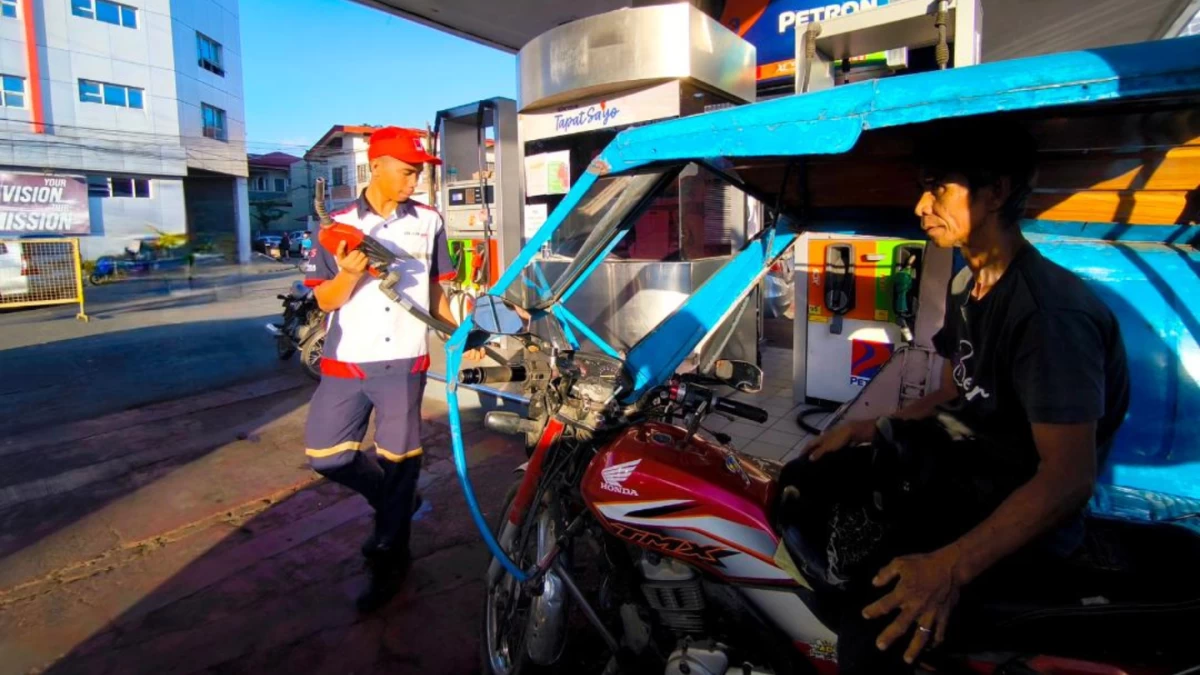
A tricycle driver refuels at a gasoline station in Iloilo City. (Photo by Tara Yap I Manila Bulletin)
The Philippines and its emerging neighbors in Southeast Asia face deepening threat of physical fuel shortages and systemic economic paralysis as the continued closure of the Strait of Hormuz chokes off refined petroleum imports.
According to Oxford Economics, the Philippines is among the most vulnerable nations globally due to its heavy dependence on imported refined products and limited fiscal capacity to absorb sustained price shocks.
While global markets grapple with soaring crude prices, the crisis in the Philippines has already shifted from a pricing emergency to a battle for basic access, forcing the government to declare a national energy emergency.
Based on Oxford Economics’ estimates, the disruption has removed a net 10 million barrels per day from global supply, a deficit that market analysts said cannot be bridged by high prices or strategic reserves alone.
For the Philippine economy, Oxford Economics said the shortfall is manifesting as a mandated four-day workweek and tighter credit terms for local fuel traders, raising the specter of a prolonged industrial slowdown.
“Short-run oil demand is inelastic,” said Bridget Payne, head of energy forecasting at Oxford Economics.
Payne noted that while Brent crude has surged 79 percent above baseline levels, global consumption is expected to fall by only 2.4 million barrels per day in the second quarter. This leaves a massive gap that must be filled by dwindling inventories or, eventually, state-mandated rationing.
The crisis is most acute in the diesel market, which serves as the backbone of Philippine freight, agriculture, and construction.
Unlike jet fuel, which has seen demand drop as airlines cancel flights, diesel has few near-term substitutes. When supply is physically constrained, the impact cascades through food production and logistics, driving up the cost of basic goods even if crude prices were to stabilize.
Regional neighbors including Vietnam, Thailand, Bangladesh, and Pakistan are implementing similar desperation measures from fuel purchase caps to export bans.
However, the Philippines' position is particularly precarious as it competes for non-Gulf supply in a tightening market. Oxford Economics warned that if the blockade persists for six months, the resulting “rationing shock” could trigger a global recession, with gross domestic product (GDP) growth potentially slowing to 1.4 percent in 2026.
For the Philippines, the immediate priority remains securing emergency shipments to prevent the current administrative rationing from evolving into a total breakdown of the domestic supply chain.