







Follow Jesus; discover the power of love, humility
Published Apr 2, 2026 12:02 am
|
Updated Apr 1, 2026 03:58 pm


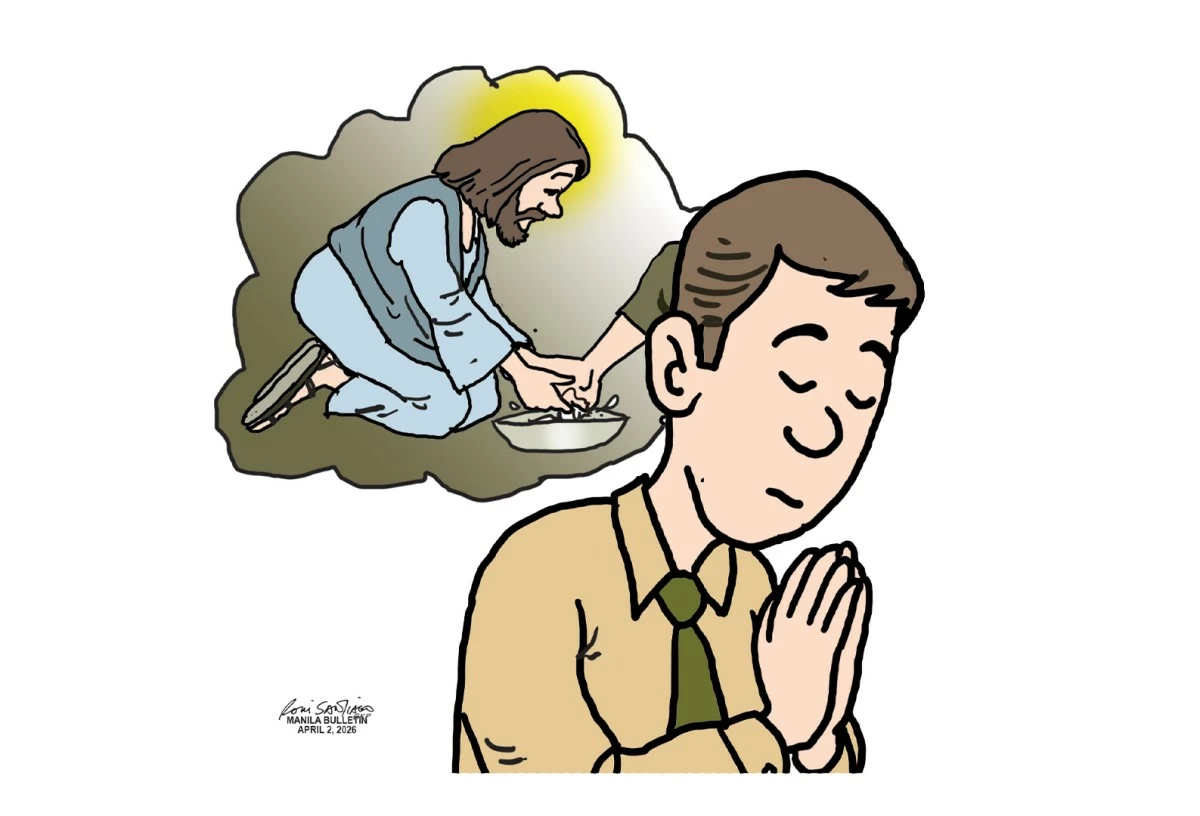
As the nation pauses in solemn reflection this Maundy Thursday, the familiar rituals—Visita Iglesia, processions, and prayers—call for acts deeper than the tradition we have been used to. They call for transformation. At the heart of this sacred observance lies a radical model of leadership, love, and surrender embodied by Jesus Christ. It is one that remains urgently relevant in a world often driven by power, pride, and self-preservation.
Maundy Thursday commemorates the Last Supper, where Jesus performed an act that stunned His disciples: He washed their feet. In a culture where such a task was reserved for servants, this deliberate act shattered conventional hierarchies. “Now that I, your Lord and Teacher, have washed your feet, you also should wash one another’s feet” (John 13:14). Jesus’ act was symbolic and instructional. Leadership, in its truest form, is not about authority but humility—choosing to serve rather than to be served.
In the Philippines, where leadership is often scrutinized and sometimes distrusted, this model offers a stark but necessary contrast. Imagine leaders—whether in government, communities, or families—who prioritize the welfare of others over personal gain. The servant leadership of Christ challenges the notion that greatness is measured by dominance. Instead, it is defined by sacrifice, empathy, and accountability.
Yet, servant leadership cannot exist without love—one that is self-giving and unconditional. During the same meal, Jesus gave a command that remains both simple and demanding: “Love one another. As I have loved you, so you must love one another” (John 13:34). This kind of love is not passive. It seeks justice, extends forgiveness, and reaches out especially to the marginalized.
In times of national and personal crisis—be it natural disasters, economic struggles, or social divisions—this call to love becomes even more urgent. Loving one’s neighbor is not limited to charity; it involves solidarity. It means standing with those who suffer, speaking truth when it is uncomfortable, and choosing compassion over indifference. The measure of faith, then, is not found in ritual alone but in how that faith is lived out in service to others.
Perhaps the most difficult lesson Maundy Thursday offers is the call to surrender. In the Garden of Gethsemane, Jesus faced overwhelming anguish, fully aware of the suffering ahead. His prayer reveals both His humanity and His obedience: “Father, if you are willing, take this cup from me; yet not my will, but yours be done” (Luke 22:42). This moment encapsulates the essence of surrender—not resignation, but trust.
For many Filipinos facing uncertainty—whether due to personal hardships or broader societal challenges—this example speaks profoundly. Surrendering to God’s will does not mean passivity; it means entrusting one’s fears, plans, and future to a higher purpose. It is an act of courage, not defeat. It allows faith to persist even when answers are unclear and outcomes uncertain.
Maundy Thursday, therefore, is more than a reminiscence. It is a reflection on the example set by Jesus Christ some 2,000 years ago. Now, are we willing to lead by serving, to love beyond comfort, and to trust beyond fear? These are not easy paths, but they are transformative ones if we want to follow Jesus. In a nation rich in faith and resilience, embodying these principles could reshape not only individual lives but the moral fabric of society. The choice is yours.