ADVERTISEMENT

Silent betrayals in a chaotic world

Published Apr 1, 2026 12:05 am  |  Updated Apr 1, 2026 02:19 pm
Holy Wednesday, often overshadowed by the more visibly solemn days of the Holy Week, carries an unsettling weight in Christendom. It commemorates the moment Judas Iscariot chose betrayal over loyalty, accepting 30 pieces of silver in exchange for delivering Jesus Christ into the hands of those who sought His death.
This is why this day must be marked not just by the usual grand rituals, but by a deep reflection on conscience, compromise, and the subtle ways moral failure takes root.
Oftentimes, betrayal begins in small justifications, in rationalized decisions, and in moments when convenience outweighs conviction. Looking back, Judas was not an outsider. He was among the chosen of Jesus Christ. His fall reminds us that proximity to truth does not guarantee faithfulness to it.
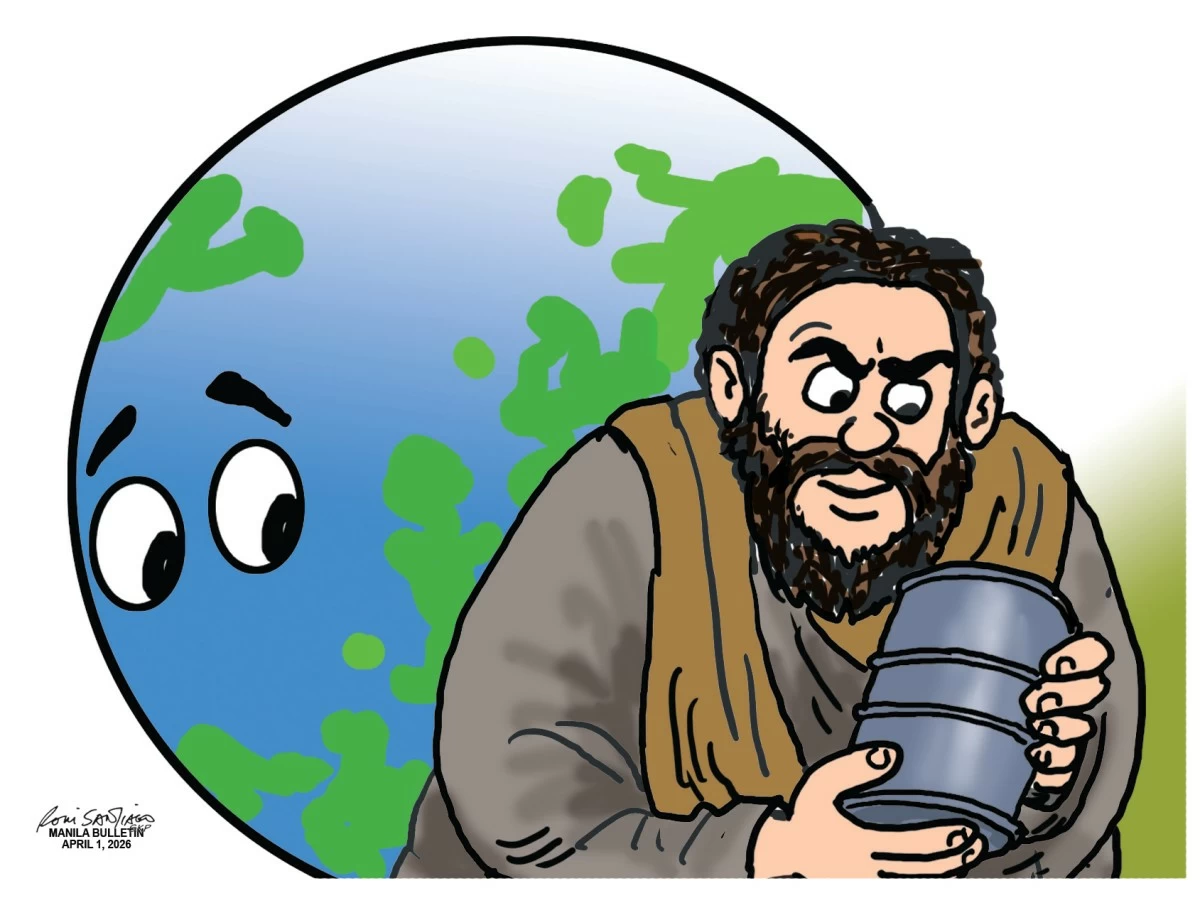
The message of Judas’ betrayal resonates powerfully in today’s global fuel crisis, which has exposed fractures not only in energy systems but also in leadership, accountability, and collective responsibility. Around the world—and in the Philippines—rising fuel prices have strained economies, disrupted livelihoods, and widened inequality. Yet beneath these economic realities lies a question everyone should ponder: have we, in our own ways, traded long-term sustainability for short-term gain?
Governments, for instance, face the burden of stewardship. Policy decisions made years or even decades ago—favoring dependency on imported fossil fuels over investment in renewable energy—now reveal their consequences. While external factors such as geopolitical tensions play a role, internal complacency and shortsighted planning cannot be ignored. Holy Wednesday challenges leaders to examine whether expediency has quietly replaced foresight, and whether public trust has been compromised in the process.
The private sector is not exempt. Energy corporations and large industries have long benefited from systems that prioritize profit margins over environmental and social costs. In times of crisis, some companies pass on burdens to consumers without equally sharing in the sacrifices. The parallel to Judas’ transaction may not be exact, but the underlying principle remains. When gain is prioritized without regard for impact, betrayal—of trust, of responsibility—occurs.
For ordinary citizens, the connection may seem less direct, but it is no less significant. Daily choices—how we consume energy, how we respond to inconvenience, how we hold institutions accountable—collectively shape the direction where society is headed. It is easy to feel powerless in the face of global crises, yet Holy Wednesday reminds us that even individual decisions carry moral impact. Judas acted alone, but his choice altered history.
What, then, should be done?
Governments must move decisively toward sustainable energy policies, investing in renewables, improving public transportation, and ensuring transparency in fuel pricing. Crisis response should not be limited to short-term subsidies but must include structural reforms that reduce vulnerability to future shocks.
The private sector must embrace genuine corporate responsibility, not as a public relations exercise but as a core business principle. This includes investing in cleaner technologies, adopting fair pricing practices, and aligning profitability with societal well-being.
Citizens, too, have a role to play. Conservation, mindful consumption, and active civic engagement are expressions of accountability. Supporting policies and leaders that prioritize sustainability, and being willing to adapt personal habits, are forms of participation in the common good.
Holy Wednesday ultimately calls for introspection. It prompts us to dig deeper into who Judas was, and how his story echoes in our own decisions today. In a world grappling with crises both moral and material, the challenge is clear. We should choose integrity over convenience, responsibility over indifference, and foresight over fleeting gain.
In doing so, we resist the quiet betrayals that shape this world.
ADVERTISEMENT
.most-popular .layout-ratio{ padding-bottom: 79.13%; } @media (min-width: 768px) and (max-width: 1024px) { .widget-title { font-size: 15px !important; } }

{{ articles_filter_1561_widget.title }}

.most-popular .layout-ratio{ padding-bottom: 79.13%; } @media (min-width: 768px) and (max-width: 1024px) { .widget-title { font-size: 15px !important; } }

{{ articles_filter_1562_widget.title }}

.most-popular .layout-ratio{ padding-bottom: 79.13%; } @media (min-width: 768px) and (max-width: 1024px) { .widget-title { font-size: 15px !important; } }

{{ articles_filter_1563_widget.title }}

{{ articles_filter_1564_widget.title }}

.mb-article-details { position: relative; } .mb-article-details .article-body-preview, .mb-article-details .article-body-summary{ font-size: 17px; line-height: 30px; font-family: "Libre Caslon Text", serif; color: #000; } .mb-article-details .article-body-preview iframe , .mb-article-details .article-body-summary iframe{ width: 100%; margin: auto; } .read-more-background { background: linear-gradient(180deg, color(display-p3 1.000 1.000 1.000 / 0) 13.75%, color(display-p3 1.000 1.000 1.000 / 0.8) 30.79%, color(display-p3 1.000 1.000 1.000) 72.5%); position: absolute; height: 200px; width: 100%; bottom: 0; display: flex; justify-content: center; align-items: center; padding: 0; } .read-more-background a{ color: #000; } .read-more-btn { padding: 17px 45px; font-family: Inter; font-weight: 700; font-size: 18px; line-height: 16px; text-align: center; vertical-align: middle; border: 1px solid black; background-color: white; } .hidden { display: none; }
function initializeAllSwipers() { // Get all hidden inputs with cms_article_id document.querySelectorAll('[id^="cms_article_id_"]').forEach(function (input) { const cmsArticleId = input.value; const articleSelector = '#article-' + cmsArticleId + ' .body_images'; const swiperElement = document.querySelector(articleSelector); if (swiperElement && !swiperElement.classList.contains('swiper-initialized')) { new Swiper(articleSelector, { loop: true, pagination: false, navigation: { nextEl: '#article-' + cmsArticleId + ' .swiper-button-next', prevEl: '#article-' + cmsArticleId + ' .swiper-button-prev', }, }); } }); } setTimeout(initializeAllSwipers, 3000); const intersectionObserver = new IntersectionObserver( (entries) => { entries.forEach((entry) => { if (entry.isIntersecting) { const newUrl = entry.target.getAttribute("data-url"); if (newUrl) { history.pushState(null, null, newUrl); let article = entry.target; // Extract metadata const author = article.querySelector('.author-section').textContent.replace('By', '').trim(); const section = article.querySelector('.section-info ').textContent.replace(' ', ' '); const title = article.querySelector('.article-title h1').textContent; // Parse URL for Chartbeat path format const parsedUrl = new URL(newUrl, window.location.origin); const cleanUrl = parsedUrl.host + parsedUrl.pathname; // Update Chartbeat configuration if (typeof window._sf_async_config !== 'undefined') { window._sf_async_config.path = cleanUrl; window._sf_async_config.sections = section; window._sf_async_config.authors = author; } // Track virtual page view with Chartbeat if (typeof pSUPERFLY !== 'undefined' && typeof pSUPERFLY.virtualPage === 'function') { try { pSUPERFLY.virtualPage({ path: cleanUrl, title: title, sections: section, authors: author }); } catch (error) { console.error('ping error', error); } } // Optional: Update document title if (title && title !== document.title) { document.title = title; } } } }); }, { threshold: 0.1 } ); function showArticleBody(button) { const article = button.closest("article"); const summary = article.querySelector(".article-body-summary"); const body = article.querySelector(".article-body-preview"); const readMoreSection = article.querySelector(".read-more-background"); // Hide summary and read-more section summary.style.display = "none"; readMoreSection.style.display = "none"; // Show the full article body body.classList.remove("hidden"); } document.addEventListener("DOMContentLoaded", () => { let loadCount = 0; // Track how many times articles are loaded const offset = [1, 2, 3, 4, 5, 6, 7, 8, 9, 10]; // Offset values const currentUrl = window.location.pathname.substring(1); let isLoading = false; // Prevent multiple calls if (!currentUrl) { console.log("Current URL is invalid."); return; } const sentinel = document.getElementById("load-more-sentinel"); if (!sentinel) { console.log("Sentinel element not found."); return; } function isSentinelVisible() { const rect = sentinel.getBoundingClientRect(); return ( rect.top < window.innerHeight && rect.bottom >= 0 ); } function onScroll() { if (isLoading) return; if (isSentinelVisible()) { if (loadCount >= offset.length) { console.log("Maximum load attempts reached."); window.removeEventListener("scroll", onScroll); return; } isLoading = true; const currentOffset = offset[loadCount]; window.loadMoreItems().then(() => { let article = document.querySelector('#widget_1690 > div:nth-last-of-type(2) article'); intersectionObserver.observe(article) loadCount++; }).catch(error => { console.error("Error loading more items:", error); }).finally(() => { isLoading = false; }); } } window.addEventListener("scroll", onScroll); });

Sign up by email to receive news.