






 Philippines
National
Senate initial report: PH gov't should intensify high-level G2G negotiations to secure country's oil supply
Philippines
National
Senate initial report: PH gov't should intensify high-level G2G negotiations to secure country's oil supply
Senate initial report: PH gov't should intensify high-level G2G negotiations to secure country's oil supply


At A Glance
- The Philippines should engage in a high-level government-to-government negotiations to facilitate procurement efforts of private oil companies in order to ensure the country has enough supply of petroleum, diesel and crude oil, according to the chairman of the Proactive Response and Oversight for Timely and Effective Crisis Strategy (PROTECT) ad hoc committee.
The Philippines should engage in a high-level government-to-government negotiations to facilitate procurement efforts of private oil companies in order to ensure the country has enough supply of petroleum, diesel and crude oil.
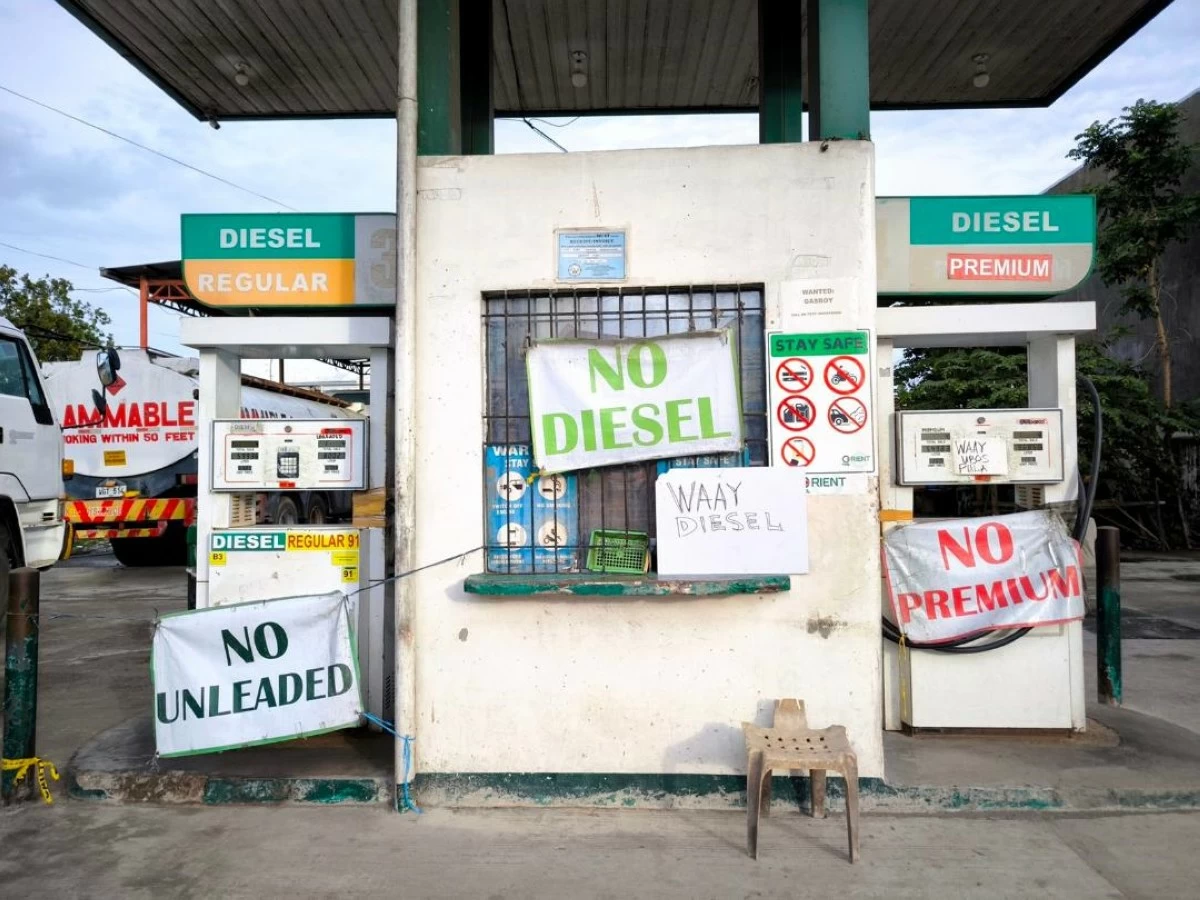
This was part of the recommendation drafted by Sen. Sherwin Gatchalian, chairman of the Proactive Response and Oversight for Timely and Effective Crisis Strategy (PROTECT) ad hoc committee, in releasing the chairman’s preliminary report after holding two Senate hearings on the impact of the Middle East crisis on the country’s energy and economy.
Gatchalian noted that the Department of Energy (DOE) identified at least 25 alternate source countries for crude oil, and 26 alternate source countrires for refined petroleum products—all outside of the Middle East.
However, after the two hearings held, both the number of countries engaged by the Philippine government and the status of negotiations remain unclear.
“As earlier discussed, it appears that only one successful negotiation, with Japan, has been concluded as of March 26, 2026,” Gatchalian said in the report which his office released on Wednesday, April 1, 2026.
During the first hearing, the DOE stressed that the responsibility of stockpiling petroleum products has been transferred to the private sector under the deregulated oil industry regime.
But the chairman noted that the international state of energy crisis poses political risks beyond the control of private oil industry players, such as the shutdown of the Strait of Hormuz and the implementation of export bans by source countries.
“Only the highest levels of our government are capable of engaging their counterparts in other countries to open additional avenues of procurement for Philippine oil companies under these circumstances,” Gatchalian said.
“In line with the foregoing, it is imperative for the Philippine government to engage in high-level G2G negotiations with as many alternate source countries as possible to facilitate the procurement and importation of petroleum products by industry players,” he stressed.
As part of a short-term strategy, the senator said the government should support oil industry players in navigating “the complexity of rapidly changing energy policy regimes” being implemented by other countries.”
“If necessary, the government should flex its diplomatic might and play a more active role in securing the country’s oil supply during this time of crisis,” he stressed.
“One specific priority of the government should be to negotiate with Iran on the safe passage of Philippine-bound oil vessels through the Strait of Hormuz. Another priority should be to assist oil industry players in unlocking new source markets, such as those in the Americas and Africa,” he said.
The senator said both the Philippine National Oil Company (PNOC) and the DOE should engage “in a more aggressive G2G negotiations to further augment the country’s supply of petroleum products.”
“In addition, it is recommended that the PNOC play a larger role in the procurement of emergency fuel supplies,” he said.
On Tuesday, March 31, Palace Press Officer Claire Castro said President Ferdinand “Bongbong” Marcos has ordered Foreign Affairs Secretary Theresa Lazaro to negotiate with Iranian ambassador to Manila Yousef Esmaeil Zadeh to ensure the safe passage of Philippine-bound oil tankers through the Strait of Hormuz.
According to Castro, the Department of Foreign Affairs (DFA) chief has committed to talk with the envoy at the soonest possible time.