






Manila Bulletin
 Business
The Economy
Rising costs amid Middle East war slow Philippine manufacturing growth in March
Business
The Economy
Rising costs amid Middle East war slow Philippine manufacturing growth in March
Business
The Economy
Rising costs amid Middle East war slow Philippine manufacturing growth in March
Rising costs amid Middle East war slow Philippine manufacturing growth in March
Published Apr 1, 2026 08:57 am


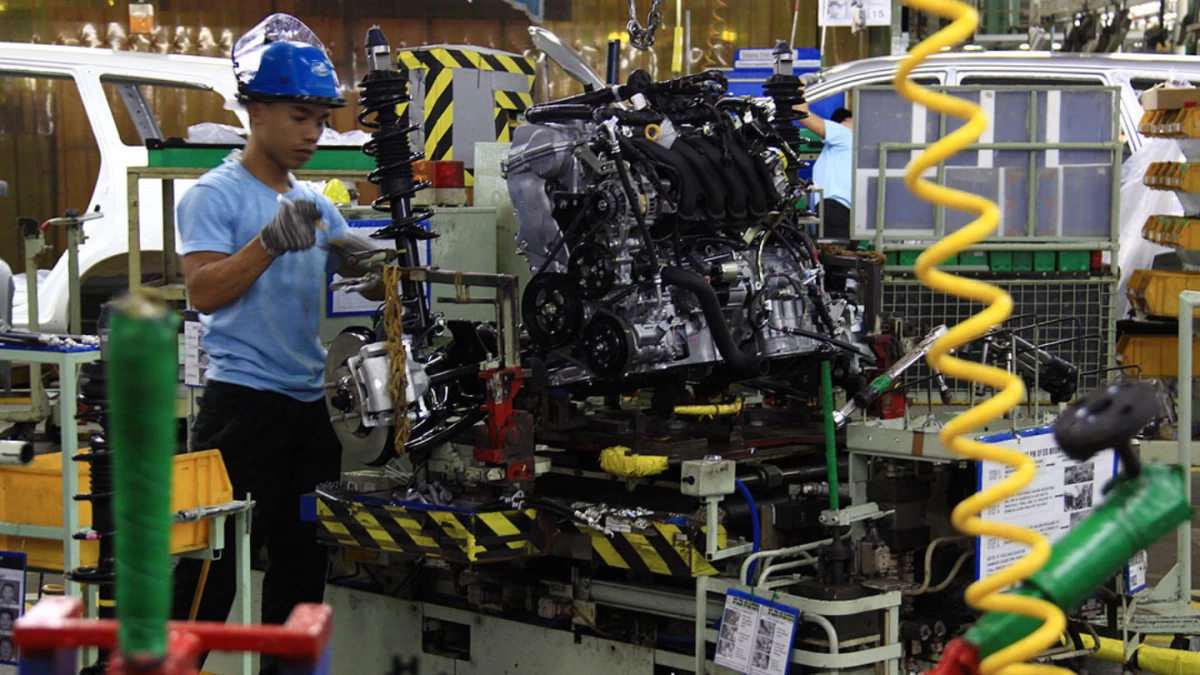
Philippine manufacturing growth slowed in March as input prices spiked amid rising energy costs tied to the war in the Middle East.
In a report on Wednesday, April 1, S&P Global said the Philippines’ purchasing managers’ index (PMI) eased to 51.3 last month from 54.6 in February, signaling a “notable slowdown” despite a fourth straight month of expansion.
S&P Global said the latest reading marked a three-month low and reflected a more muted performance at the end of the first quarter, as growth momentum weakened alongside softer gains in output and new orders.
The report noted that output and new orders continued to expand, but at a slower pace, while new export orders declined for the first time since December, as firms cited weaker foreign demand due to the conflict.
Input prices surged during the month due to higher energy costs and material shortages, resulting in historically strong inflationary pressures and higher operating expenses and factory gate charges for manufacturers, S&P Global said.
Also, purchasing activity stalled in March, ending a three-month expansion, while firms drew down inventories as delays in the delivery of inputs persisted.
The report also showed that employment rose for a third straight month, albeit at a marginal pace, while backlogs of work increased modestly due to delays in input deliveries.
“The war in Middle East weighed on the performance of the Philippines’ manufacturing sector, March PMI data showed,” S&P Global Market Intelligence economist Maryam Baluch said.
“With vast majority of the country’s oil supply coming from the Gulf countries now under threat, the President [Ferdinand R. Marcos Jr.] has declared a national energy emergency,” she noted.
“Filipino manufacturers are exposed to shocks in oil and fuel prices rippling through global markets, as signaled via notable hikes in costs and charges, and softer demand conditions. Meanwhile, purchasing activity stalled and output growth and job creation slowed,” she added.
“The duration and intensity of the war will directly impact the sector’s trajectory in the coming months, as inflationary pressures constrain sales and pricing power,” Baluch warned.
Across the region, manufacturing activity also lost momentum, with the Association of Southeast Asian Nations (ASEAN) PMI easing to 51.8 in March from February’s record 53.8, marking a six-month low as output and new orders growth softened and inflationary pressures surged.