






Manila Bulletin
 Philippines
National
No 'ayuda' for middle class? Gatchalian says suspension of excise tax, VAT may benefit all household
Philippines
National
No 'ayuda' for middle class? Gatchalian says suspension of excise tax, VAT may benefit all household
Philippines
National
No 'ayuda' for middle class? Gatchalian says suspension of excise tax, VAT may benefit all household
No 'ayuda' for middle class? Gatchalian says suspension of excise tax, VAT may benefit all household
Published Apr 1, 2026 02:36 pm


At A Glance
- Sen. Sherwin Gatchalian said he believes the suspension of the excise tax, as well as the possibility of suspending the value added tax (VAT) will benefit all households, including the middle class.
While there is no specific provision calling for immediate economic relief for the middle class families is stated in the report, Sen. Sherwin Gatchalian said the suspension of the excise tax, as well as the possibility of suspending the value added tax (VAT) may benefit all households.
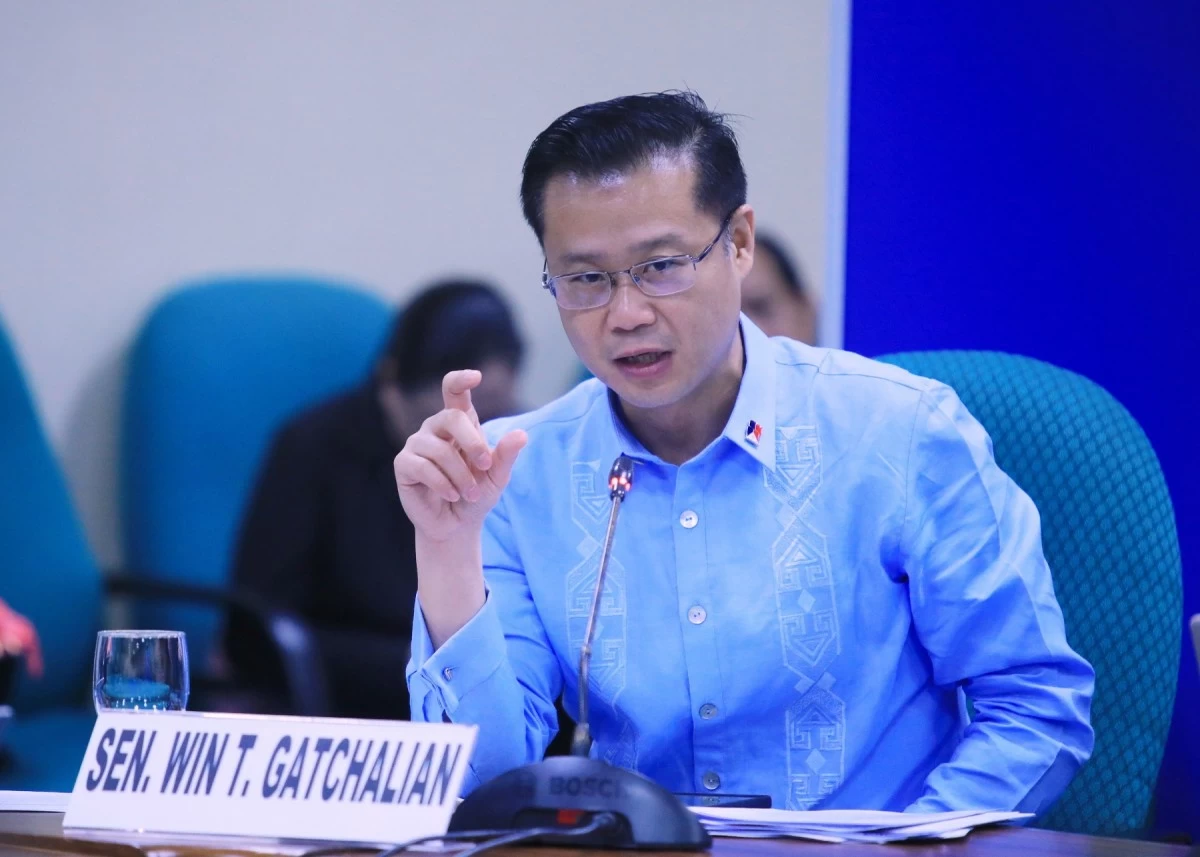
Gatchalian pointed this out when asked why no provision for the middle class was included in the Proactive Response and Oversight for Timely and Effective Crisis Strategy (PROTECT) ad hoc committee chairman’s preliminary report on the ongoing Middle East conflict and its impact on the country’s economy and overseas Filipino workers (OFWs).
“If we suspend the excise tax, as well as the possibility of suspending the VAT, that will reach everyone,” Gatchalian said in an online press briefing on Wednesday, April 1.
Gatchalian said providing for financial subsidy for the middle class should be studied by state economic managers, considering there is no clear definition for the middle income bracket.
“That’s why we have to study it carefully. VAT is very complex… it’s complicated. But the most straightforward would be the excise tax (suspension) because it will basically hit the middle class, all the way to the upper segments of our income bracket,” he pointed out.
“It can be studied, precisely because the definition of middle class is broad. There’s a middle, middle high, middle low (class). So they can study who are susceptible to inflation shock,” he said.
Nevertheless, Gatchalian said the chairman’s preliminary report has recommendation for minimum wage earners.
“Typically our social amelioration are (for those at) poverty level and below. So we also recommended (subsidies for the) minimum wage earners, because they are near poor and they are susceptible to inflation shock,” he said.
Fuel rationing, staggered power rates
As part of immediate interventions, Gatchalian’s report also recommended the imposition of a price cap on petroleum products and rationing of fuel as a response to the energy crisis.

Motorcycle riders refuel in a gas station along Commonwealth Avenue in Quezon City on March 20, 2026. The Department of Energy said the Philippines has placed an order for 250,000 to 300,000 barrels of diesel from a Southeast Asian supplier, with delivery scheduled for next week, as the government moves to assist private oil companies in securing future fuel supplies. (Santi San Juan)
While fuel rationing may be unpopular at this point, the senator said such a move is better in order for all sectors to “survive and pull through.”
“I know it's unpopular, I know it might cause panic, but if we get to the point where we don't have any oil coming in, our problems will be worse. So, we need to extend our inventory. And let's start with non-essential activities. So, that's the way I see it to extend,” he said.
“But the fact is that our inventory is actually just 51 plus an additional 10 days, 60 days and nothing more. And if it (conflict) goes on longer, then we will have a problem. So here in our recommendations, it is written here what we can do and should study as early as now,” he stressed.
Moreover, the preliminary report also recommended mandating the Energy Regulatory Commission (ERC) to implement a staggered power rate increases to shield consumers from shock over higher electricity bills.
The report noted that power supply for 1.4 million households in off-grid areas may run out by September 2026.
To ensure continuous power supply, the report recommended the approval of a supplemental budget for the National Power Corporation (NPC), for the procurement of fuel past the predicted September fuel run-out date.
“Otherwise, approximately seven (7) million Filipinos in missionary areas across 35 provinces may be left without electricity,” Gatchalian noted in the report.
Also, the report recommended that the ERC coordinate with the Bureau of Internal Revenue (BIR) to clarify the tax treatment on system loss charges for distribution utilities (DUs), since the agency said it is studying the possibility of no longer imposing VAT on this specific item.
“This could potentially provide savings on the monthly electricity bill of consumers without requiring the passage of additional tax legislation,” he said.