






Manila Bulletin
 Philippines
National
Mark your calendars: Comets, meteor showers may be visible this April
Philippines
National
Mark your calendars: Comets, meteor showers may be visible this April
Philippines
National
Mark your calendars: Comets, meteor showers may be visible this April
Mark your calendars: Comets, meteor showers may be visible this April
Published Apr 1, 2026 09:46 am
|
Updated Apr 1, 2026 01:46 pm


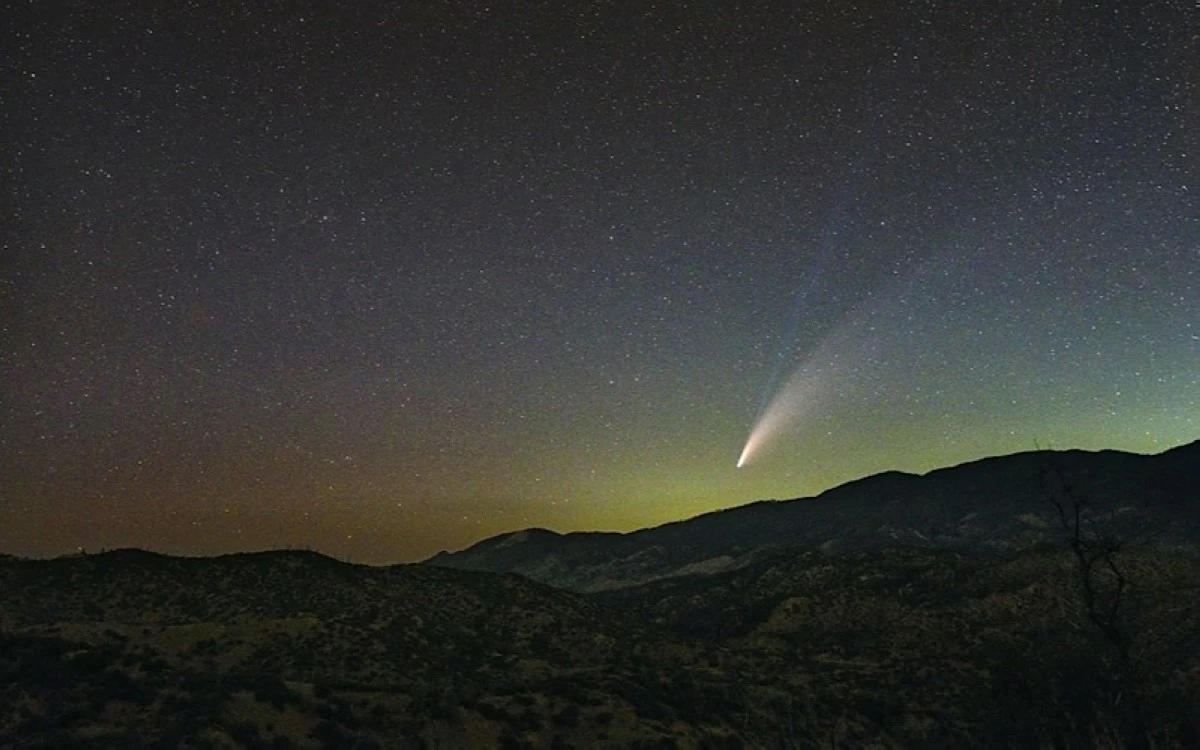
PIXABAY PHOTO
Two comets and two meteor showers may light up Philippine skies this April, although visibility will depend on weather and viewing conditions, the Philippine Atmospheric, Geophysical and Astronomical Services Administration (PAGASA) said in its latest astronomical diary.
PAGASA said comet C/2026 A1 (MAPS) will make its closest approach to the Sun on April 4 and to Earth on April 6, but may only become visible days later, from April 9 to 15.
During this period, it is expected to appear first in the constellation Cetus before drifting toward Taurus.
Another comet, C/2025 R3 (PANSTARRS), may be spotted in the early morning sky, particularly on April 19 when it reaches perihelion.
It is expected to rise at 4:09 a.m. and briefly climb about 14 degrees above the eastern horizon before fading with the break of dawn.
The comet may be visible from April 5 to 21, starting out in Pegasus and gradually shifting toward Pisces.
It will likely no longer be observable by the time it reaches its closest point to Earth on April 26.
Meanwhile, the Lyrid meteor shower may be observed from April 16 to 25, with peak activity on April 22.
PAGASA said the best viewing window is in the hours before dawn, when its radiant in the constellation Hercules is highest in the sky.
Under clear and dark conditions, observers may see up to 18 meteors per hour at peak.
The Moon, which will be near its First Quarter phase in Gemini at that time, is not expected to significantly affect visibility.
Another meteor display, the π-Puppids, may also be seen from April 15 to 28, peaking on April 23.
Unlike the Lyrids, this shower is best viewed shortly after sunset and may remain visible until around 10:09 p.m., when its radiant in Puppis sets below the horizon.
Although peak activity is forecast at around 5 p.m., PAGASA said the best chance of seeing meteors is after dusk, when the radiant is still relatively high.
However, the Moon, then near its first quarter phase in Cancer, may interfere with viewing early in the evening.
PAGASA advised the public to seek dark areas away from city lights and to watch under clear skies for better chances of spotting these celestial events.
It added that meteor showers can be seen without telescopes or binoculars.