ADVERTISEMENT

Magis X prints a new path for homebuilding, layer by layer

The construction firm applies robotics to address delays, labor gaps, and inconsistencies in homebuilding

Published Apr 1, 2026 06:02 pm
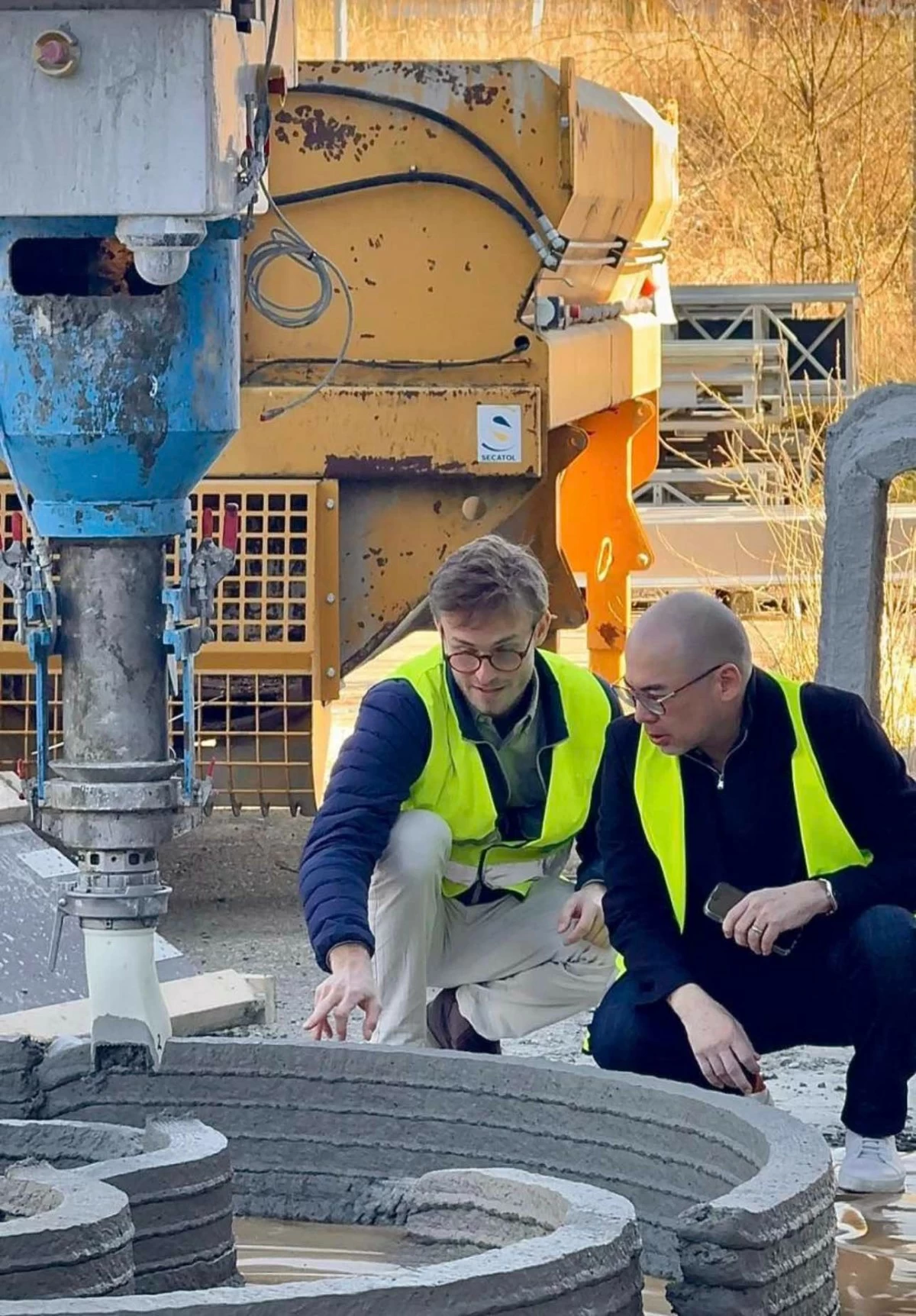
The construction firm uses a robotic system that follows digital models to layer concrete and build walls with precise dimensions. (Photo courtesy of Buensalido PR)
With limited tech adoption and a shortage of skilled labor, the construction industry often faces tight deadlines that lead to avoidable errors, delays, and added costs for homeowners. In response, Magis X, founded by Paolo Periquet and Gino Cariño, is introducing robotic construction systems in the Philippines to improve efficiency and streamline how homes are built and delivered.
“We realized the real problem wasn’t effort—it was the system: the delays, miscommunication, duplication, and rework. Magis X is a response to that,” Periquet says.
The firm spent several years studying how robotic construction systems can complement local building practices. It partnered with COBOD, a Danish firm behind widely used 3D concrete printing systems, with support from PERI, Holcim, and General Electric. These systems improve consistency in structural work, make timelines more predictable, enhance build quality, support site safety, reduce material waste, and give homeowners clearer visibility into the construction process.
Cariño says the goal is to support, not replace, traditional building methods. “The goal is not to replace craftsmanship, but to augment it—to make the process more precise and consistent. By integrating robotics and industrial-grade systems, we can expand design possibilities, improve reliability, and elevate performance—while keeping craftsmanship and engineering judgment at the center.”
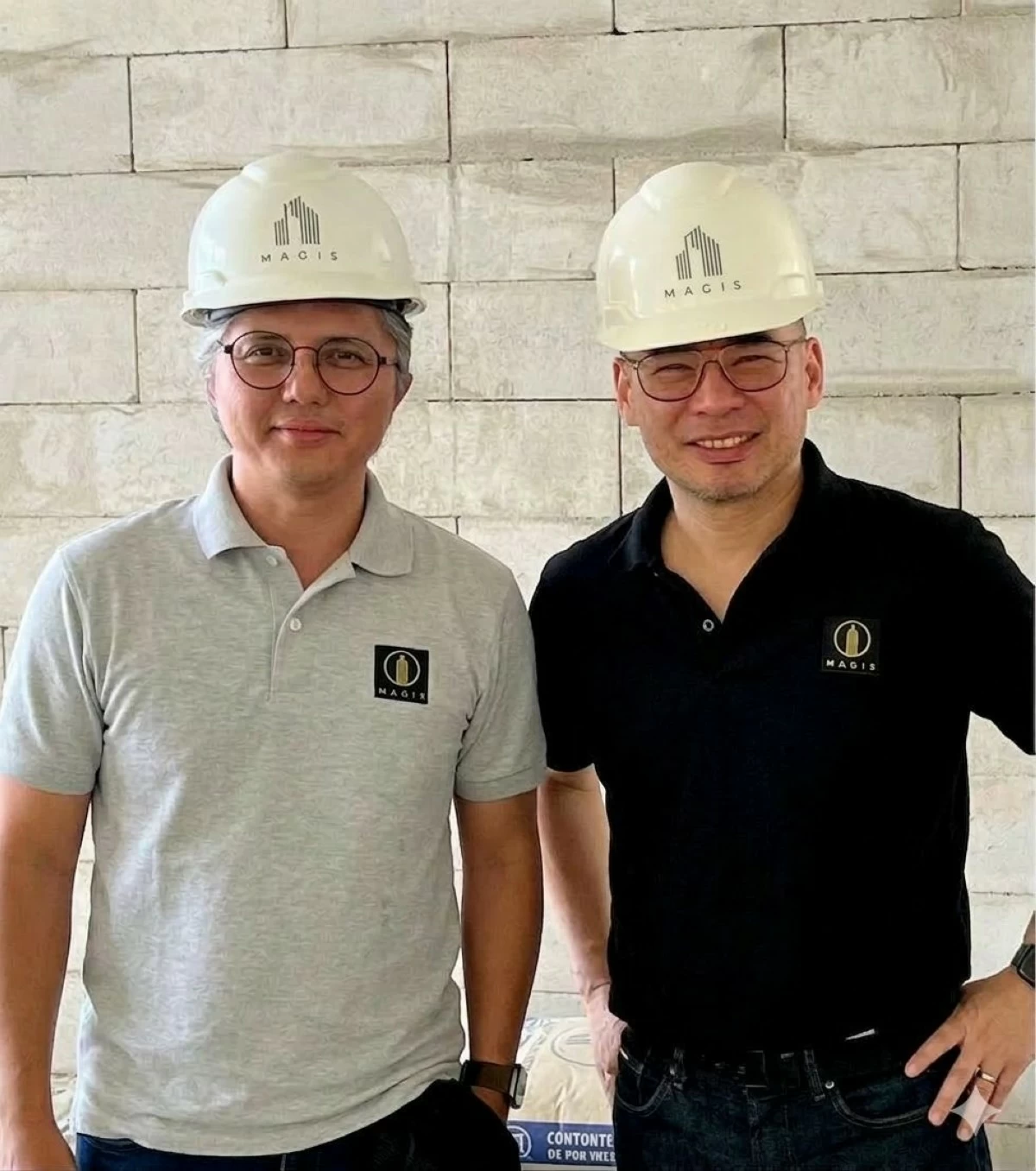
Magis X founders Gino Cariño and Paolo Periquet (Photo courtesy of Buensalido PR)
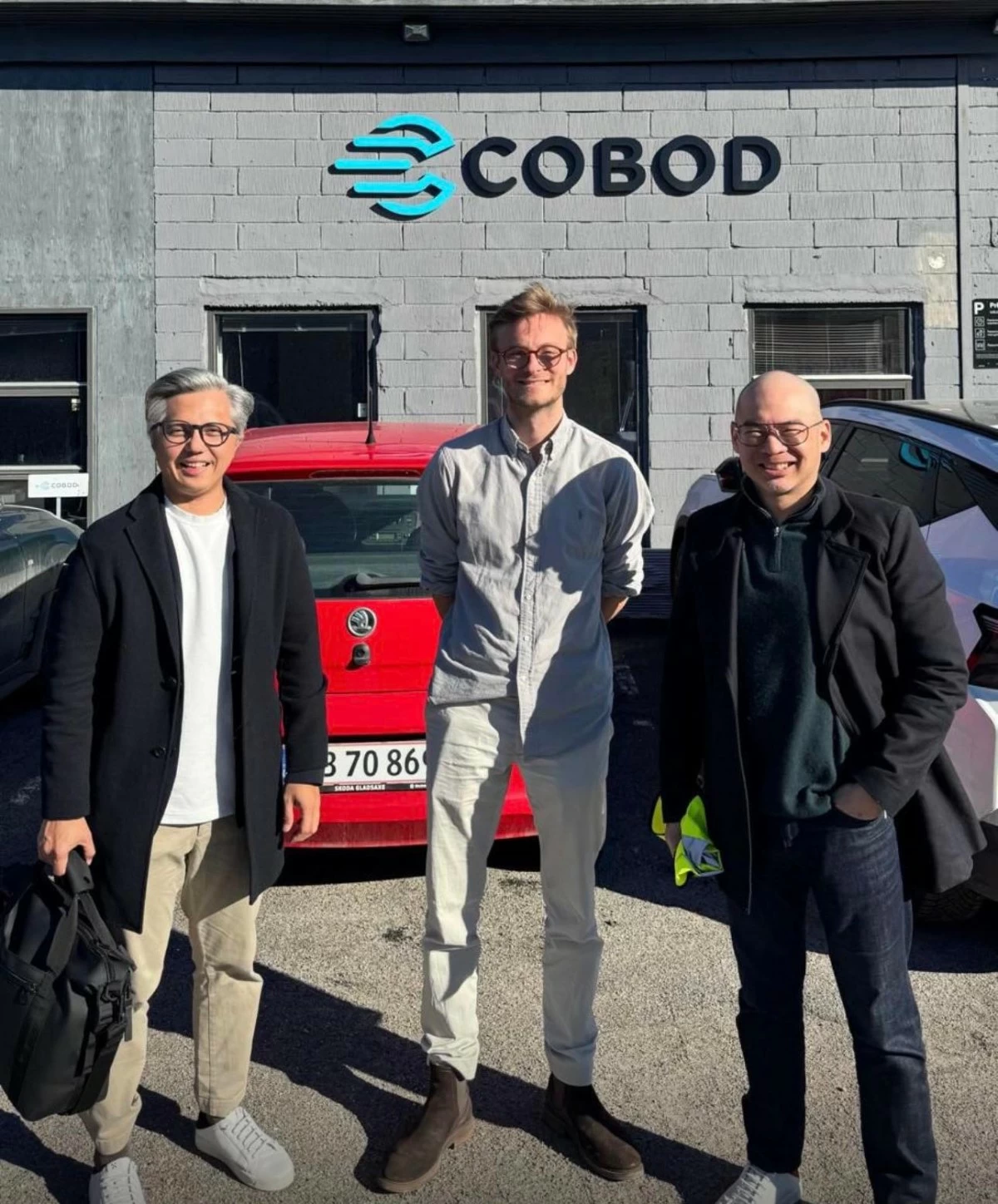
Magis X founders Gino Cariño (left) and Paolo Periquet (right) with Danish firm COBOD co-founder Simon Klint Bergh (center) at their Copenhagen headquarters (Photo courtesy of Buensalido PR)
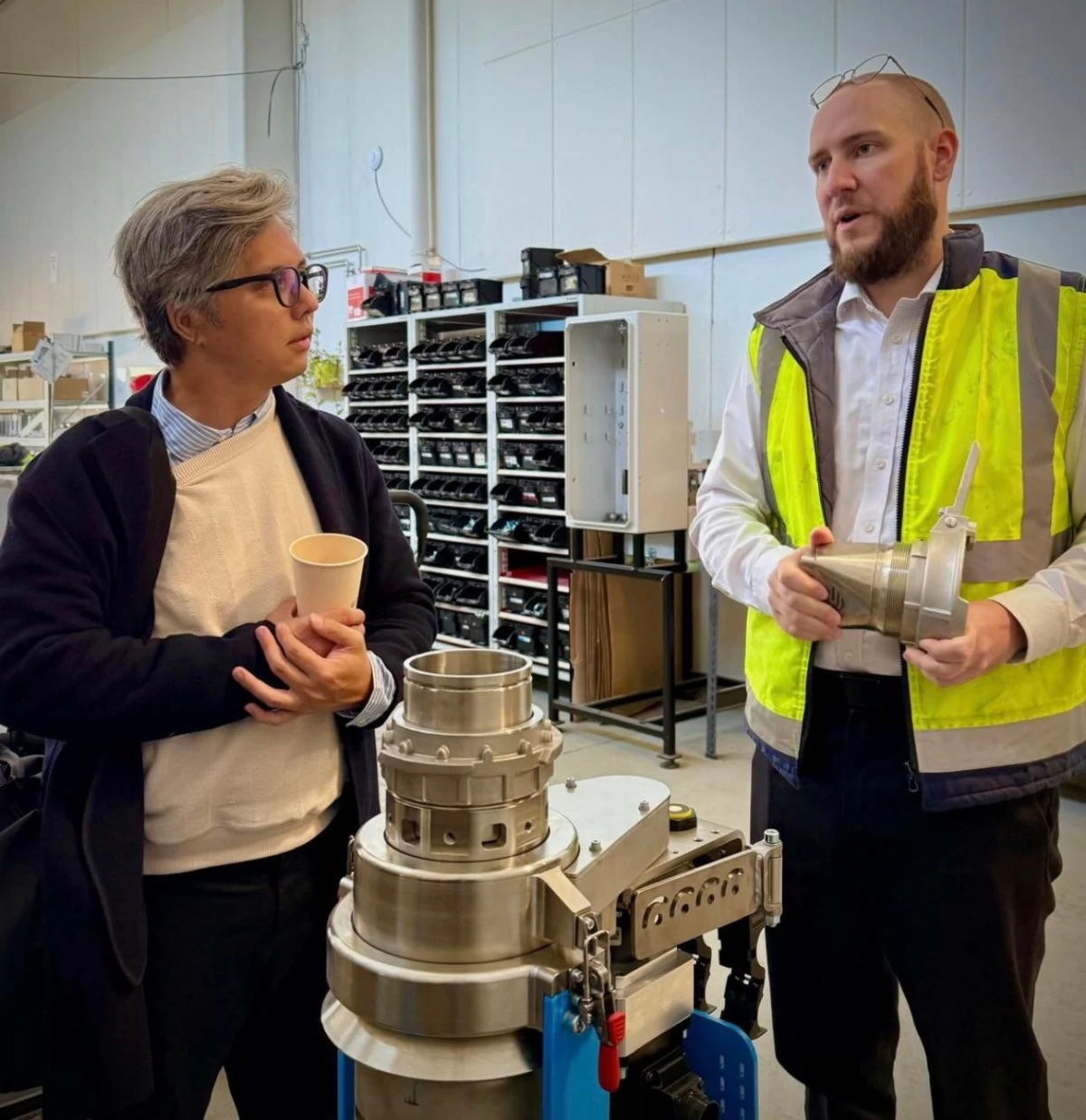
(Photo courtesy of Buensalido PR)
This process uses robotic concrete extrusion to build structural walls, with machines following digital models for precise, layer-by-layer construction. Engineers then complete reinforcement, utilities, and finishes using conventional methods. While still new in the Philippines, the technology is already used globally across residential and commercial projects, including large-scale developments like the 300-home communities completed in Texas by ICON and Lennar using 3D concrete printing.
After building his own home 15 years ago, Periquet began looking for a better way to build, which led to the founding of Magis, a residential construction firm focused on improving project delivery. The company has completed 64 homes, including projects designed by Ed Calma, Dominic Galicia, Anthony Nazareno, Tina Periquet, and Jorge Yulo, and is known for handling complex residential designs. Through Magis X, the team applies robotic construction to improve accuracy and reduce the limitations of traditional methods.
This initiative is set to begin its first residential project using robotic construction later this year, expected to be the Philippines’ first robot-assisted home. The team aims to show how these systems can work within standard construction practices. “It is not a new kind of house. Just a new level of control. The same building code applies, and requirements for structural design, reinforcement, engineering approvals, and permits remain the same,” shared Cariño.
For Paolo Periquet, the goal is to address the same issues that continue to affect the industry—delays, errors, and uncertainty. “We didn’t set out to compete in construction—we set out to redesign how it works,” he says. “Magis X is still Magis. It’s about giving architects their ideas back, giving homeowners certainty, and taking a real step toward ending ‘Construction Hell.’”

Related Tags

Magis X Paolo Periquet Gino Cariño COBOD
ADVERTISEMENT
.most-popular .layout-ratio{ padding-bottom: 79.13%; } @media (min-width: 768px) and (max-width: 1024px) { .widget-title { font-size: 15px !important; } }

{{ articles_filter_1561_widget.title }}

.most-popular .layout-ratio{ padding-bottom: 79.13%; } @media (min-width: 768px) and (max-width: 1024px) { .widget-title { font-size: 15px !important; } }

{{ articles_filter_1562_widget.title }}

.most-popular .layout-ratio{ padding-bottom: 79.13%; } @media (min-width: 768px) and (max-width: 1024px) { .widget-title { font-size: 15px !important; } }

{{ articles_filter_1563_widget.title }}

{{ articles_filter_1564_widget.title }}

.mb-article-details { position: relative; } .mb-article-details .article-body-preview, .mb-article-details .article-body-summary{ font-size: 17px; line-height: 30px; font-family: "Libre Caslon Text", serif; color: #000; } .mb-article-details .article-body-preview iframe , .mb-article-details .article-body-summary iframe{ width: 100%; margin: auto; } .read-more-background { background: linear-gradient(180deg, color(display-p3 1.000 1.000 1.000 / 0) 13.75%, color(display-p3 1.000 1.000 1.000 / 0.8) 30.79%, color(display-p3 1.000 1.000 1.000) 72.5%); position: absolute; height: 200px; width: 100%; bottom: 0; display: flex; justify-content: center; align-items: center; padding: 0; } .read-more-background a{ color: #000; } .read-more-btn { padding: 17px 45px; font-family: Inter; font-weight: 700; font-size: 18px; line-height: 16px; text-align: center; vertical-align: middle; border: 1px solid black; background-color: white; } .hidden { display: none; }
function initializeAllSwipers() { // Get all hidden inputs with cms_article_id document.querySelectorAll('[id^="cms_article_id_"]').forEach(function (input) { const cmsArticleId = input.value; const articleSelector = '#article-' + cmsArticleId + ' .body_images'; const swiperElement = document.querySelector(articleSelector); if (swiperElement && !swiperElement.classList.contains('swiper-initialized')) { new Swiper(articleSelector, { loop: true, pagination: false, navigation: { nextEl: '#article-' + cmsArticleId + ' .swiper-button-next', prevEl: '#article-' + cmsArticleId + ' .swiper-button-prev', }, }); } }); } setTimeout(initializeAllSwipers, 3000); const intersectionObserver = new IntersectionObserver( (entries) => { entries.forEach((entry) => { if (entry.isIntersecting) { const newUrl = entry.target.getAttribute("data-url"); if (newUrl) { history.pushState(null, null, newUrl); let article = entry.target; // Extract metadata const author = article.querySelector('.author-section').textContent.replace('By', '').trim(); const section = article.querySelector('.section-info ').textContent.replace(' ', ' '); const title = article.querySelector('.article-title h1').textContent; // Parse URL for Chartbeat path format const parsedUrl = new URL(newUrl, window.location.origin); const cleanUrl = parsedUrl.host + parsedUrl.pathname; // Update Chartbeat configuration if (typeof window._sf_async_config !== 'undefined') { window._sf_async_config.path = cleanUrl; window._sf_async_config.sections = section; window._sf_async_config.authors = author; } // Track virtual page view with Chartbeat if (typeof pSUPERFLY !== 'undefined' && typeof pSUPERFLY.virtualPage === 'function') { try { pSUPERFLY.virtualPage({ path: cleanUrl, title: title, sections: section, authors: author }); } catch (error) { console.error('ping error', error); } } // Optional: Update document title if (title && title !== document.title) { document.title = title; } } } }); }, { threshold: 0.1 } ); function showArticleBody(button) { const article = button.closest("article"); const summary = article.querySelector(".article-body-summary"); const body = article.querySelector(".article-body-preview"); const readMoreSection = article.querySelector(".read-more-background"); // Hide summary and read-more section summary.style.display = "none"; readMoreSection.style.display = "none"; // Show the full article body body.classList.remove("hidden"); } document.addEventListener("DOMContentLoaded", () => { let loadCount = 0; // Track how many times articles are loaded const offset = [1, 2, 3, 4, 5, 6, 7, 8, 9, 10]; // Offset values const currentUrl = window.location.pathname.substring(1); let isLoading = false; // Prevent multiple calls if (!currentUrl) { console.log("Current URL is invalid."); return; } const sentinel = document.getElementById("load-more-sentinel"); if (!sentinel) { console.log("Sentinel element not found."); return; } function isSentinelVisible() { const rect = sentinel.getBoundingClientRect(); return ( rect.top < window.innerHeight && rect.bottom >= 0 ); } function onScroll() { if (isLoading) return; if (isSentinelVisible()) { if (loadCount >= offset.length) { console.log("Maximum load attempts reached."); window.removeEventListener("scroll", onScroll); return; } isLoading = true; const currentOffset = offset[loadCount]; window.loadMoreItems().then(() => { let article = document.querySelector('#widget_1690 > div:nth-last-of-type(2) article'); intersectionObserver.observe(article) loadCount++; }).catch(error => { console.error("Error loading more items:", error); }).finally(() => { isLoading = false; }); } } window.addEventListener("scroll", onScroll); });

Sign up by email to receive news.