






Manila Bulletin
 Business
Trade & Industry
Holy Week exodus: Filipino travel demand surges 50% despite rising costs
Business
Trade & Industry
Holy Week exodus: Filipino travel demand surges 50% despite rising costs
Business
Trade & Industry
Holy Week exodus: Filipino travel demand surges 50% despite rising costs
Holy Week exodus: Filipino travel demand surges 50% despite rising costs
Published Apr 1, 2026 12:22 am
|
Updated Apr 1, 2026 06:50 am


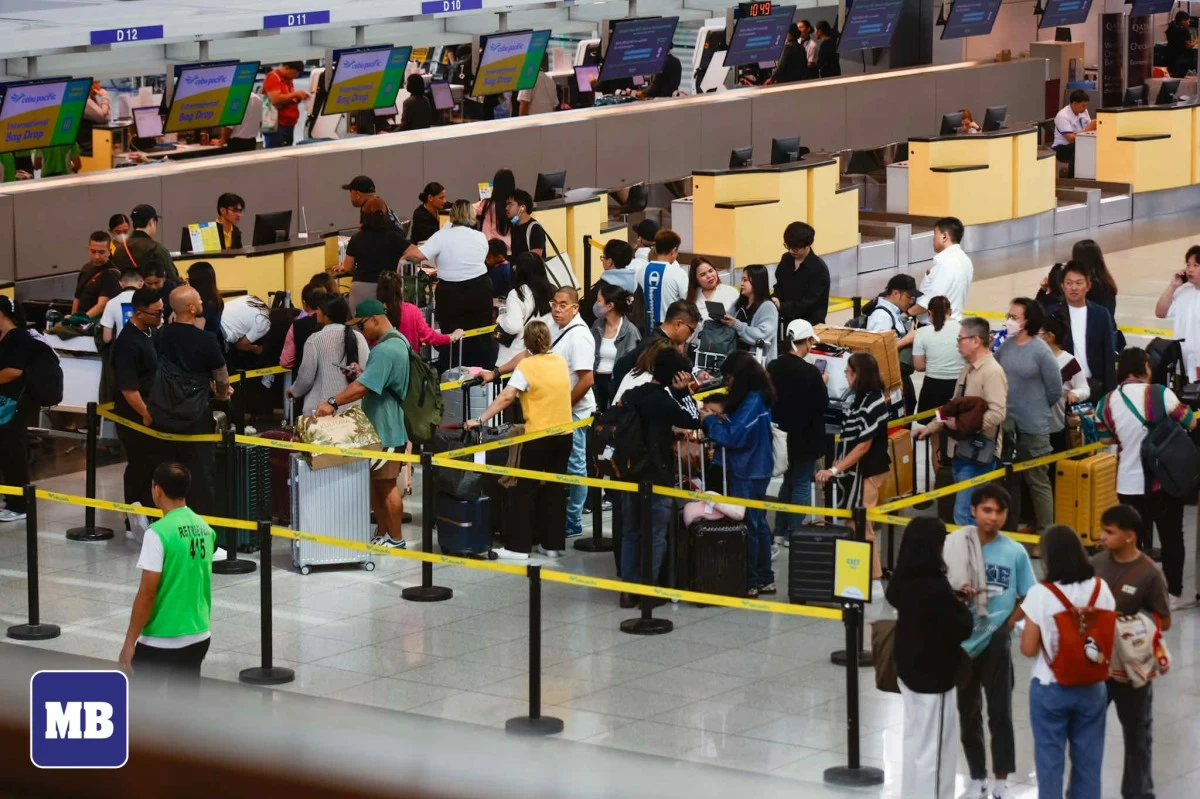
With 78 flights cancelled, local carriers are prioritizing airworthiness checks after receiving the urgent A320 software directive from EASA.
Demand for travel during the Holy Week period is on another level this year, as Filipinos are making more trips to local and international destinations at a time of price uncertainty.
Based on data from travel service provider Trip.com, travel demand among Filipinos has risen by 50 percent for this year’s Holy Week compared to the same period last year.
“Holy Week is rapidly emerging as one of the Philippines’ biggest travel moments, with Filipinos increasingly using the extended holiday to take longer leisure trips both domestically and abroad,” it said.
The company said there remains strong demand for international travel, especially to regional destinations where Filipinos can enjoy diverse cultural attractions and vibrant shopping scenes without lengthy travel time.
Hong Kong, which is a little more than two hours away from Manila, is the most popular foreign destination for Filipinos this Holy Week. It is followed by Tokyo, Singapore, Bangkok, and Taipei.
Domestic travel is also on the upswing, with bookings growing by 25 percent compared to last year, as Filipinos increasingly combine leisure trips with visits to their hometowns.
According to Trip.com, the most popular local destinations are Manila, Cebu, Palawan, Boracay, and Davao del Sur, in that order.
“Together, these trends position Holy Week as a major travel and economic moment for Filipino travellers–driving demand across airlines, hotels, and tourism experiences,” the company said.
Booking data aggregated by AirAsia MOVE, the online booking arm of Malaysia-based budget carrier AirAsia, showed that 82 percent of travelers this Holy Week are flying within the Philippines, while 18 percent are heading abroad.
AirAsia MOVE said that 56 percent of travelers coming from Manila are flying solo, while 18 percent are traveling as couples, 15 percent with children, and 11 percent as a group of friends.
Around 35 percent of these flights are morning departures, as travelers seek to maximize their time at their destination, while 17 percent opt for late-night flights to make the most of their limited leave days.
Further, 40 percent of these trips last only around three to four days, with 26 percent extending up to six days, taking advantage of the long holiday weekend.
This is slightly shorter than Trip.com’s report, which noted that the average trip length this Holy Week is approximately 9.57 days, shorter than last year’s 10.03 days.
Both Trip.com and AirAsia MOVE, however, agree that Filipino travelers are becoming more deliberate when planning their Holy Week trips.
Data from Trip.com showed that travelers are booking around 74 days before departure, while AirAsia MOVE said 22 percent of travelers are booking 30 to 61 days ahead.
“Last-minute booking remains minimal at 2 percent, indicating strong intent to plan ahead during this peak season,” said AirAsia MOVE.
By booking their trips early, Filipino travelers are shielded from increases in airfares, especially this April, as carriers move to cushion the impact of rising fuel prices on their operations amid the ongoing war in the Middle East.
Earlier, the Civil Aeronautics Board (CAB) authorized local airlines to impose a higher passenger fuel surcharge for the first half of April in response to rising jet fuel prices.
According to the International Air Transport Association (IATA), the average global price of jet fuel more than doubled to $195 per barrel as of March 27, from around $89 per barrel in February.