ADVERTISEMENT

High prices may spoil record Philippine wheat demand

Published Apr 1, 2026 02:12 pm
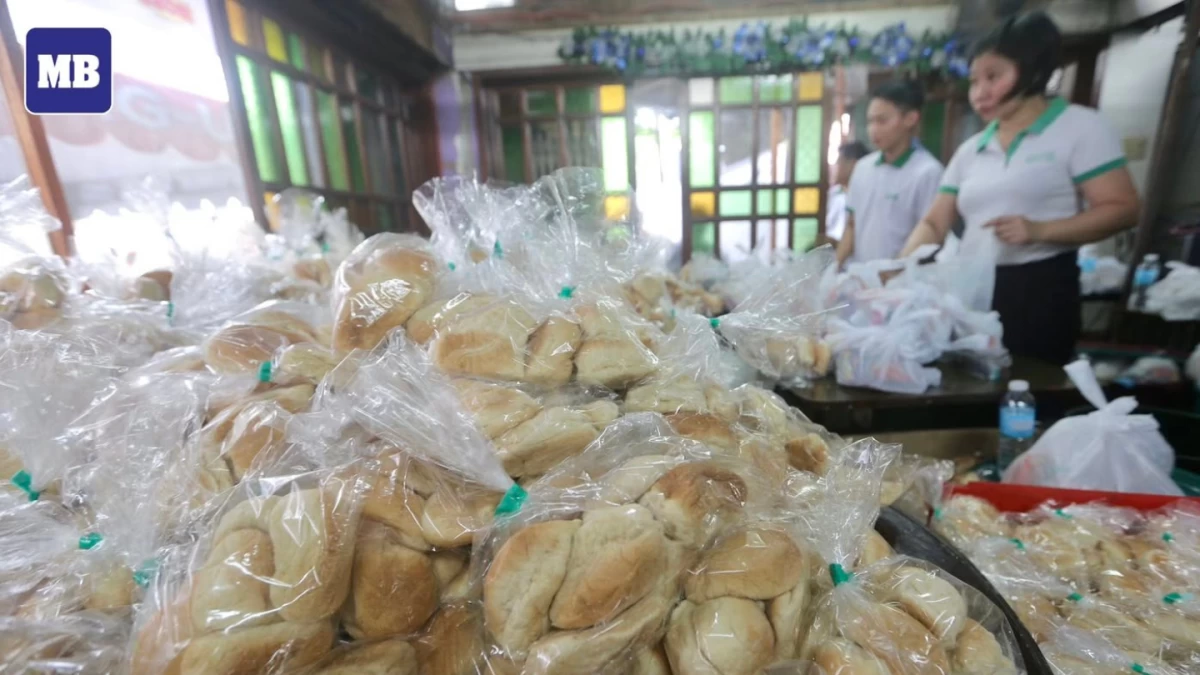
A recent USDA report projects Philippine wheat consumption to hit 6.9 million metric tons for MY 2025-2026, driven by a growing population and a shift toward noodles and pasta. However, officials warn that surging fuel costs and regional conflicts could push retail prices higher for these basic commodities after April 16. (Photo by Mark Balmores | MB)

The Philippines is projected to increase its consumption of wheat-based products in the current marketing year (MY) to nearly seven million metric tons (MT), although rising input costs may temper growth, according to the United States Department of Agriculture (USDA).

In a report, the USDA estimated that the country’s wheat consumption for MY 2025-2026 would expand by 6.2 percent to 6.9 million MT from 6.5 million MT in the previous year. The MY for wheat started in July last year and will end in June this year, according to the USDA.

“Population growth, rising incomes, and dietary diversification are projected to drive increased consumption of wheat-based products, especially bread, noodles, and pasta,” the USDA said. The agency added that demand remains strong, supported by the country’s growing population, rising household incomes, and dietary diversification.

However, it warned that demand could be moderated if retail prices rise due to higher input costs driven by surging fuel prices amid the ongoing Middle East conflict. “These higher energy costs could lead to increased retail prices for bread and other baked goods,” the USDA said.

There is an expectation that prices of certain wheat-based products may increase as manufacturers adjust to rising production costs. Trade Secretary Cristina Roque said prices of some basic necessities and prime commodities (BNPCs)—which include wheat-based goods like bread and instant noodles—may rise after April 16.

If input costs normalize, the USDA said wheat consumption may grow by 2.2 percent to 7.05 million MT in MY 2026-2027. Citing a survey by the Department of Science and Technology’s Food and Nutrition Research Institute (DOST-FNRI), the USDA said the upward trend would be driven by sustained demand for traditional and specialty wheat-based products, especially among school-age children and adolescents.

Despite the projected increase in demand, the USDA said wheat imports may decline by more than five percent to seven million MT compared to the current MY forecast of 7.4 million MT.

“The forecast decline is primarily driven by moderating demand for feed wheat, even as milling wheat demand increases. This follows several years of growth in total wheat imports, driven largely by increased feed wheat use in the expanding poultry, aquaculture, and pet food industries,” it said.

Feed wheat demand, typically used as a substitute for feed corn when prices are favorable, has weakened because it is currently more expensive than the commodity it is meant to replace.

“As a result, feed wheat demand began to moderate, with sustained imports during this period largely reflecting earlier procurement decisions and continued strong demand from the livestock sector,” the USDA said.

Since the Philippines does not produce wheat, it relies entirely on imports to meet its requirements, primarily sourcing milling wheat for human consumption and feed wheat for animal feed.

Related Tags

United States Department of Agriculture (USDA) wheat Cristina Roque Department of Science and Technology (DOST) Food and Nutrition Research Institute (FNRI)
ADVERTISEMENT
.most-popular .layout-ratio{ padding-bottom: 79.13%; } @media (min-width: 768px) and (max-width: 1024px) { .widget-title { font-size: 15px !important; } }

{{ articles_filter_1561_widget.title }}

.most-popular .layout-ratio{ padding-bottom: 79.13%; } @media (min-width: 768px) and (max-width: 1024px) { .widget-title { font-size: 15px !important; } }

{{ articles_filter_1562_widget.title }}

.most-popular .layout-ratio{ padding-bottom: 79.13%; } @media (min-width: 768px) and (max-width: 1024px) { .widget-title { font-size: 15px !important; } }

{{ articles_filter_1563_widget.title }}

{{ articles_filter_1564_widget.title }}

.mb-article-details { position: relative; } .mb-article-details .article-body-preview, .mb-article-details .article-body-summary{ font-size: 17px; line-height: 30px; font-family: "Libre Caslon Text", serif; color: #000; } .mb-article-details .article-body-preview iframe , .mb-article-details .article-body-summary iframe{ width: 100%; margin: auto; } .read-more-background { background: linear-gradient(180deg, color(display-p3 1.000 1.000 1.000 / 0) 13.75%, color(display-p3 1.000 1.000 1.000 / 0.8) 30.79%, color(display-p3 1.000 1.000 1.000) 72.5%); position: absolute; height: 200px; width: 100%; bottom: 0; display: flex; justify-content: center; align-items: center; padding: 0; } .read-more-background a{ color: #000; } .read-more-btn { padding: 17px 45px; font-family: Inter; font-weight: 700; font-size: 18px; line-height: 16px; text-align: center; vertical-align: middle; border: 1px solid black; background-color: white; } .hidden { display: none; }
function initializeAllSwipers() { // Get all hidden inputs with cms_article_id document.querySelectorAll('[id^="cms_article_id_"]').forEach(function (input) { const cmsArticleId = input.value; const articleSelector = '#article-' + cmsArticleId + ' .body_images'; const swiperElement = document.querySelector(articleSelector); if (swiperElement && !swiperElement.classList.contains('swiper-initialized')) { new Swiper(articleSelector, { loop: true, pagination: false, navigation: { nextEl: '#article-' + cmsArticleId + ' .swiper-button-next', prevEl: '#article-' + cmsArticleId + ' .swiper-button-prev', }, }); } }); } setTimeout(initializeAllSwipers, 3000); const intersectionObserver = new IntersectionObserver( (entries) => { entries.forEach((entry) => { if (entry.isIntersecting) { const newUrl = entry.target.getAttribute("data-url"); if (newUrl) { history.pushState(null, null, newUrl); let article = entry.target; // Extract metadata const author = article.querySelector('.author-section').textContent.replace('By', '').trim(); const section = article.querySelector('.section-info ').textContent.replace(' ', ' '); const title = article.querySelector('.article-title h1').textContent; // Parse URL for Chartbeat path format const parsedUrl = new URL(newUrl, window.location.origin); const cleanUrl = parsedUrl.host + parsedUrl.pathname; // Update Chartbeat configuration if (typeof window._sf_async_config !== 'undefined') { window._sf_async_config.path = cleanUrl; window._sf_async_config.sections = section; window._sf_async_config.authors = author; } // Track virtual page view with Chartbeat if (typeof pSUPERFLY !== 'undefined' && typeof pSUPERFLY.virtualPage === 'function') { try { pSUPERFLY.virtualPage({ path: cleanUrl, title: title, sections: section, authors: author }); } catch (error) { console.error('ping error', error); } } // Optional: Update document title if (title && title !== document.title) { document.title = title; } } } }); }, { threshold: 0.1 } ); function showArticleBody(button) { const article = button.closest("article"); const summary = article.querySelector(".article-body-summary"); const body = article.querySelector(".article-body-preview"); const readMoreSection = article.querySelector(".read-more-background"); // Hide summary and read-more section summary.style.display = "none"; readMoreSection.style.display = "none"; // Show the full article body body.classList.remove("hidden"); } document.addEventListener("DOMContentLoaded", () => { let loadCount = 0; // Track how many times articles are loaded const offset = [1, 2, 3, 4, 5, 6, 7, 8, 9, 10]; // Offset values const currentUrl = window.location.pathname.substring(1); let isLoading = false; // Prevent multiple calls if (!currentUrl) { console.log("Current URL is invalid."); return; } const sentinel = document.getElementById("load-more-sentinel"); if (!sentinel) { console.log("Sentinel element not found."); return; } function isSentinelVisible() { const rect = sentinel.getBoundingClientRect(); return ( rect.top < window.innerHeight && rect.bottom >= 0 ); } function onScroll() { if (isLoading) return; if (isSentinelVisible()) { if (loadCount >= offset.length) { console.log("Maximum load attempts reached."); window.removeEventListener("scroll", onScroll); return; } isLoading = true; const currentOffset = offset[loadCount]; window.loadMoreItems().then(() => { let article = document.querySelector('#widget_1690 > div:nth-last-of-type(2) article'); intersectionObserver.observe(article) loadCount++; }).catch(error => { console.error("Error loading more items:", error); }).finally(() => { isLoading = false; }); } } window.addEventListener("scroll", onScroll); });

Sign up by email to receive news.