







Easy Easter crafts for kids—and parents, too!
Tippy Go of Googly Gooeys shares why simple, open-ended projects matter. Plus, three easy crafts to try at home
Published Apr 1, 2026 12:46 pm


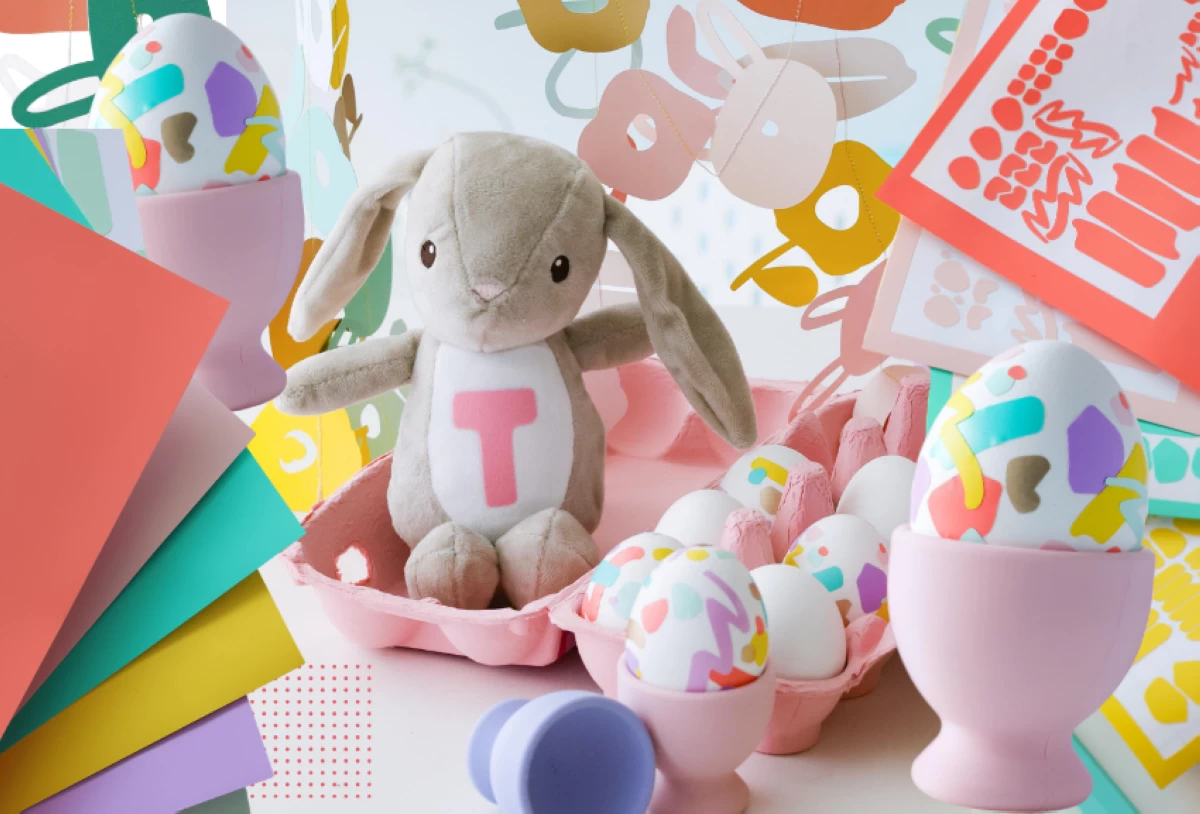
One of the easiest ways to bring the Easter spirit into our homes is through creating something with our hands.
For Tippy Go of Googly Gooeys, the crafting experience is less about perfect results and more about shared moments. This season’s projects are intentionally simple and open-ended, allowing kids and parents to explore, play, and create without pressure. It’s about embracing imperfections, staying curious, and finding joy in the process.
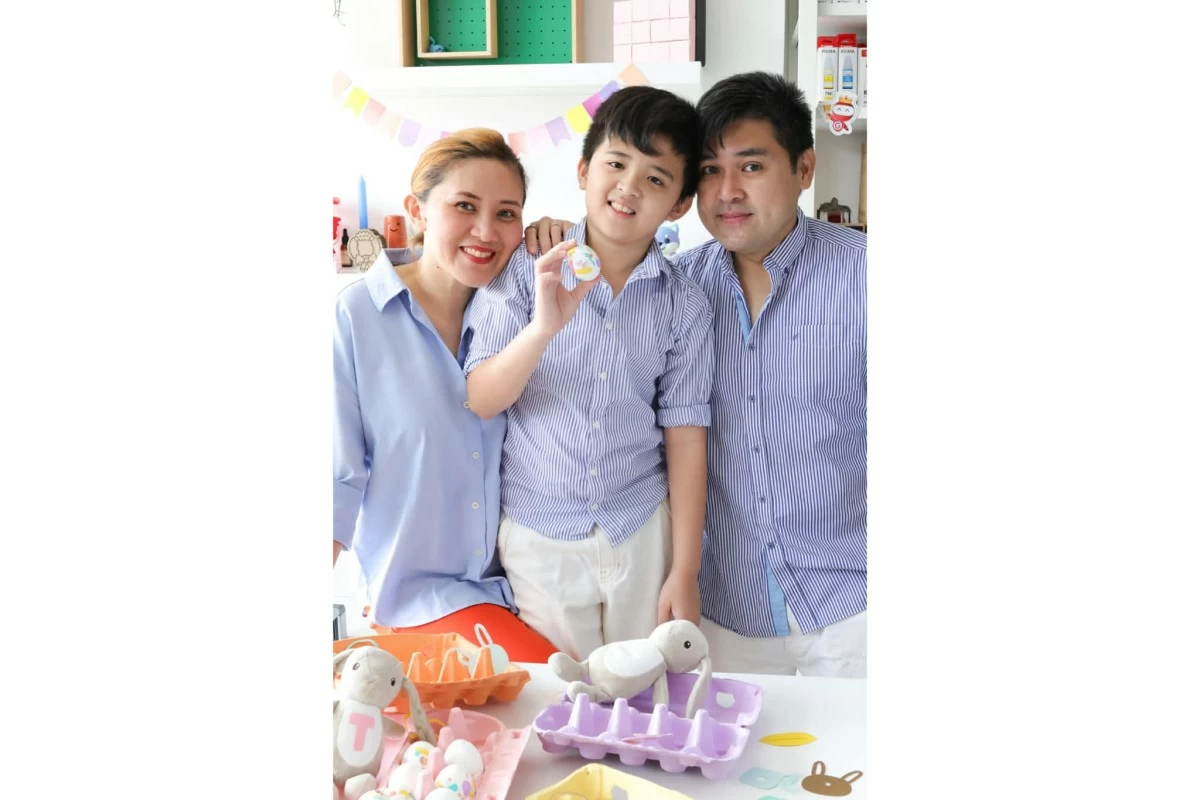
Tippy and Anthony Go with their son Riley (Photo from Tippy Go)
This mindset is evident in both her work and her story. Tippy runs Googly Gooeys with her husband, Anthony, while raising their 10-year-old son, Riley. What began as a blog in 2009—when she was learning digital illustration and revisiting her childhood love for comics—slowly evolved into something bigger. Her early webcomics, often inspired by everyday life and playful exchanges with Anthony, resonated for their humor and relatability.
“There was something meaningful about telling simple stories and seeing how people from different places connected to them,” she tells Manila Bulletin Lifestyle. From a creative platform, it grew into a craft shop and community space in Quezon City. Today, it brings together tools, workshops, and experiences that make creativity more accessible.
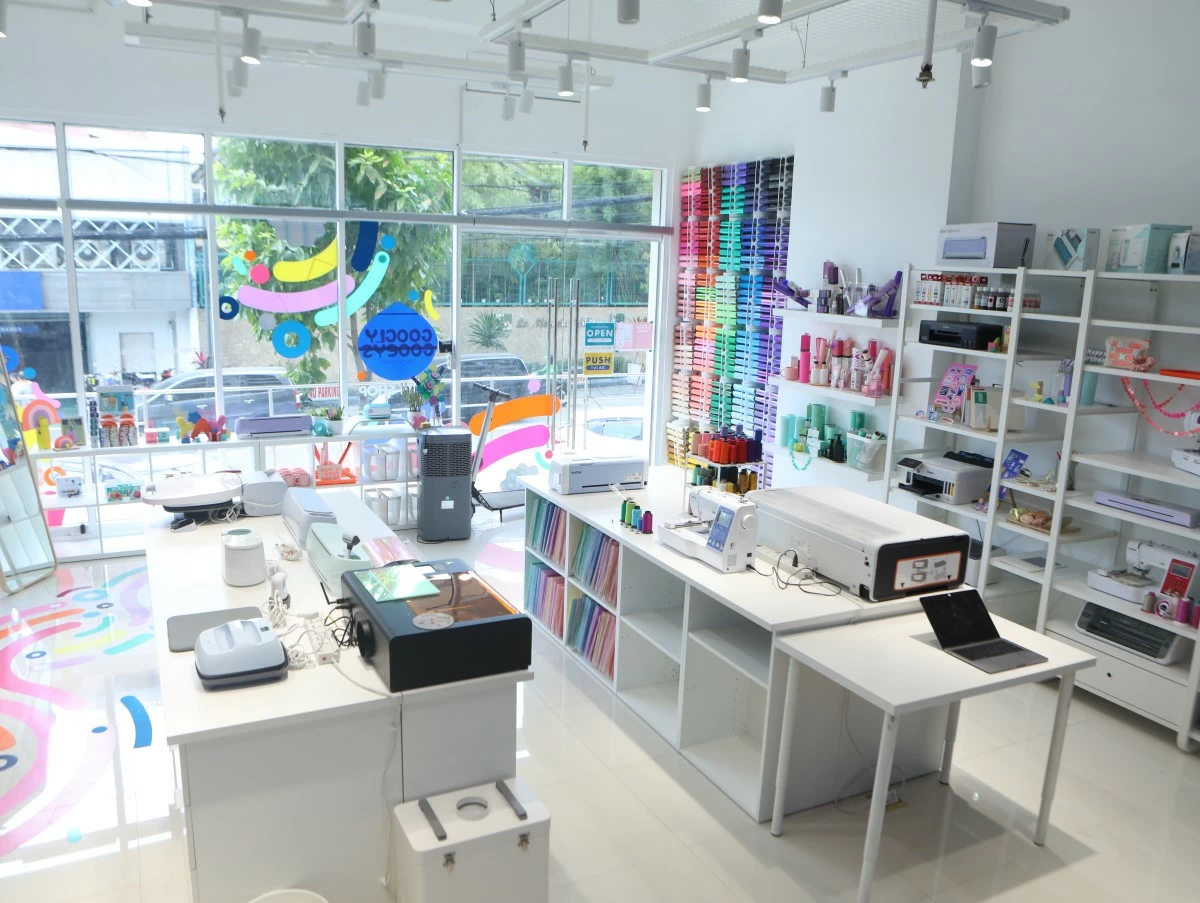
Inside Googly Gooeys (Photo from Tippy Go)
Here she shares with us three easy Easter-themed craft projects that you’ll surely enjoy making with the family. Some are inspired by familiar memories, like colorful fiesta banderitas, while others embrace abstract shapes where there is no single “right” outcome. Because these Easter crafts aren’t just about what you make, they’re about the moments you create along the way.
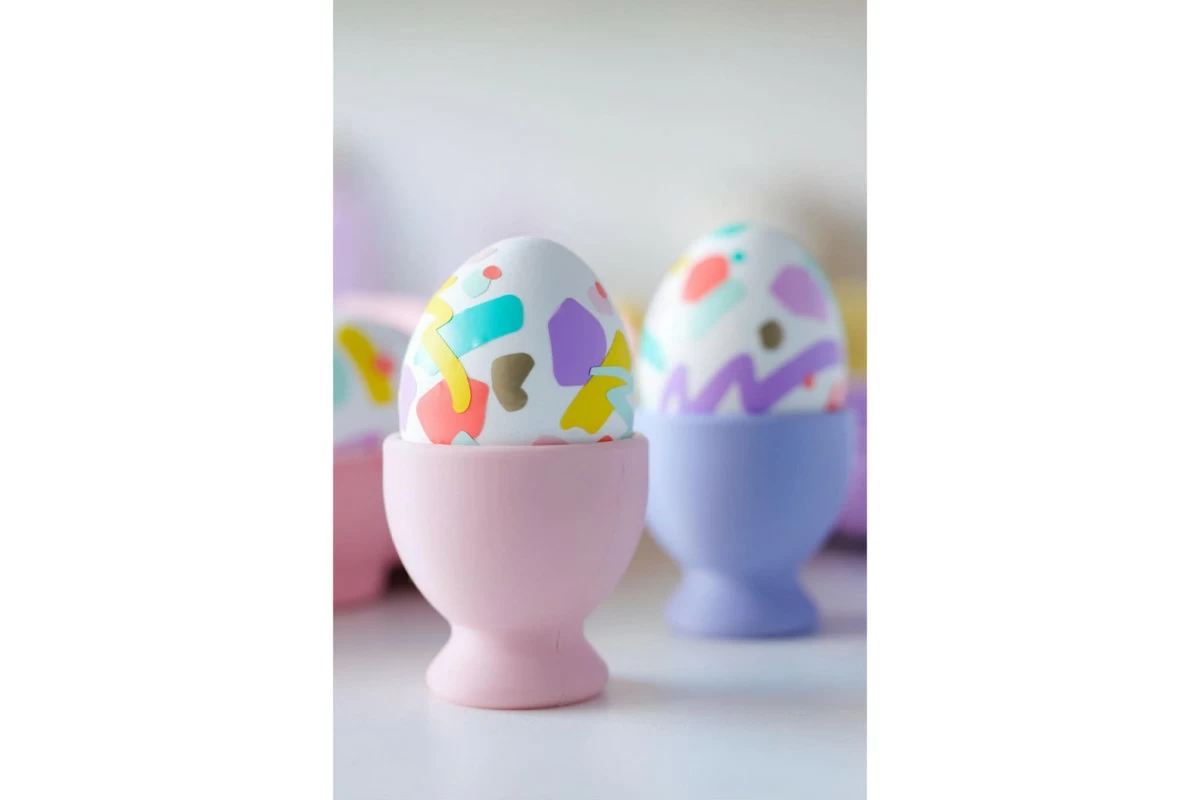
Easter egg decor (Photo from Tippy Go)
Easter egg decor
The best way for kids—and kids at heart—to start creating is to let go of being perfect. Children naturally explore without fear. This project lets both kids and parents create freely, whether through random, abstract shapes or familiar ones like hearts and stars. There are no rules here. Just draw, cut, arrange, and enjoy the process.
Materials
Boiled eggs, paper, pencil or markers, scissors, glue, and stickers. Optional (if available): TeckWrap vinyl and Siser Juliet cutting machine.
Steps
1. Boil the eggs: Cook the eggs and allow them to cool completely before decorating.
2. Draw your shapes: Encourage kids to draw freely on paper. This can be abstract shapes, lines, or patterns. They may also choose familiar shapes like hearts, stars, or flowers.
3. Cut the shapes: Cut out the drawings. Imperfect edges are part of the creative process. This step also helps develop children’s fine motor skills.
4. Arrange before sticking: Let the kids place the shapes on the egg first. They can move them around, layer elements, and explore different compositions.
5. Glue or stick: Once they are happy with the layout, glue the paper shapes onto the egg or use stickers.
6. (Optional) Use vinyl and a cutting machine: If available, shapes can also be cut using TeckWrap vinyl with a cutting machine like the Siser Juliet, then applied directly onto the egg.
Easter bunting (Photo from Tippy Go)
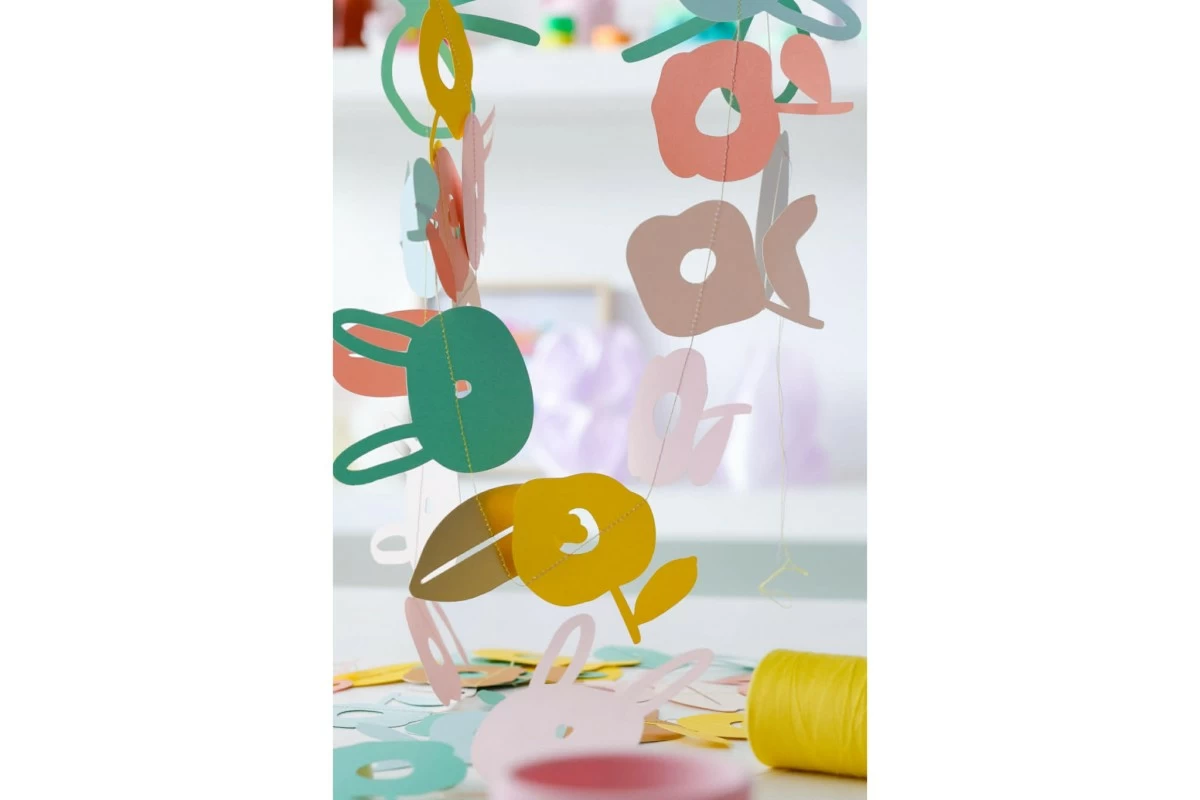
Easter bunting
Creating decorations can be just as meaningful as celebrating the occasion itself. Make their own Easter buntings using simple materials, turning everyday paper into something festive and personal. It is also a fun way to explore shapes, colors, and patterns while creating something you can display at home.
Materials
Paper, pencil or markers, scissors, yarn or string, tape, and a hole puncher. Optional (if available): Cardstock, Siser Juliet cutting machine, and Brother sewing machine
Steps
1. Draw your shapes: On paper, draw Easter-inspired or abstract shapes. These can be eggs, bunnies, flowers, or simple geometric forms.
2. Cut the shapes: Cut out the drawings. You can make multiple pieces in different sizes and colors.
3. Create holes or attachment points: Use a hole puncher to create a small hole at the top of each piece. If a hole puncher is not available, an adult may carefully make a small opening using scissors.
4. Assemble the bunting: Thread the yarn or string through each piece. You can also tape the cutouts onto the string if that feels easier for younger children.
5. (Optional) Sew the pieces: If available, a sewing machine can be used to stitch the pieces in a line for a cleaner and more durable finish.
Easter plushie (Photo from Tippy Go)
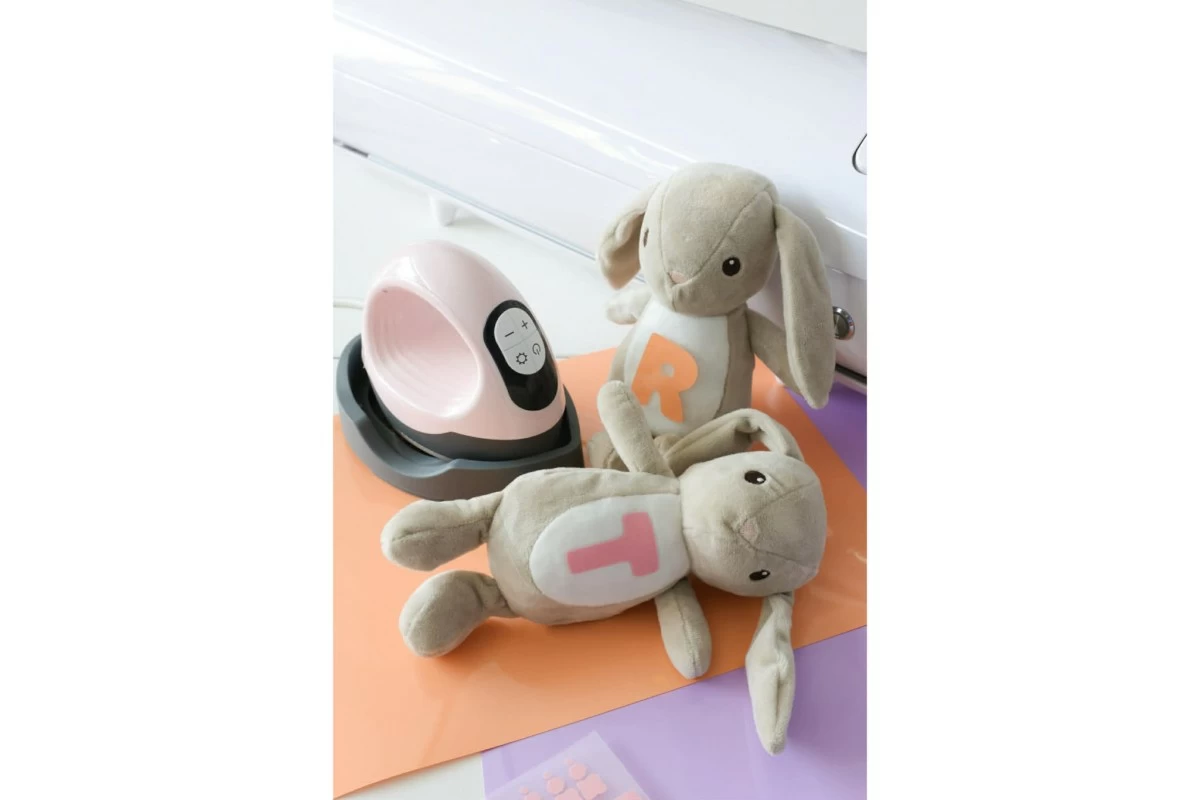
Easter plushie
Adding your personal touch to everyday items is always more meaningful. Customize your stuffed toys (in this case, the bunny), clothing, or fabric items using simple designs and heat transfer vinyl. It is a hands-on way to explore creativity while turning familiar objects into something uniquely their own.
Materials
Stuffed toy, shirt, tote bag, or cap; paper; pencil or markers, scissors, heat transfer vinyl (HTV), and home iron. Optional (if available): Siser Juliet cutting machine and Siser heat transfer vinyl.
Steps
1. Choose your item: Select a stuffed toy or any fabric item such as a shirt, tote bag, or cap.
2. Create your design: Draw a simple design on paper. This can be an Easter symbol, a name, or a single letter for personalization.
3. Transfer to HTV: Draw or trace your design onto the back side of the heat transfer vinyl.
4. Cut the design: Carefully cut out the design. If available, a cutting machine may also be used for more precise results.
5. Position your design: Place the cut design onto the fabric or stuffed toy where you would like it to appear.
6. Apply heat: Using a home iron, press the design for approximately 10 to 15 seconds. Adult supervision is recommended during this step.
7. Let it cool and peel: Allow the material to cool slightly, then peel off the backing to reveal the final design.