







Marcos admin rushes to secure ₱408 billion in new loans
By Derco Rosal
Published Mar 31, 2026 05:30 pm
|
Updated Mar 31, 2026 03:42 pm


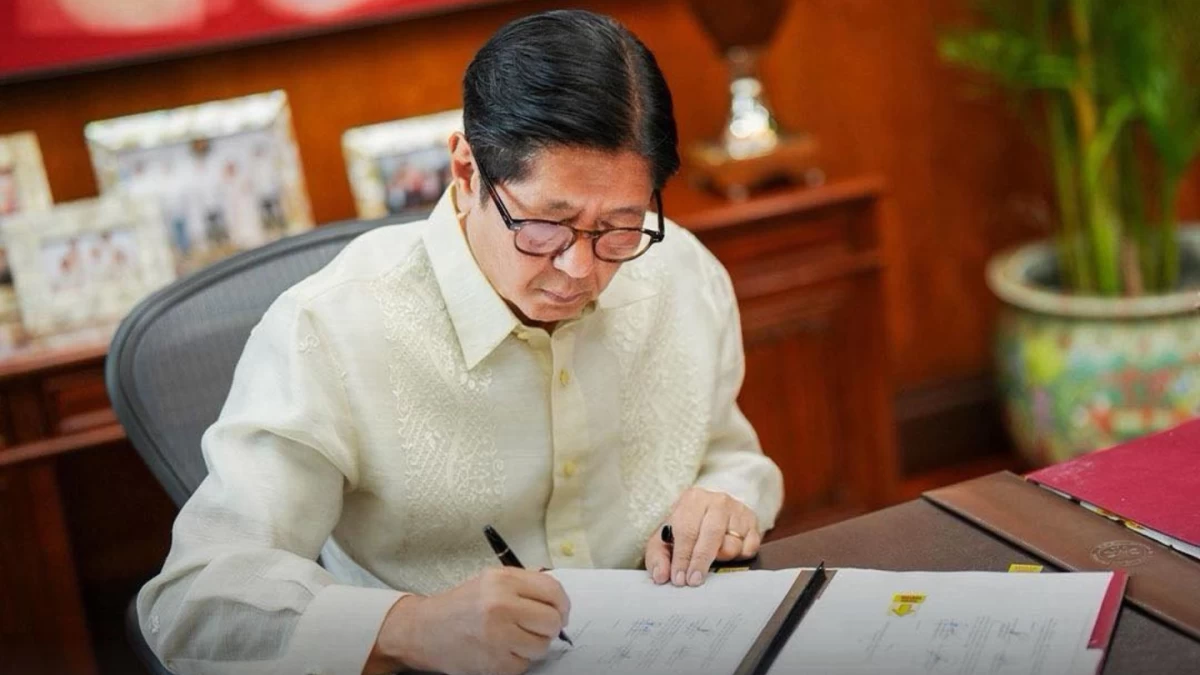
President Ferdinand R. Marcos Jr. (PCO photo)
The national government nearly doubled its gross borrowings to ₱408.2 billion in January as the Marcos administration front-loaded its financing requirements to take advantage of favorable market conditions.
According to the latest data from the Bureau of the Treasury (BTr), gross borrowings surged by ₱195.1 billion from the ₱213.1 billion recorded in the same month in 2025.
The aggressive start to the year saw the government significantly increase its exposure to foreign markets, momentarily diverging from its long-term strategy of prioritizing domestic credit.
Domestic debt accounted for ₱216.1 billion of the total, a 42 percent increase from ₱152.2 billion a year earlier. Within this segment, the Treasury raised ₱176.6 billion from fixed-rate bonds, up from ₱140 billion in 2025.
Borrowings from short-dated Treasury bills more than tripled to ₱39.5 billion from ₱12.2 billion. Despite the nominal increase, the share of domestic debt in the total borrowing mix fell to 53 percent from 71.4 percent a year ago, moving further away from the government’s 77 percent domestic financing target.
The shift in the mix was driven by a more than threefold jump in gross foreign debt, which climbed to ₱192.1 billion from ₱60.9 billion in January 2025 fueled by the issuance of ₱161.3 billion in multi-tranche global bonds.
Consequently, foreign debt comprised 47 percent of total borrowings during the month, nearly double the government’s 26 percent planned ceiling for external financing.
In contrast to the heavy bond issuance, program loans from multilateral and bilateral partners fell to ₱26.4 billion from ₱56.3 billion. Project loans also saw a marginal decline to ₱4.5 billion from ₱4.7 billion.
Economists said that the January performance was a tactical move rather than a sign of fiscal instability.
Jonathan Ravelas, a senior adviser at Reyes Tacandong & Co., said the spike reflects an intentional effort to secure funding while liquidity remains ample.
He noted that the early move provides the government with greater flexibility for the remainder of the year.
Ravelas added that while spending needs will keep borrowings elevated throughout 2026, the pace is expected to become more measured following the strong start, describing the strategy as managing risk early.
Meanwhile, Robert Dan Roces, an economist at SMIC Group, echoed this sentiment, suggesting the Treasury is prioritizing price over the speed of execution.
He noted that while energy-related shocks have introduced volatility, the government’s borrowing targets remain achievable through more selective execution and flexible tenors.
The government intends to borrow ₱2.68 trillion in 2026, with domestic plans for the first half of the year already accounting for 60 percent of that goal.
For the second quarter, the Treasury expects to raise ₱784 billion from domestic lenders, a five percent decrease from the first quarter's ₱824 billion target. Still, analysts warn that below-target borrowings could persist if geopolitical tensions continue to push yields higher.