






Manila Bulletin
 Philippines
National
'Hindi kailangang umutang': Quimbo bares what will set 'Bayanihan 3' apart from pandemic-era laws
Philippines
National
'Hindi kailangang umutang': Quimbo bares what will set 'Bayanihan 3' apart from pandemic-era laws
Philippines
National
'Hindi kailangang umutang': Quimbo bares what will set 'Bayanihan 3' apart from pandemic-era laws
'Hindi kailangang umutang': Quimbo bares what will set 'Bayanihan 3' apart from pandemic-era laws
Published Mar 31, 2026 11:53 pm
|
Updated Apr 1, 2026 12:02 am


At A Glance
- Marikina City 2nd district Rep. Miro Quimbo believes that the Marcos administration won't have to incur debt to make the envisioned "Bayanihan 3" law work and provide relief to Filipinos amid the fuel price crisis.
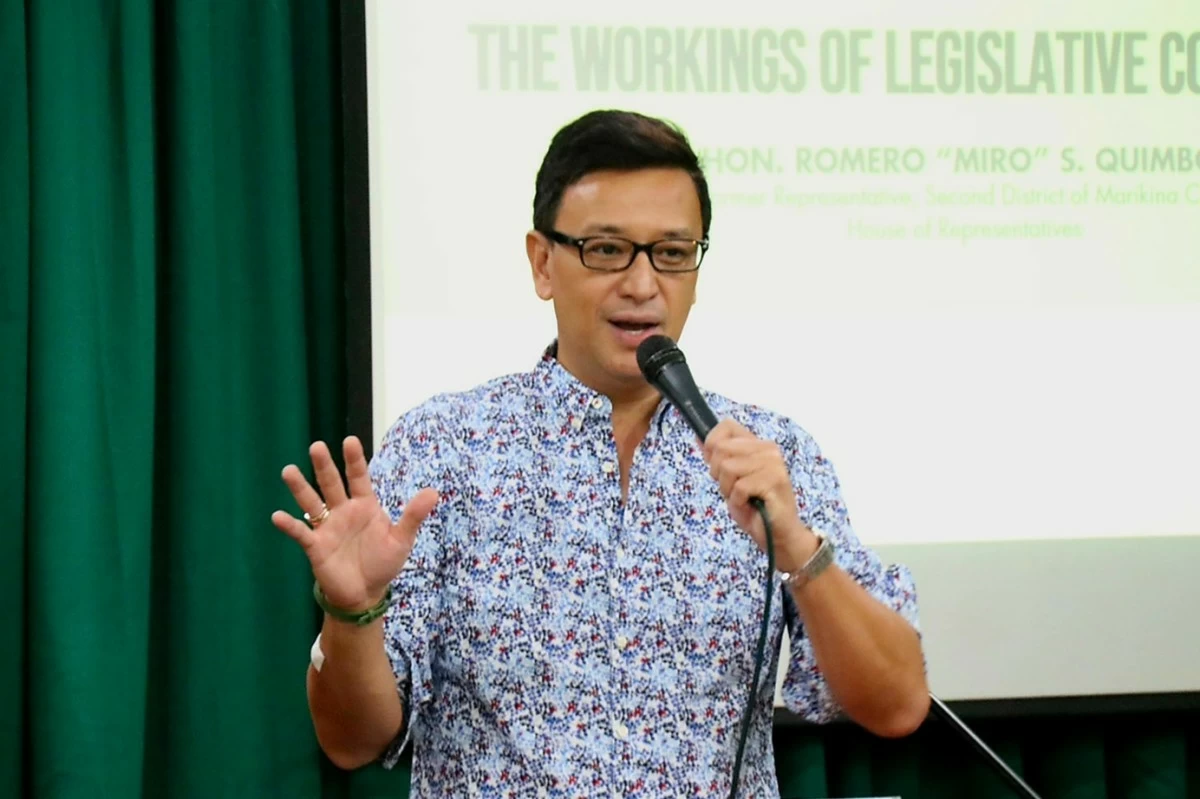
Marikina City 2nd district Rep. Miro Quimbo (PPAB)
Marikina City 2nd district Rep. Miro Quimbo believes that the Marcos administration won't have to incur debt to make the envisioned "Bayanihan 3" law work and provide relief to Filipinos amid the fuel price crisis.
In a virtual press conference Tuesday, Quimbo was asked whether or not he thinks the government would need to borrow money internationally to fund the proposed Bayanihan 3 law, especially since borrowing powered the first two Bayanihan laws during the Covid-19 pandemic.
"Sa pagdakaalam ko, di kailangan (From what I know, that isn't needed) because government now has enough cash to be able to sustain a program that can help control inflation. So today ang cash position ng gobyerno hindi alam ng marami (So today, unbeknown to many the cash position of the government is) we are actually net positive for the first quarter," said Quimbo.
"We have been able to collect or collate money na double than what was accomplished in the first quarter of 2025, so sa tingin ko hindi (so I don't think we need to borrow)," noted the House Committee on Ways and Means chairman.
The first two Bayanihan laws were "ayuda" or aid-centric, as what was required of the times.
Republic Act (RA) No.11469 or the Bayanihan to Heal as One Act earmarked an estimated P200 billion for a social amelioration programs (SAP) for low-income families that were hard-hit by the pandemic, while RA No.11494 or the Bayanihan to Recover as One Act allocated P165.5 billion for Covid-19 response and recovery.
Although Quimbo believes that the country has enough money right now, he said it's still up to the Marcos administration to make the final decision on whether to borrow or not.
"But again it's going to be the call of the executive kung ano kinakailangan. Kailangan mo i-balance yun eh parang nasa negosyo tayo. Ang pagpapatakbo ng ekonomiya ay parang isang negosyo," said the economist-solon.
(But again, it's going to be the call of the executive on what is necessary. You have to balance it, as if we are in business. Running the economy is like running a business.)
Quimbo said it would all depend on the government’s satisfaction with the scale of the program; whether it wants to sustain the program or expand it.
"Walang negosyong hindi umuutang, wala ring gobyerno na hindi mo umutang. So kailangan ng pag-utang. Ang importante lang is that it's managed well it falls within the targets of government and its finances relative to deficit," he explained.
(There is no business that does not borrow, and likewise no government that does not borrow. So borrowing is necessary. What matters is that it is managed well, that it falls within the targets of the government and its finances relative to the deficit.)
"So right now mataas ang ating debt to GDP (gross domestic product) na sa kung di ako nagkakamali na sa 63 percent or a little less than 64 percent. Pero may espasyo pa yan sa totoo lang kung iko-compare mo sa ibang Southeast Asian countries but right now I don't think there's a need to borrow," he reiterated.
(So right now our debt-to-GDP ratio is, if I’m not mistaken, at 63 percent or a little less than 64 percent. But there is still room, honestly, if you compare it with other Southeast Asian countries but right now I don’t think there is a need to borrow.)
At any rate, Quimbo said that ayuda isn't the main focus of Bayanihan 3, and that it only accounts for around 15 percent of the responses that House Speaker Faustino "Bojie" Dy III has in mind.
Speaker Dy had earlier tasked the ways and means panel plus 12 other committees to hold joint hearings even during the summer recess to draw up a legislative response to the crisis.