







'Bayanihan 3' eyed, but it won't be 'ayuda'-centric
Published Mar 31, 2026 05:09 pm


At A Glance
- All signs point to the crafting of a so-called "Bayanihan 3" bill in the House of Representatives--a measure that is meant to serve as a response not only to the current fuel price crisis, but also future problems that would require a whole-of-government solution.
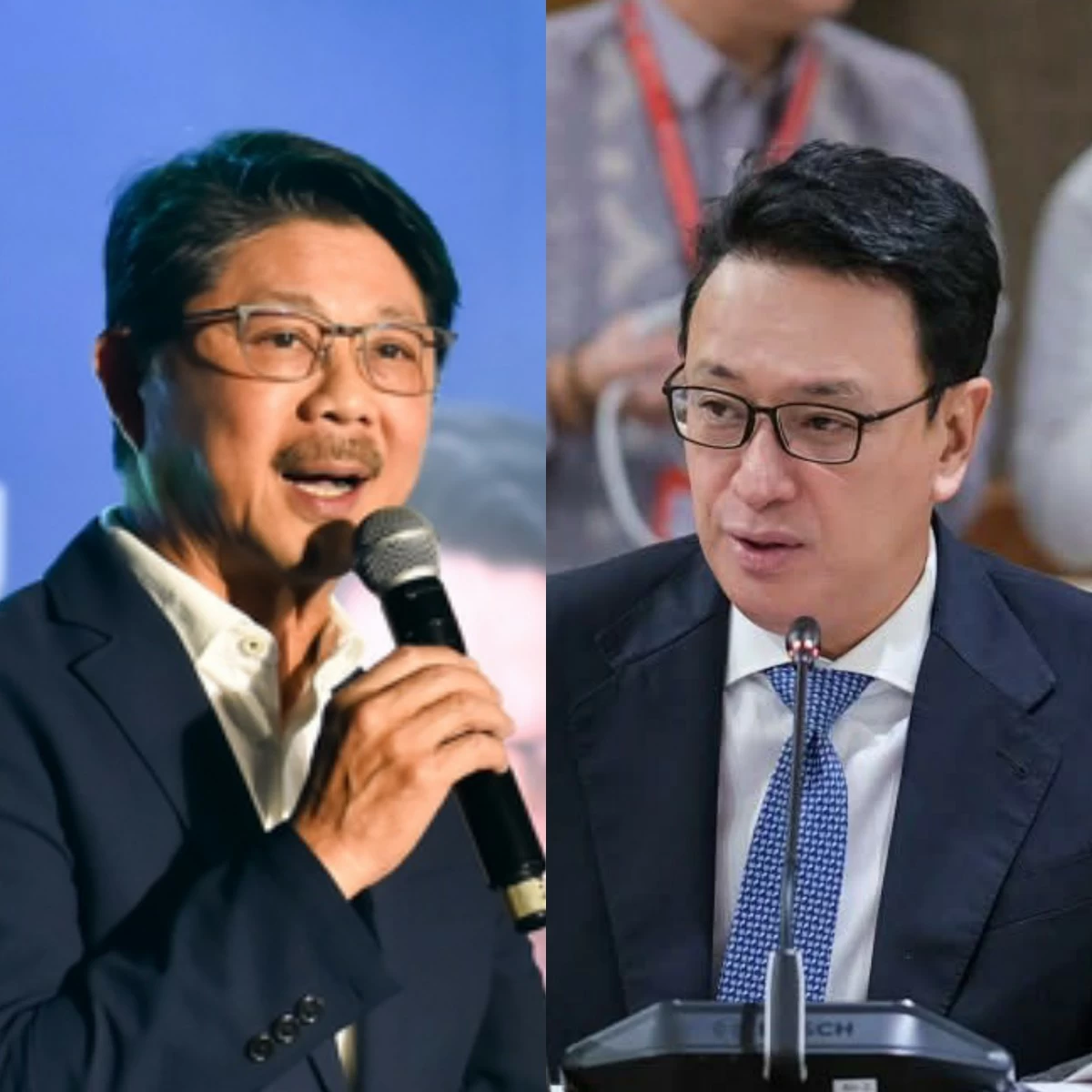
House Speaker Faustino "Bojie" Dy III (left), Marikina City 2nd district Rep. Miro Quimbo (PPAB, Facebook)
All signs point to the crafting of a so-called "Bayanihan 3" bill in the House of Representatives--a measure that is meant to serve as a response not only to the current fuel price crisis, but also future problems that would require a whole-of-government solution.
Thus, said Committee on Ways and Means Chairman Marikina City 2nd district Rep. Miro Quimbo, who noted that the House leadership under Speaker Faustino "Bojie" Dy III was eyeing both immediate and long-term relief measures for Filipinos.
“We have not talked about the entire concept of what will be the outcome, pero ako (but for me), in reality, this is Bayanihan 3. If there’s a key objective here is for Congress to hammer out Bayanihan 3,” Quimbo said on Tuesday, March 31 during a virtual press conference.
By "we", Quimbo was referring to the 13 House committees that have been tapped by Speaker Dy to coordinate with each other and hold hearings even during the summer recess in order to draw up a legislative response to the crisis, as well as her one down the road.
The 13 panels are the Committees on Energy, Agriculture and Food, Aquaculture and Fisheries, Foreign Affairs, Ways and Means, Labor, Transportation, Information and Communications Technology, Economic Affairs, Social Services, Trade and Industry, Overseas Workers Affairs, and Appropriations in the 300-plus strong House.
Unlike its Covid-19 pandemic-era predecessors, the new package will go beyond direct cash aid to the affected sectors and also focus on long-term structural reforms.
Congress enacted the Bayanihan to Heal as One Act and the Bayanihan to Recover as One Act at the height of the pandemic in 2020. The two laws centered on large-scale subsidy programs as lockdowns brought economic activity to a halt.
Quimbo said the current crisis presents a different context and does not require the same level of across-the-board financial assistance.
“The pandemic was really worse as far as we’re concerned because napaka-indeterminable noong sitwasyon. Hindi natin alam kung magkakagamot, magkakabakuna, gaano ba katagal na masu-sustain. Practically noon, the entire economy went to a halt. Hindi makalabas ang tao, it really necessitated a massive ayuda program. So iba ang konteksto ngayon,” he said.
(The pandemic was really worse, as far as we’re concerned, because the situation was highly indeterminable. We didn’t know if there would be treatment, if vaccines would come, or how long things could be sustained. Practically, the entire economy came to a halt back then. People couldn’t go out, and it truly necessitated a massive aid program. So the context now is different.)
Speaker Dy, in a statement Tuesday, justified he sheer scale of the joint committee, which was unlike anything that had been seen before in the lower chamber.
“The objective of these hearings is to work with our partners in the executive to identify solutions, not point fingers,” the House leader from Isabela's 6th district said.
“We want to hear directly from our economic managers and frontline agencies so we have the information we need to come with measures that can help our people cope with the impact of the Middle East conflict,” he stressed.
Not 'ayuda'-centric
Quimbo stressed that while financial assistance remains part of the plan, it will not be the centerpiece of the proposed measure, in line with the direction set by Dy.
“If ayuda ang pinag-uusapan (If we're talking about aid), this is really just one part of Bayanihan 3. It cannot just be ayuda-centric. In fact, ayuda, as far as what the Speaker wants, is not even 15 percent of the entire package that he wants,” he said.
Instead, the Marikina solon says Bayanihan 3 is being positioned as both an immediate response and a platform for long-delayed reforms. “Unlike past Bayanihans, it’s not just going to be a way to target direct subsidies to those who are in need. The difference with Bayanihan 3 is that it provides us also an opportunity to be able to implement long-needed reforms."
Quimbo says lawmakers are working to identify sectors that require urgent support and to mobilize available government resources without disrupting existing programs.
“The first task is trying to map out where we can sweep additional funds without affecting current programs,” he said.
He added that any targeted assistance will prioritize sectors most vulnerable to rising fuel costs, particularly transportation, while helping prevent a broader surge in prices. “The direction is to make sure that whatever aid we do is for the purpose of making sure that prices don’t spiral,” noted Quimbo.
Wake-up call
Quimbo envisions Bayanihan 3 as a measure that will also address long-standing gaps in subsidy delivery and economic resilience.
“I think it’s a wake-up call to us today that we don’t have a clear, electronic, and well-targeted distribution system,” he said, as he cited plans to develop a digital subsidy system linked to the national ID.
He added that Bayanihan 3 could also accelerate reforms in the energy sector, including support for renewable energy (RE) and incentives for electric and hybrid vehicles.
“We want to take this opportunity with Bayanihan 3 as a way by which we can make the country more resilient pagdating sa energy (when it comes to energy),” Quimbo said.
Quimbo says preparatory work is ongoing, with the first formal joint committee hearing scheduled for April 8.