ADVERTISEMENT

Travelers face higher costs as airlines battle expensive fuel

Published Mar 30, 2026 09:48 pm
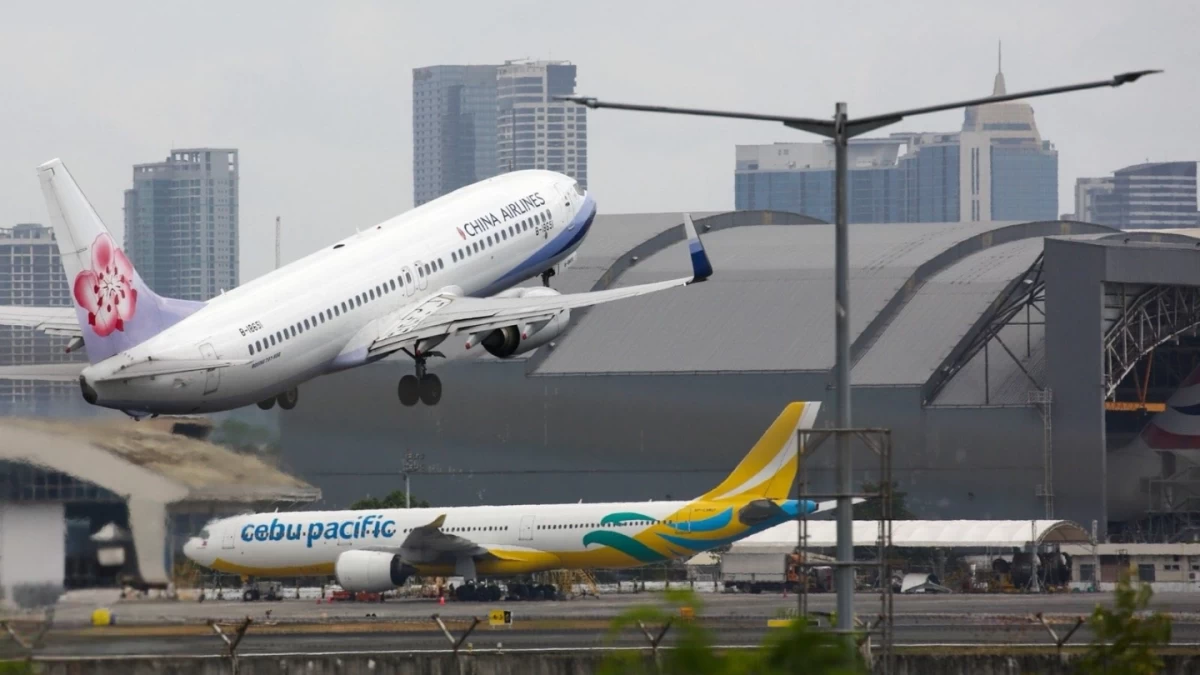
Planes taxi and depart from an air taxi terminal at an airport in Pasay City on Sunday, March 15. To combat rising jet fuel costs and keep air travel accessible, the Department of Transportation (DOTr) has ordered a reduction in passenger service charges and navigation fees at all CAAP-operated airports. (Photo by John Louie Abrina I MB)
Passenger demand across the Asia-Pacific region remained robust through February, but the outlook for the coming months is clouded by uncertainty as rising fuel prices and airspace restrictions cast doubt on air travel.
Data from the Association of Asia-Pacific Airlines (AAPA) showed that passenger volume rose by six percent to 68.83 million in the first two months of the year, compared to 64.76 million in the same period last year.
Demand, measured in revenue passenger kilometers, improved by six percent, with available seat capacity also increasing at the same rate.
The ratio of booked seats to available slots, referred to as the passenger load factor, averaged 83.2 percent by the end of February, a notch lower than last year’s 83.3 percent.
AAPA Director General Subhas Menon said the passenger growth so far this year comes against a backdrop of steady global economic growth, particularly across Asian economies.
He said the nine percent increase for February is indicative of this, as more passengers flew during the month due to the Lunar New Year festive period.
However, the strong momentum at the start of the year is now under question as escalating tensions in the Middle East have introduced greater uncertainty to the operating environment of many airlines in the region.
“Asian airlines are facing increased operational challenges, as the rise in conflicts has reduced the availability of airspace, particularly along key Asia-Europe corridors, effectively constraining capacity on these routes and limiting network flexibility for affected carriers,” said Menon.
Since the United States and Israel waged war against Iran in late February, fuel prices have soared to new highs due to disruptions in the Strait of Hormuz, a crucial waterway through which around one-fifth of the world’s oil supply passes.
Menon said the sharp increase in jet fuel prices—from an average of $90 per barrel in the first two months to an average of $150 per barrel in the first three weeks of March—has left little time for airlines to adjust.
He said increased operating costs are placing additional pressure on airlines already operating on thin profit margins, which would inevitably be passed on to consumers.
“Prolonged conflicts over the Middle East may increase inflationary pressures and affect
business and consumer sentiment on both passenger and cargo markets,” said Menon.
To maintain global connectivity, he said there should be closer coordination between governments and industry stakeholders to ensure the “continued safe and efficient operation of air services.”
In the Philippines, President Ferdinand “Bongbong” Marcos Jr. recently said that there is a “distinct possibility” that planes may have to be grounded due to a shortage of jet fuel.
Flag carrier Philippine Airlines (PAL) and leading budget carrier Cebu Pacific, both members of AAPA, have since assured passengers of sufficient fuel supply despite suspending several international and domestic flights.
PAL and Cebu Pacific said they have secured enough fuel to sustain operations through the end of June, while talks are underway with suppliers to ensure continued fuel availability in the months ahead.
The Civil Aeronautics Board (CAB) earlier allowed local airlines to impose a passenger fuel surcharge at Level 8 for the first half of April due to higher jet fuel prices.
Under Level 8, passengers may pay an additional ₱253 to ₱787 for domestic flights, depending on the distance. Meanwhile, for international flights, the surcharge ranges from ₱835.05 to ₱6,208.98.

Related Tags

Association of Asia-Pacific Airlines (AAPA)
ADVERTISEMENT
.most-popular .layout-ratio{ padding-bottom: 79.13%; } @media (min-width: 768px) and (max-width: 1024px) { .widget-title { font-size: 15px !important; } }

{{ articles_filter_1561_widget.title }}

.most-popular .layout-ratio{ padding-bottom: 79.13%; } @media (min-width: 768px) and (max-width: 1024px) { .widget-title { font-size: 15px !important; } }

{{ articles_filter_1562_widget.title }}

.most-popular .layout-ratio{ padding-bottom: 79.13%; } @media (min-width: 768px) and (max-width: 1024px) { .widget-title { font-size: 15px !important; } }

{{ articles_filter_1563_widget.title }}

{{ articles_filter_1564_widget.title }}

.mb-article-details { position: relative; } .mb-article-details .article-body-preview, .mb-article-details .article-body-summary{ font-size: 17px; line-height: 30px; font-family: "Libre Caslon Text", serif; color: #000; } .mb-article-details .article-body-preview iframe , .mb-article-details .article-body-summary iframe{ width: 100%; margin: auto; } .read-more-background { background: linear-gradient(180deg, color(display-p3 1.000 1.000 1.000 / 0) 13.75%, color(display-p3 1.000 1.000 1.000 / 0.8) 30.79%, color(display-p3 1.000 1.000 1.000) 72.5%); position: absolute; height: 200px; width: 100%; bottom: 0; display: flex; justify-content: center; align-items: center; padding: 0; } .read-more-background a{ color: #000; } .read-more-btn { padding: 17px 45px; font-family: Inter; font-weight: 700; font-size: 18px; line-height: 16px; text-align: center; vertical-align: middle; border: 1px solid black; background-color: white; } .hidden { display: none; }
function initializeAllSwipers() { // Get all hidden inputs with cms_article_id document.querySelectorAll('[id^="cms_article_id_"]').forEach(function (input) { const cmsArticleId = input.value; const articleSelector = '#article-' + cmsArticleId + ' .body_images'; const swiperElement = document.querySelector(articleSelector); if (swiperElement && !swiperElement.classList.contains('swiper-initialized')) { new Swiper(articleSelector, { loop: true, pagination: false, navigation: { nextEl: '#article-' + cmsArticleId + ' .swiper-button-next', prevEl: '#article-' + cmsArticleId + ' .swiper-button-prev', }, }); } }); } setTimeout(initializeAllSwipers, 3000); const intersectionObserver = new IntersectionObserver( (entries) => { entries.forEach((entry) => { if (entry.isIntersecting) { const newUrl = entry.target.getAttribute("data-url"); if (newUrl) { history.pushState(null, null, newUrl); let article = entry.target; // Extract metadata const author = article.querySelector('.author-section').textContent.replace('By', '').trim(); const section = article.querySelector('.section-info ').textContent.replace(' ', ' '); const title = article.querySelector('.article-title h1').textContent; // Parse URL for Chartbeat path format const parsedUrl = new URL(newUrl, window.location.origin); const cleanUrl = parsedUrl.host + parsedUrl.pathname; // Update Chartbeat configuration if (typeof window._sf_async_config !== 'undefined') { window._sf_async_config.path = cleanUrl; window._sf_async_config.sections = section; window._sf_async_config.authors = author; } // Track virtual page view with Chartbeat if (typeof pSUPERFLY !== 'undefined' && typeof pSUPERFLY.virtualPage === 'function') { try { pSUPERFLY.virtualPage({ path: cleanUrl, title: title, sections: section, authors: author }); } catch (error) { console.error('ping error', error); } } // Optional: Update document title if (title && title !== document.title) { document.title = title; } } } }); }, { threshold: 0.1 } ); function showArticleBody(button) { const article = button.closest("article"); const summary = article.querySelector(".article-body-summary"); const body = article.querySelector(".article-body-preview"); const readMoreSection = article.querySelector(".read-more-background"); // Hide summary and read-more section summary.style.display = "none"; readMoreSection.style.display = "none"; // Show the full article body body.classList.remove("hidden"); } document.addEventListener("DOMContentLoaded", () => { let loadCount = 0; // Track how many times articles are loaded const offset = [1, 2, 3, 4, 5, 6, 7, 8, 9, 10]; // Offset values const currentUrl = window.location.pathname.substring(1); let isLoading = false; // Prevent multiple calls if (!currentUrl) { console.log("Current URL is invalid."); return; } const sentinel = document.getElementById("load-more-sentinel"); if (!sentinel) { console.log("Sentinel element not found."); return; } function isSentinelVisible() { const rect = sentinel.getBoundingClientRect(); return ( rect.top < window.innerHeight && rect.bottom >= 0 ); } function onScroll() { if (isLoading) return; if (isSentinelVisible()) { if (loadCount >= offset.length) { console.log("Maximum load attempts reached."); window.removeEventListener("scroll", onScroll); return; } isLoading = true; const currentOffset = offset[loadCount]; window.loadMoreItems().then(() => { let article = document.querySelector('#widget_1690 > div:nth-last-of-type(2) article'); intersectionObserver.observe(article) loadCount++; }).catch(error => { console.error("Error loading more items:", error); }).finally(() => { isLoading = false; }); } } window.addEventListener("scroll", onScroll); });

Sign up by email to receive news.