







PSEi falls as Middle East conflict worsens
Published Mar 30, 2026 05:07 pm


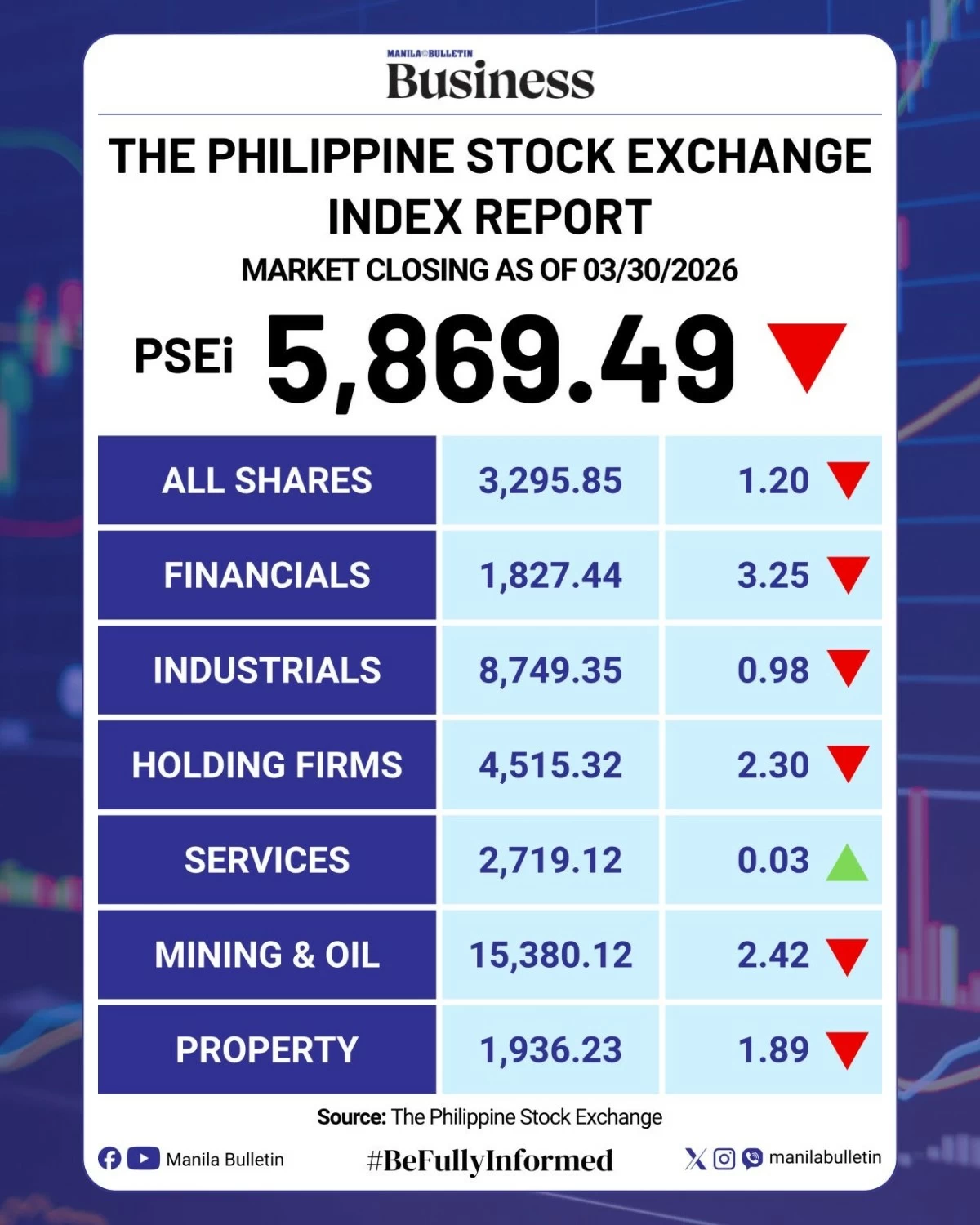
The Philippine Stock Exchange index (PSEi) fell on Monday, March 30, as the conflict in the Middle East worsens despite efforts by the United States (US) to pursue a more diplomatic tack to break Iran’s blockade of the Strait of Hormuz.
The main index plunged by 103.34 points, or 1.73 percent, to close at 5,869.49. Banks led the withdrawal, while services managed to hold its ground.
Volume was strong at 746 million shares worth ₱8.29 billion despite the coming Lenten break. Losers beat gainers—126 to 74, with 60 unchanged.
“The Philippine market opened the week lower as the Middle East war entered its fifth week, the conflict continued to escalate despite ongoing efforts to reach a diplomatic resolution,” said Regina Capital Development Corp. managing director Luis Limlingan.
The prolonged tensions have continued to weigh on market risk appetite, as both geopolitical and economic factors persistently dampen investor sentiment. External uncertainties and macroeconomic pressures continue to drive cautious trading behavior across markets.
Philstocks Financial Inc. research manager Japhet Tantiangco said, “The local market started the shortened trading week on a negative tone as the war in the Middle East continues, with hopes of negotiation among involved countries faltering.”
He noted that global oil prices remain elevated while the peso depreciates further keeping worries over the Philippines’ inflation outlook high. The peso plunged to a new all-time low of ₱60.69 against the US dollar.
Rizal Commercial Banking Corp. (RCBC) chief economist Michael Ricafort said the PSEi declined for the third straight trading day as the exchange rate again closed at a new record low and hitting a new intraday record low of ₱60.84:$1 after crude oil prices rose because the Houthis joined the war in the Middle East.