







PCBPF: Turning peace commitments into legislative action
Published Mar 30, 2026 12:05 am
|
Updated Mar 29, 2026 03:56 pm


PEACE BY PEACE
Peace agreements are best remembered not only for putting an end to decades of armed conflict between the parties but also for their promise of creating a better and brighter future for the people. But the real work begins after the ink on these agreements dries up.
The Comprehensive Agreement on the Bangsamoro (CAB) laid a clear path on how the Government of the Philippines (GPH) and the Moro Islamic Liberation Front (MILF), which now leads the Bangsamoro Government, can realize their commitments under the CAB.
However, translating this roadmap into reality requires more than just expressions of trust and goodwill. It also needs highly-functioning inter-governmental mechanisms that will translate commitments into tangible policies and concrete interventions.
This is why the creation of such mechanisms such as the Philippine Congress-Bangsamoro Parliament Forum (PCBPF) is crucial. The PCBPF is an integral part of the peace architecture that was established under the Bangsamoro Organic Law (BOL).
According to the BOL, the body was created to “serve as a platform for the members of the Congress of the Philippines and the Bangsamoro Parliament to discuss issues and concerns affecting the Bangsamoro Autonomous Region.”
The Forum’s latest meeting on March 24, its fourth since creation and third under the administration of President Ferdinand R. Marcos Jr., is a reminder that the success of the peace process is anchored on a robust and strategic legislative partnership.
We at the Office of the Presidential Adviser on Peace, Reconciliation and Unity (OPAPRU) believe that peace must be sustained and built upon by policies that will ensure that no one will be left behind in the peace and development process.
As Senator Loren Legarda emphasized during the gathering, national policies must respond to regional realities, in the same way that regional priorities must find expression in national decisions and policies. This mutual responsiveness is among the main pillars of the CAB.
This is where the PCBPF plays a crucial role. By bringing together legislators from the national and Bangsamoro governments, the Forum creates a space where challenges can be immediately addressed and find a common ground.
The PCBPF allows national lawmakers to better understand the context behind Bangsamoro priorities, and at the same time, enables regional leaders to engage directly with the legislators who shape national policy.
Lanao del Sur Representative Ziaur-Rahman Adiong noted that Congress provides the framework and resources, while the Bangsamoro Parliament brings voice and context. The PCBPF ensures that these roles complement and support each other
And this synergy is critical in fulfilling the Philippine government’s commitments under the CAB such as ongoing legislative efforts to establish a province under the Bangsamoro region’s Special Geographic Areas (SGAs).
Within the context of the peace process, the province’s creation represents the national government’s obligation to support the decision of communities that voted for inclusion in the Bangsamoro Autonomous Region in Muslim Mindanao (BARMM).
Addressing such a “special case,” as Senator Juan Miguel Zubiri described it, requires both legal flexibility and political sensitivity. It demands a forum where such complex matters can be collectively threshed out and resolved.
By enabling both houses of Congress and the Bangsamoro Parliament to jointly carefully navigate these issues, the Forum ensures that the implementation of the CAB remains faithful to both its letter and its spirit.
This is the same principle that applies to the challenges being faced by the region’s education sector, another key area that is tied directly to the peace process. Sadly, decades of conflict have left deep gaps in the students’ ability to learn.
Addressing these gaps has not only become a legislative priority but a peace imperative for both governments. Without meaningful improvements in education, the dividends of peace in the BARMM risk becoming uneven and fragile.
Recognizing this reality, the PCBPF seeks to establish a technical working group on education. This is a strategic intervention that enhances coordination between both governments, aligns their resources, and clarifies each other’s institutional roles.
The Bangsamoro peace process was meant to create a well-functioning system of governance that is responsive, where institutions are aligned, and people feel the tangible benefits of peace in their daily lives.
As Bangsamoro Parliament Speaker Mohammad S. Yacob emphasized, building the Bangsamoro is a shared responsibility. The Forum operationalizes that responsibility through legislation.
This partnership ensures that the national government’s interventions are in sync and carried out together with the Bangsamoro Government. Through this approach, both parties always work hand in hand, shoulder to shoulder, which is the main intention of the CAB.
Peace, in this sense, is no longer just an agreement. It becomes a process that is embedded in institutions, carried forward through legislation, and sustained by mutual trust and cooperation between the national and Bangsamoro governments.
This will ensure that the dividends of peace are not only promised but delivered to the people.
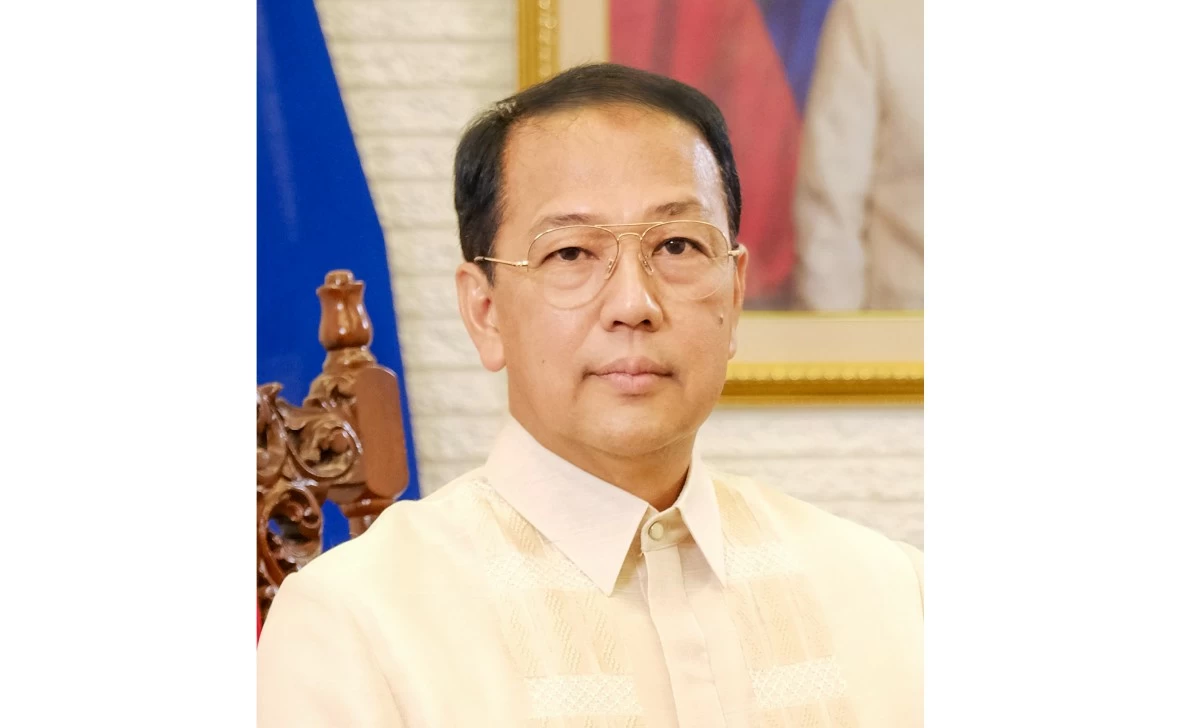
(Secretary Carlito G. Galvez, Jr. is the presidential adviser on peace, reconciliation, and unity.)