






 Business
Trade & Industry
Domestic trade hits over 60 million tons as road transport boosts 2025 figures
Business
Trade & Industry
Domestic trade hits over 60 million tons as road transport boosts 2025 figures
Domestic trade hits over 60 million tons as road transport boosts 2025 figures


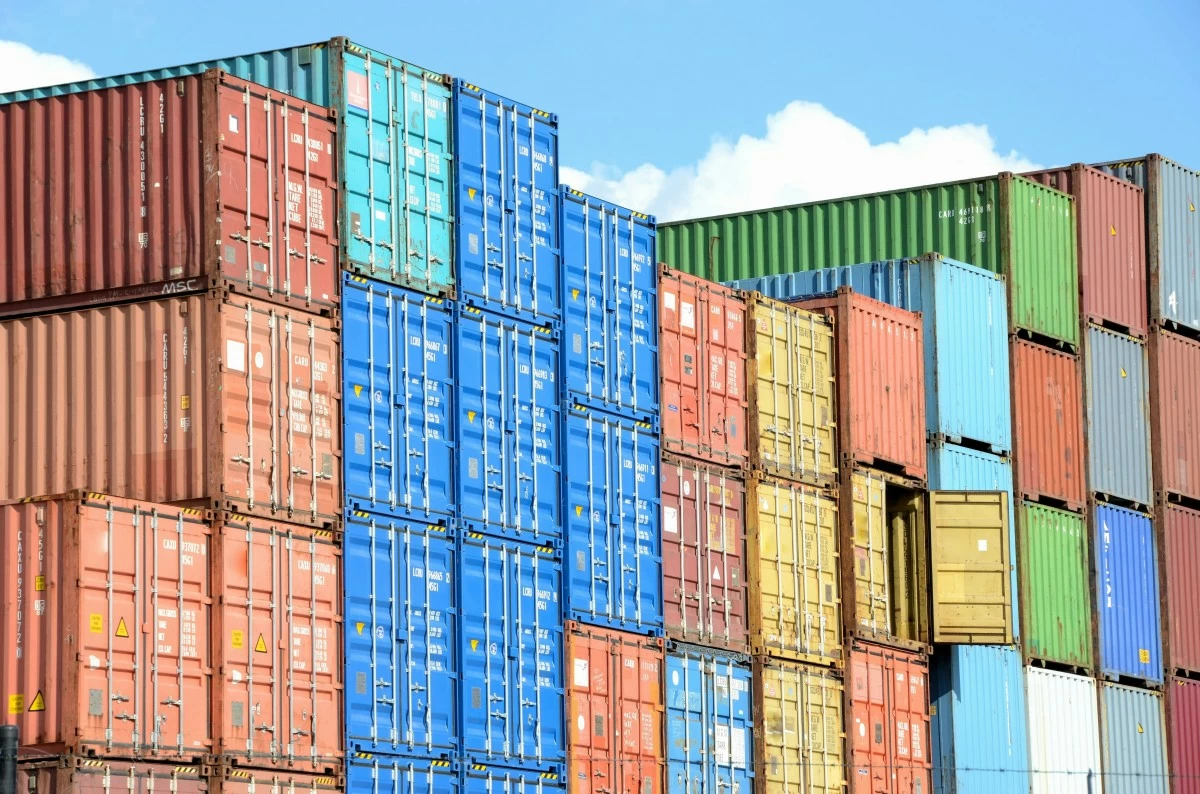
Domestic trade in the Philippines continued to grow across water and air transport systems in 2025, with an even higher volume and value now recorded through road transport, which the Philippine Statistics Authority (PSA) tracked for the first time last year.
The PSA reported on Monday, March 30, that the total volume of domestic trade reached 60.19 million tons in 2025. Commodities transported by water accounted for the largest share at 31.89 million tons, or 53 percent of total volume, marking an annual increase of 6.4 percent from 29.96 million tons in 2024.
CALABARZON led in terms of outflow volume of traded commodities, which refers to the movement of goods leaving a region, registering 11.76 million tons, or 19.5 percent of total domestic trade. Central Luzon followed with 11.49 million tons (19.1 percent of total), and National Capital Region (NCR) with 8.45 million tons (14 percent). Zamboanga Peninsula recorded the lowest outflow at 140,000 tons, or 0.2 percent of total.
In terms of inflow volume, which measures the movement of goods entering a region, NCR posted the highest volume at 12.79 million tons, or 21.2 percent of total domestic trade. Central Visayas followed with 6.47 million tons (10.75 percent of total), and CALABARZON with 6.46 million tons (10.74 percent). Bangsamoro Autonomous Region in Muslim Mindanao (BARMM) recorded the lowest inflow volume at 250,000 tons, or 0.4 percent of total.
Central Luzon recorded the highest favorable trade balance in volume, or the difference between outflow and inflow, at 6.63 million tons. CALABARZON followed with 5.3 million tons, and Northern Mindanao with 2.27 million tons. Regions with the largest unfavorable trade balances included NCR at -4.34 million tons, SOCCSKSARGEN at -2.75 million tons, and Zamboanga Peninsula at -2.31 million tons.
In terms of value, the total domestic trade was ₱3.34 trillion in 2025. Road transport accounted for the majority at ₱1.8 trillion, or 54 percent of total, followed by water at ₱1.53 trillion, or 45.9 percent, and air at ₱2.38 billion, or a 0.1-percent share, representing a 4.8-percent decline from ₱2.5 billion in 2024. The value of commodities traded by water rose 17 percent from ₱1.31 trillion in 2024.
CALABARZON led in outflow value with ₱714.85 billion, or 21.4 percent of total domestic trade, followed by NCR at ₱556.21 billion (16.7 percent of total) and Northern Mindanao at ₱547.21 billion (16.4 percent). Zamboanga Peninsula registered the lowest outflow value at ₱8.67 billion, or 0.3 percent of total.
For inflow value, NCR recorded the highest at ₱655.89 billion, or 19.6 percent of total domestic trade, followed by Central Visayas at ₱438.98 billion (13.15 percent of total) and CALABARZON at ₱437.45 billion (13.1 percent). BARMM recorded the lowest inflow value at ₱11.68 billion, or 0.3 percent of total.
CALABARZON also had the highest favorable trade balance in value at ₱277.4 billion, followed by Northern Mindanao at ₱262.77 billion and Central Luzon at ₱219.48 billion. Regions with unfavorable trade balances in value included Central Visayas at -₱234.33 billion, Zamboanga Peninsula at -₱171.39 billion, and SOCCSKSARGEN at -₱145.44 billion.