







What matters beyond grades: The CEIS experience
By MBrand
Published Mar 28, 2026 08:42 am
|
Updated Apr 15, 2026 02:18 pm


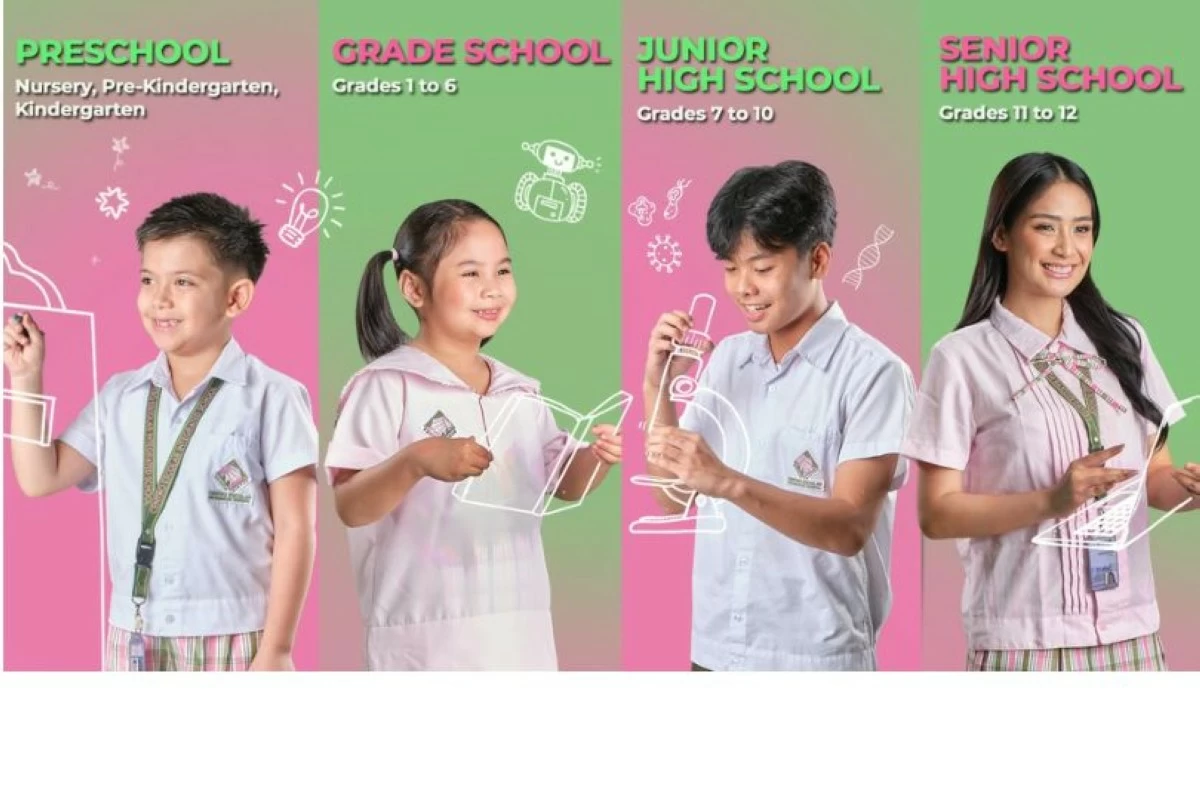
Centro Escolar Integrated School
The educational institution one chooses shapes more than his transcript of records. It influences how one thinks, works, and shows up in the real world. For students making this decision, one question matters most: Will this place help me grow academically and prepare me for the real-world?
Centro Escolar Integrated School (CEIS) makes sure students get both. Here are some of its programs that take learning beyond the classroom.
Complete education from day one
CEIS believes that strong learning begins from the very first day a child walks through the door of its classrooms. At CEIS Malolos, this commitment is reflected in a full preschool, grade school, and high school program that gives students a continuous, well-rounded education from their earliest years.
Christian Living Education, part of the core curriculum from preschool through junior high school, weaves values, respect, responsibility, and service into everyday learning. This connects faith and character to actions both in school and at home.
Singaporean Math is integrated from kindergarten to senior high school, while Robotics Integration in ICT and Science is implemented from Grade 1 to all levels.
"Young learners acquire new habits, attitudes, and routines quickly. Early exposure to responsibility, respect, problem-solving, and cooperation shapes long-term behavior. Practical activities and lessons on values help children connect learning with daily life," said Abigail E. Bernardino, CEIS Malolos principal.
Senior high program academic track
STEM: For the naturally curious
For students drawn to medicine, engineering or information technology, CEIS built its STEM (Science, Technology, Engineering and Mathematics) strand around one idea: learning by doing. This program is not about memorizing answers but more about asking the right questions.
STEM students at CEIS develop analytical thinking and problem-solving skills through research, experiments, and technology-driven learning that are held to the same high standards and innovative approach found in Singapore Science and Math classrooms.
This hands-on approach is backed by real facilities. In the CEIS Robotics Laboratory, students design and program their own robots using VEX IQ and Arduino Kits, taking on projects that push their creativity, logic, and ability to work as a team.
The school's Science Laboratories bring physics, chemistry, and biology off the page, giving students the equipment and space to run experiments, observe real results, and think like scientists.
In CEIS Computer Laboratories, students build digital literacy, explore foundational programming, and learn to use technology with both skill and responsibility.
ABM: For the future decision-makers
Want to understand how businesses actually work – not just in theory, but in practice? At CEIS, Accountancy, Business and Management (ABM) students don't just memorize formulas. They learn to analyze problems, spot opportunities, and make decisions that matter.
"Taking this strand will help students develop their analytical thinking that is crucial in making business strategies," said Tagumpay Esguerra, CEIS Makati assistant principal.
Through accounting, business, and management courses, students build the mindset of entrepreneurs and leaders. ABM students work hands-on with Systems, Applications, and Products (SAP) Business One, the same business software used by actual companies, running simulations in accounting, inventory, sales, and reporting.
It's the kind of experience that closes the gap between classroom lessons and real business operations, so students graduate already familiar with how the professional world runs.
HUMSS: For the community builders
If you are the type who cares about why things are the way they are, Humanities and Social Sciences (HUMSS) might be your strand. Here, students explore culture, society, and human behavior while building critical thinking that drives careers in law, communication, education, and public service.
At CEIS, the strand emphasizes leadership grounded in empathy and civic responsibility – preparing students not just to understand communities, but to strengthen them.
That starts with something foundational: the ability to read, reflect, and articulate ideas. The CEIS Reading Center supports exactly that, offering a wide range of fiction, nonfiction, and reference materials where students engage in guided reading, literacy exercises, and quiet, focused study.
It is a space designed to sharpen comprehension, develop language skills, and build the kind of consistent reading habit that every future lawyer, educator, or public servant needs.
The next step: Entering CEIS
CEIS doesn't require an entrance exam. The school believes readiness is not proven by a test but built through good teaching, strong guidance, and an environment where students can actually grow.
"Programs at CEIS are designed with the end in mind," said Benjie Lalic Dano, CEIS Manila assistant principal. "We focus on preparing students for college and real-world demands while making sure learning stays both academically strong and practically meaningful."
That commitment holds across every branch. CEIS runs on unified curriculum guides, shared learning materials, and common assessment standards – backed by regular training, academic audits, and consistent collaboration among school heads and subject coordinators.
"Periodic observations and benchmarking maintain quality," added Bernardino. "Every student, regardless of branch, receives the same learning experience and opportunities.”
Admissions for senior high students at CEIS Malolos, CEIS Makati, and CEIS Manila for the upcoming academic year are now open. Interested students can apply online at https://www.ceis.edu.ph. For the latest updates and more information about programs, events, and student life, follow CEIS on Facebook at CEISMalolosOfficial, CEISSHSManila, and CEISSHSMakati.