







Inside the ERC's 'no-excuses' reform agenda
Atty. Francis Saturnino "Nino" Juan
Published Mar 28, 2026 08:14 am


Atty. Francis Saturnino “Nino” Juan
When Atty. Francis Saturnino “Nino” Juan took the helm of the Energy Regulatory Commission (ERC) in August 2025, he inherited an agency choked by years of delays. Its credibility was so bruised that power sector stakeholders approached progress not with hope, but with hardened, deliberately low expectations.
The midterm shake-up at the ERC under the Marcos administration was widely viewed as a calculated rescue attempt—an effort to pull an agency from the depths of decade-long backlogs. Deliverables had failed to keep pace due to a slew of missed targets spanning multiple administrations.
With deep roots in the ERC and the broader energy sector, the “repair and reset” Juan has initiated is proving to be more than mere reform; it is a full-scale resuscitation. This adrenaline shot is bringing the agency back to its feet at a critical juncture, as the country faces its toughest energy challenges driven by the lingering Middle East crisis. In this climate, there is simply no room for the ERC to be left in the hands of the inexperienced.
Today, Juan and the Commissioners are leading the organization in full stride. Urgent deliverables are being pushed at a pace that is finally outrunning the agency’s old badge of shame: mabagal (slow). This regulatory reboot means moving fast, making tough calls, and pursuing tangible results that matter for both consumers and the industry’s viability.
From day one, the new ERC Chair knew speed was a vital lifeline. Consumers are feeling the pinch of relentlessly climbing rates, while investments have slowed due to delays in Power Supply Agreement (PSA) approvals, rate adjustments, and rule-making. Every timeline slippage costs the country; there was no time left to waste.
“Our new mantra is regulatory agility. We are an active enabler of progress. We are facilitators. We get things done,” Juan said. “Investors won't wait, and the Filipino people cannot wait for affordable, reliable power.”
To deliver on this mandate, Juan declared: “We are now resolving applications and issuing regulations at unprecedented speed, enforcing strict deadlines, and speaking in one unified voice. We are building an ERC that is responsive, fair, and fast.”
When decisions stall, consumers pay the price

ERC Chairperson Atty. Francis Saturnino “Nino” Juan outlines his “regulatory agility” mantra, aimed at clearing decade-long backlogs and stabilizing power rates. Juan emphasizes that the commission is shifting from a “bottleneck” to an “active enabler” of the country’s energy transition.
The ERC Chair stated categorically that regulatory delays take a heavy toll. They drive up consumer rates, stifle investor cost recoveries, and leave critical rules in limbo. Inaction doesn’t just stall investment; it directly squeezes the pockets of everyday Filipinos.
Addressing current frustrations over power rate spikes, Juan explained: “This is pain that has been postponed. It will remain painful for everyone if we don’t act. Sooner or later, we have to confront it. For us to ultimately fix it, somebody has to do the tough job, and that’s what we ought to deliver at the ERC.”
Juan warned that if regulators fail to act now, consumers will pay even higher prices later, investors will retreat, and capital expenditures (capex) could dry up. Worse, power outages could hit, forcing families and the economy to shoulder a devastating fallout.
“We have to decide. It is our responsibility to make these hard decisions to ensure a better energy future. Our consumers and investors deserve better,” he stressed.
Immediately after taking office, the ERC moved on a critical decision: adjusting the Feed-in-Tariff Allowance (FIT-All) on electric bills, an essential incentive for renewable energy (RE) investments. While this meant a slight increase in bills, doing nothing would have driven investors away and triggered expensive legal battles the country could ill afford. With a seven-to-eight-month backlog choking FIT remittances, swift action was the only way to prevent a looming crisis.
Moving forward, the ERC’s priority this year is fixing long-overdue rate adjustments for private distribution utilities (DUs) and electric cooperatives (ECs) under the legally mandated Rules for Setting Distribution Wheeling Rates (RDWR). This move will shore up utility finances so they can deliver reliable services and, eventually, more competitive rates.
Juan clarified that over a decade of stalled filings had turned the Performance-Based Rate-setting (PBR) framework into a convoluted mess. These fixes are urgent not just for giants like Manila Electric Co. (Meralco) or Visayan Electric Co. (VECO), but for all 121 electric cooperatives serving over 13.2 million households.
“Finally, we will cut the Gordian knot of the rate reset,” Juan noted. “Imagine, that had not been acted upon for more than 10 years, when in fact, the very mandate of the ERC is to regulate the rates passed on to consumers.”
The ERC chief reiterated that the chaotic backlog of delayed PBR-underpinned resets certainly demands decisive action to recover lost costs from stalled applications and to finally bring forward-looking tariff-setting back on track in the deregulated power industry.
To break the deadlock, the ERC crafted a framework that separates charges from past delays (lapsed periods) from new tariff applications. This ensures transparency without letting “old baggage” drag down future adjustments.
“We have to modify the rules and we had to decouple lapsed period with the new applications in such a way that we can already do tariff-setting as forward-looking,” he expounded. “That is the very nature of PBR—it shall be forward-looking and it shall always be based on forecasted costs; especially for capex projects that will be constructed within the covered regulatory periods.”
Juan asserted that the clock is ticking, with the next PBR reset filings scheduled for the first half of this year.
“There’s a real sense of urgency - since for the first time in a decade, the broken tariff-setting system for regulated power utilities will finally be put back together and made whole,” he enthused.
And with the recent PBR-based rate-setting milestones, Juan proudly narrated that the new rules were crafted internally and without any help from foreign consultants; this was a clear manifestation that the ERC had already built the requisite expertise and backbone to get the job done.
He highlighted “this is one of my proudest achievements at the ERC…we didn’t rely on any consultants - local or foreign - to shape the next tariff-setting roadmap for our regulated entities; everything was done in-house, and that is a testament to our local expertise and independence.”
Rewiring regulation for smart grids
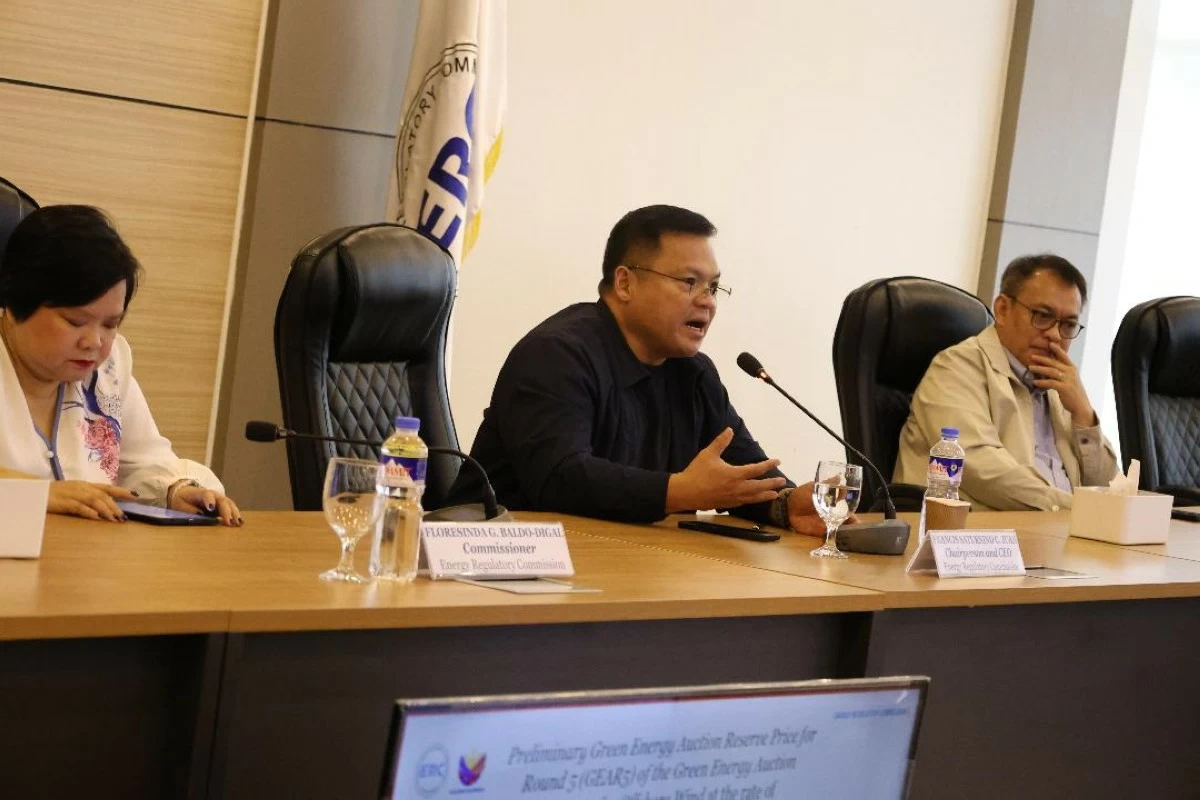
With electricity rates under pressure from global crises, ERC Chair Francis Saturnino Juan asserts that the agency will no longer postpone “tough decisions.” The new leadership is prioritizing long-overdue rate resets for 121 electric cooperatives and major utilities to ensure a fairer deal for over 13 million Filipino households.
As part of the rate-setting agenda, the ERC similarly took a major step on streamlining capex filings for smart grid projects, primarily to fast-track the rollout of advanced metering infrastructure (AMI) or ‘intelligent meters’ for power utilities (including that of industry giant Meralco), so that consumers can better manage their electricity consumption based on their budget.
In simple terms, the AMI or intelligent metering system is like handing consumers a legally-enabled ‘cheat code’ in managing their electricity bills: for them to track usage in real time, stop surges before they happen and take back control on what they can just afford to pay for. As a result, the power will finally be shifted to where it really belongs – that is into the hands of Filipino consumers, not just the utilities.
For Meralco, in particular, the AMI rollout will mark the critical first step into its full smart grid journey – to be chiefly anchored on the four-phased Grid Edge Operations and Control Center (GEOCC) project set for completion by 2030. Kicking off with smart meters and low-voltage monitoring, the plan will scale to integrate electric vehicles, solar and energy storage; while later phases will unleash advanced digitalization across the entire grid, including artificial intelligence (AI) applications.
The ERC ruling on Meralco’s AMI and smart grid applications may serve as a pivotal lever for the entire industry – especially in drawing up prospective cost structures, and in driving transformation to consumer services into the modern age.
Juan qualified that the ERC had to cut through red tape and simplify AMI filings – and that somehow ended the maze of separate, duplicative applications which previously weighed down the applications of power utilities.
“What we did was simplify the whole process,” he said, specifying that “we integrated the AMI application directly into the capex filing, so there’s no more separate smart grid program filings.
The old system was a time-sink for both regulators and power utilities, which is why previous applications failed. We needed to cut the complexity to make it work,” he specified.
The ERC chief elaborated “we pinpointed the core components of a smart grid -- AMI or smart meters, sensors, monitoring systems for predictive analytics, grid automation, and the integration of distributed energy resources, storage, AI, and cybersecurity. We looked at both the basics and the advanced features, and that’s what we initially integrated in the new AMI rules and we would also be embedding the rest in subsequent rule-making for smart grid investment applications.”
Benchmarking and honoring CSP results
As the ERC had been burdened with over 4,000 case backlogs when Juan assumed office, he and the ERC Commissioners - with the help and support of the entire organization, didn’t just focus on clearing the case pile-up; but they set their sights on practical-yet-effective fixes.
Primarily, they zeroed in on flawed rate design, benchmarked filings against similarly-situated cases and overhauled rule-making so this can be applied industry-wide . They worked on simplifying processes such as on the issuance of certificates of compliance (COCs) for new plants and license renewals; as well as standardizing approvals for power supply agreements (PSAs); hence, making compliance faster, leaner and more consistent across the entire supply chain.
Juan pointed out "fast action on COCs is critical, and benchmarking can make that happen. If power plants can’t renew their COCs on time, we’ve seen cases where operational plants with available capacity are stuck, unable to run simply because their COC applications were still pending at the ERC. We need to avoid this at all costs, because when a plant can't operate due to regulatory delays, it creates an artificial supply tightness or shortage; and that could drive up electricity rates that consumers end up paying for."
On addressing these bottlenecks, Juan shared "we’ve created a template to streamline how we evaluate COC applications and speed up the decision-making process. By pinpointing key focus areas, we’ve made it easier to act quickly and efficiently; and that somehow guarantees faster approval by the Commission.”
The ERC chair similarly highlighted another major industry pain point: slow regulatory approvals on tariffs drawn from competitive selection processes (CSPs) of power utilities in underwriting PSAs with generation companies (GenCos), a delay that frequently tightens grid supply unnecessarily.
He reckoned "honoring the results of these CSPs is crucial; especially the tariffs won by power generation companies. That’s what will bring certainty and predictability to the deregulated side of the industry."
The ERC chair argued that honoring the CSP outcomes could significantly lower investment risks in the power sector. By ensuring that the rules are efficiently enforced, investors won’t have to tack on unnecessary risk premiums to their rates, and that in turn, could contribute to rate reduction that will ultimately benefit consumers.
“Our question is simple: if the ERC is going to alter the rates won by GenCos (generation companies) in the CSP, then why did we even bother doing CSP in the first place? If we mandated power utilities to conduct the CSP, it means the process was already comprehensively evaluated and upheld; especially the tariff set during the supply auction. Changing that now introduces unnecessary risk as investors are compelled to add at least P1.00 or P2.00 per kilowatt hour premium; and that in the process would become a cost burden being passed on to consumers. So the logic is simple: if we honor the CSP results, we eliminate that risk premium and the regulatory uncertainty for investors,” he indicated.
Beyond preventing investors from padding rates with unnecessary risk premiums, Juan articulated that the ERC’s focus is now shifting to the non-tariff aspects of CSPs. Specifically, the Commission will evaluate whether distribution utilities (DU) truly need the contracted capacity, or if they’ve been over- or under-contracting.
“This is where the ERC can protect consumers; not only by ensuring they aren’t paying for unneeded capacity, but also by holding power utilities accountable for reliably and efficiently keeping the lights on for their customers,” he stated.
Easing IPO requirements, reinforcing rulebook
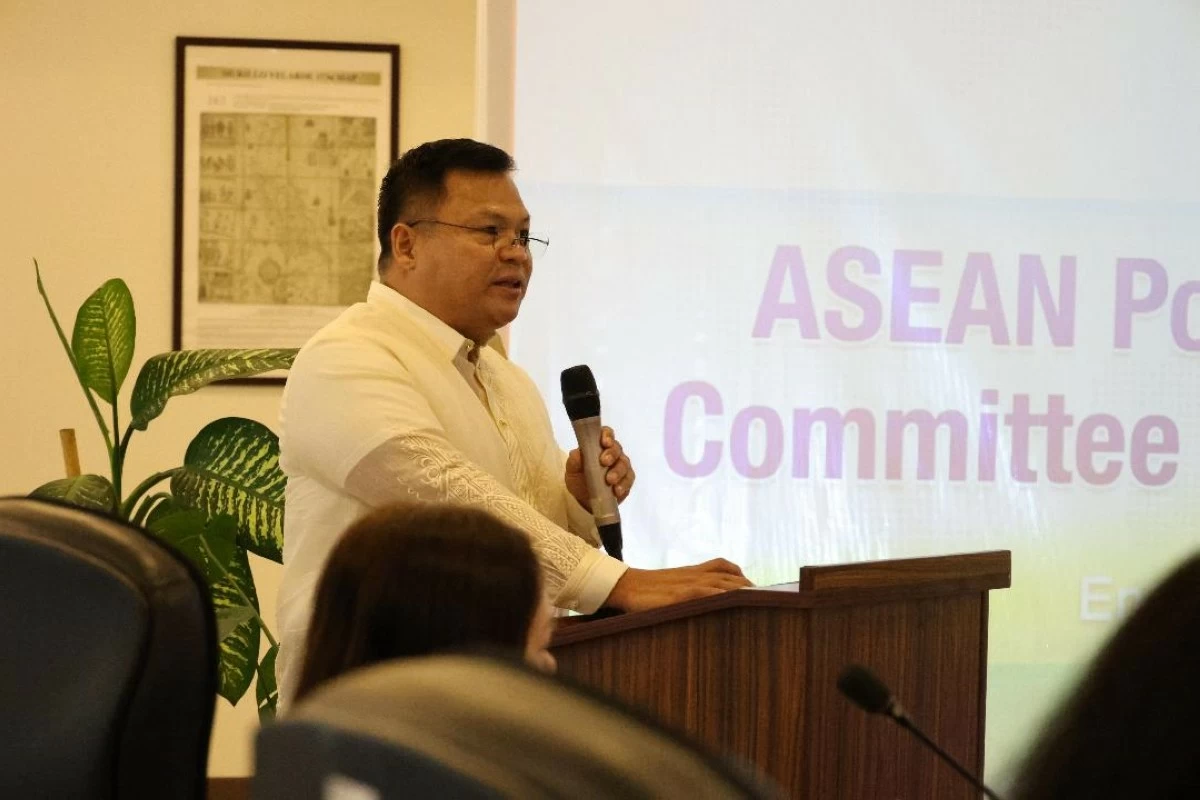
ERC Chair Francis Saturnino Juan discusses the streamlining of “intelligent meter” (AMI) rollouts. By cutting red tape for smart grid projects, the ERC aims to give consumers real-time control over their electricity consumption and budget, effectively “handing the power back” to the public.
As prescribed under Section 43 of the Electric Power Industry Reform Act (EPIRA), power generation companies and distribution utilities must offer at least 15% of their common shares to the public – and the intent of that is to broaden ownership for these industry segments.
But since there had been 'gray areas' which stalled warranted IPO compliance; such as unclear ‘shareholder value’ that could be delivered to shareholders, the ERC is now providing much-needed clarity and efficiency to the rules so that the industry can finally move forward on this policy enforcement minus the formidable ambiguities.
Under the new guidelines issued by the ERC in October last year, covered players have a five-year window to broaden ownership; but the timeline would only start when a company is genuinely ready for a public offering and not merely when it begins operations. That way, a more realistic and viable approach to stocks listing could be met instead of a premature compliance burden.
“This is another achievement we can really take pride in,” Juan underscored; while qualifying that “in the past, there were constant complaints because many companies couldn’t meet the listing requirement, especially when it came to IPOs (initial public offerings) with the Philippine Stock Exchange. The issue was: for them to list, they not only had to meet the PSE's criteria but also prove they could offer real value to potential investors. However, with so many smaller players in the industry now - especially in the renewable energy sector - this emerges a major hurdle. That’s the reason why we had to modify the rules,” he said.
Juan asserted “we relaxed the public offering rules because there are other legal ways for companies to meet listing requirements; whether through the PSE or alternative methods for offering shares. The key is making sure buyers get real value from the company’s assets, and not just an underwhelming stock certificate.”
He contended "the five-year window for listing has been recalibrated; it no longer starts at the moment that the company operations begin, but when that industry player can clearly prove it’s ready for a public offering. This can be shown through solid financial results, both top and bottom lines, or when financial advisors confirm the company is genuinely prepared commercially for market listing."
"What does that mean? We can't blindly apply the public offering requirement to every generation company, which is why we reworked the rules. We made sure that once a company secures a COC, it can't just be downgraded to a PAO (provisional authority to operate) because that just triggers uncertainty; not just for the company, but for the potential buyers of its shares," he noted.
Clearly, the ERC is not just working on improving the rate-setting regime; but it has also been reinforcing its focus on the regulatory challenges ahead. Future approaches could include setting tariffs for nuclear power, crafting decarbonization strategies and preparing for AI integration across the energy supply chain. The Commission is also gearing up for tech advances like long-duration energy storage, electrification for growing EV demand, tackling cybersecurity risks as well as updating standards to keep pace with the sector’s rapid evolution.
At this point, Juan is still straight up admitting that both the industry and consumers are still feeling some sort of ‘electric shock’; with the bills still expected to be rising in the immediate term; although he reassured that once the mandated fixes are fully in play, rates won’t just stabilize, they could also start softening. And with more competitive rates, the whole country will likewise be plugged in into a major economic boost.