ADVERTISEMENT

A nation on an energy war footing

Published Mar 28, 2026 12:05 am  |  Updated Mar 27, 2026 05:52 pm
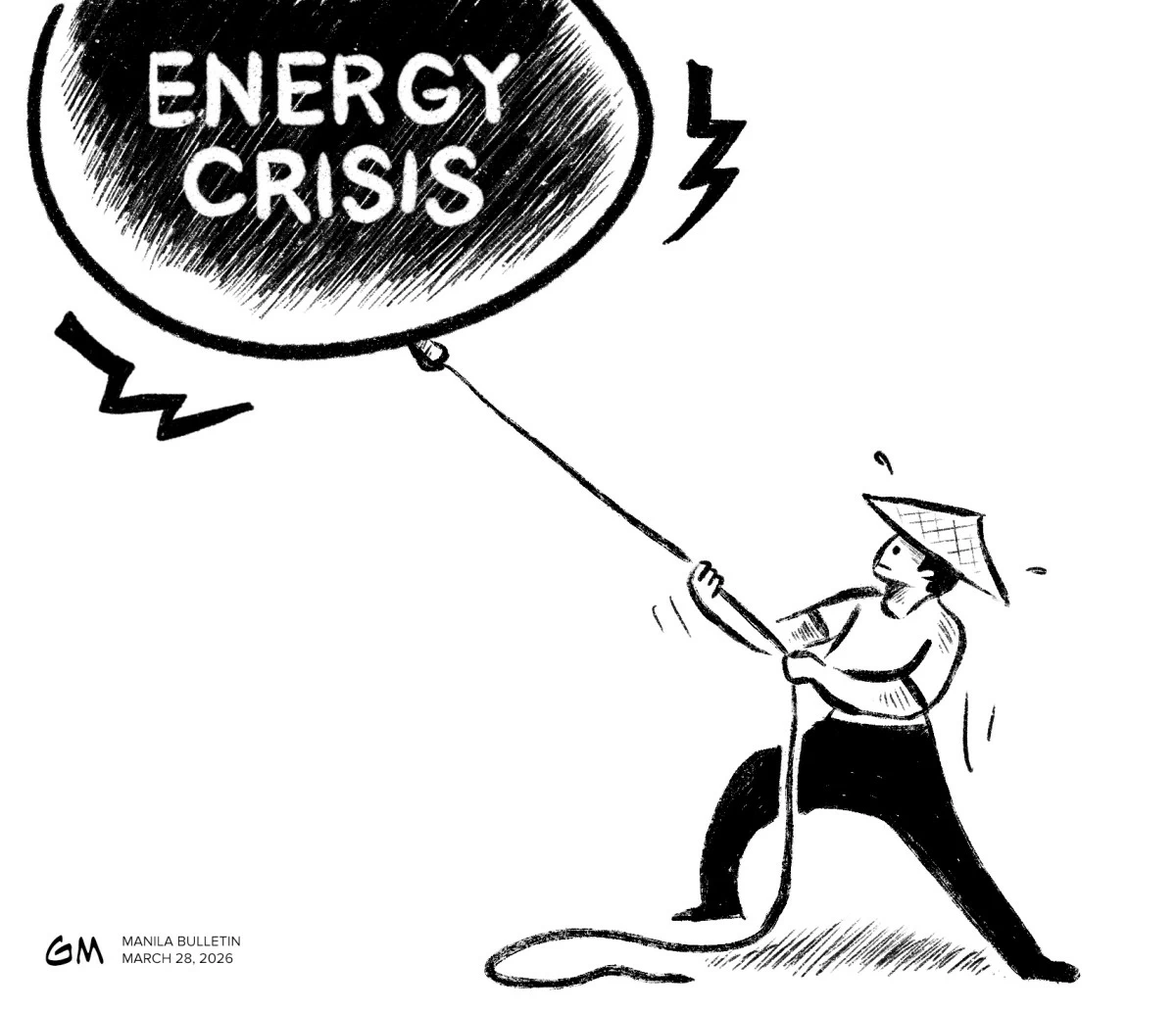
The Philippine economy, long a darling of emerging market growth, is shifting into a defensive war footing. As Brent crude flirts with atmospheric heights and the Middle East conflict continues to choke the Strait of Hormuz—the world’s most vital energy artery—President Ferdinand Marcos Jr. has declared a state of national energy emergency. It is a blunt admission that for a country that imports almost all its fuel, this is not a problem that can be managed with domestic policy alone.
The fallout of this declaration is already hitting the ground. The country’s largest mall operator is cutting morning operating hours to reduce pressure on the power grid. Major domestic carriers are also dropping regional routes to save on jet fuel. These are not just corporate tweaks; they are signals that the era of predictable, affordable energy has been suspended.
The Department of Finance (DOF) is now in damage-control mode, working with the Asian Development Bank (ADB) to line up emergency credit. The goal is to ensure the government does not have to gut school and hospital budgets just to keep the lights on.
However, the balance sheet does not offer much comfort. The Philippines walked into 2026 with a record $147.65 billion in external debt. With the peso hovering near 60 to the dollar and diesel prices potentially hitting ₱200 per liter, there is very little room for a misstep. The ADB’s offer of countercyclical funding is essentially an emergency overdraft to keep essential imports moving, but it adds to a debt pile that is already at record levels. The bank has warned that a prolonged conflict could shave 1.3 percentage points off regional growth while sending inflation soaring.
This fuel shock, according to a former official, is a much more dangerous animal than Covid-19. During the pandemic, the government could at least control the movement of people and manage “controllables” like vaccines. But in a global energy squeeze, those levers simply do not exist. The former official is pushing for a logistics-of-survival approach: using old oil tankers as floating storage for fuel and food, and treating the crisis as a total national mobilization. While big business groups generally support the coordination, there is a real fear that if the government makes conservation measures mandatory, the millions of micro-businesses that drive the economy simply won’t survive.
At the central bank, regulators are in a difficult spot. In an emergency meeting this week, the Bangko Sentral ng Pilipinas kept interest rates at 4.25 percent. The Monetary Board knows that raising rates won’t make oil any cheaper, but it warned that if fuel costs start pushing up the price of everything else—from transport fares to a bag of rice—it will have to act. Investors are already betting that the Philippines will be forced to hike rates by as much as 140 basis points over the next year, making it the most aggressive hiker in Asia.
For most people, the emergency is already a part of daily life. Malls are opening later, flights are fewer, and the cost of living is creeping up. The administration is betting that by acting early—stockpiling what they can and securing loans now—they can prevent a total collapse. However, as industry leaders have pointed out, the visibility on this crisis only extends through June. Beyond that, the Philippines is flying into a geopolitical storm without a clear exit, relying on fiscal stamina and quick logistics to stay afloat.
The coming weeks will determine if this “preemptive strike” by the government is enough to cushion the blow. For now, the strategy is less about growth and entirely about endurance.

Related Tags

ENERGY WAR ENERGY FUEL PHILIPPINE ECONOMY
ADVERTISEMENT
.most-popular .layout-ratio{ padding-bottom: 79.13%; } @media (min-width: 768px) and (max-width: 1024px) { .widget-title { font-size: 15px !important; } }

{{ articles_filter_1561_widget.title }}

.most-popular .layout-ratio{ padding-bottom: 79.13%; } @media (min-width: 768px) and (max-width: 1024px) { .widget-title { font-size: 15px !important; } }

{{ articles_filter_1562_widget.title }}

.most-popular .layout-ratio{ padding-bottom: 79.13%; } @media (min-width: 768px) and (max-width: 1024px) { .widget-title { font-size: 15px !important; } }

{{ articles_filter_1563_widget.title }}

{{ articles_filter_1564_widget.title }}

.mb-article-details { position: relative; } .mb-article-details .article-body-preview, .mb-article-details .article-body-summary{ font-size: 17px; line-height: 30px; font-family: "Libre Caslon Text", serif; color: #000; } .mb-article-details .article-body-preview iframe , .mb-article-details .article-body-summary iframe{ width: 100%; margin: auto; } .read-more-background { background: linear-gradient(180deg, color(display-p3 1.000 1.000 1.000 / 0) 13.75%, color(display-p3 1.000 1.000 1.000 / 0.8) 30.79%, color(display-p3 1.000 1.000 1.000) 72.5%); position: absolute; height: 200px; width: 100%; bottom: 0; display: flex; justify-content: center; align-items: center; padding: 0; } .read-more-background a{ color: #000; } .read-more-btn { padding: 17px 45px; font-family: Inter; font-weight: 700; font-size: 18px; line-height: 16px; text-align: center; vertical-align: middle; border: 1px solid black; background-color: white; } .hidden { display: none; }
function initializeAllSwipers() { // Get all hidden inputs with cms_article_id document.querySelectorAll('[id^="cms_article_id_"]').forEach(function (input) { const cmsArticleId = input.value; const articleSelector = '#article-' + cmsArticleId + ' .body_images'; const swiperElement = document.querySelector(articleSelector); if (swiperElement && !swiperElement.classList.contains('swiper-initialized')) { new Swiper(articleSelector, { loop: true, pagination: false, navigation: { nextEl: '#article-' + cmsArticleId + ' .swiper-button-next', prevEl: '#article-' + cmsArticleId + ' .swiper-button-prev', }, }); } }); } setTimeout(initializeAllSwipers, 3000); const intersectionObserver = new IntersectionObserver( (entries) => { entries.forEach((entry) => { if (entry.isIntersecting) { const newUrl = entry.target.getAttribute("data-url"); if (newUrl) { history.pushState(null, null, newUrl); let article = entry.target; // Extract metadata const author = article.querySelector('.author-section').textContent.replace('By', '').trim(); const section = article.querySelector('.section-info ').textContent.replace(' ', ' '); const title = article.querySelector('.article-title h1').textContent; // Parse URL for Chartbeat path format const parsedUrl = new URL(newUrl, window.location.origin); const cleanUrl = parsedUrl.host + parsedUrl.pathname; // Update Chartbeat configuration if (typeof window._sf_async_config !== 'undefined') { window._sf_async_config.path = cleanUrl; window._sf_async_config.sections = section; window._sf_async_config.authors = author; } // Track virtual page view with Chartbeat if (typeof pSUPERFLY !== 'undefined' && typeof pSUPERFLY.virtualPage === 'function') { try { pSUPERFLY.virtualPage({ path: cleanUrl, title: title, sections: section, authors: author }); } catch (error) { console.error('ping error', error); } } // Optional: Update document title if (title && title !== document.title) { document.title = title; } } } }); }, { threshold: 0.1 } ); function showArticleBody(button) { const article = button.closest("article"); const summary = article.querySelector(".article-body-summary"); const body = article.querySelector(".article-body-preview"); const readMoreSection = article.querySelector(".read-more-background"); // Hide summary and read-more section summary.style.display = "none"; readMoreSection.style.display = "none"; // Show the full article body body.classList.remove("hidden"); } document.addEventListener("DOMContentLoaded", () => { let loadCount = 0; // Track how many times articles are loaded const offset = [1, 2, 3, 4, 5, 6, 7, 8, 9, 10]; // Offset values const currentUrl = window.location.pathname.substring(1); let isLoading = false; // Prevent multiple calls if (!currentUrl) { console.log("Current URL is invalid."); return; } const sentinel = document.getElementById("load-more-sentinel"); if (!sentinel) { console.log("Sentinel element not found."); return; } function isSentinelVisible() { const rect = sentinel.getBoundingClientRect(); return ( rect.top < window.innerHeight && rect.bottom >= 0 ); } function onScroll() { if (isLoading) return; if (isSentinelVisible()) { if (loadCount >= offset.length) { console.log("Maximum load attempts reached."); window.removeEventListener("scroll", onScroll); return; } isLoading = true; const currentOffset = offset[loadCount]; window.loadMoreItems().then(() => { let article = document.querySelector('#widget_1690 > div:nth-last-of-type(2) article'); intersectionObserver.observe(article) loadCount++; }).catch(error => { console.error("Error loading more items:", error); }).finally(() => { isLoading = false; }); } } window.addEventListener("scroll", onScroll); });

Sign up by email to receive news.