






Manila Bulletin
 Philippines
National
Talks on South China Sea issue to push through amid PH's move to curb oil supply threats
Philippines
National
Talks on South China Sea issue to push through amid PH's move to curb oil supply threats
Philippines
National
Talks on South China Sea issue to push through amid PH's move to curb oil supply threats
Talks on South China Sea issue to push through amid PH's move to curb oil supply threats
Published Mar 27, 2026 05:08 pm


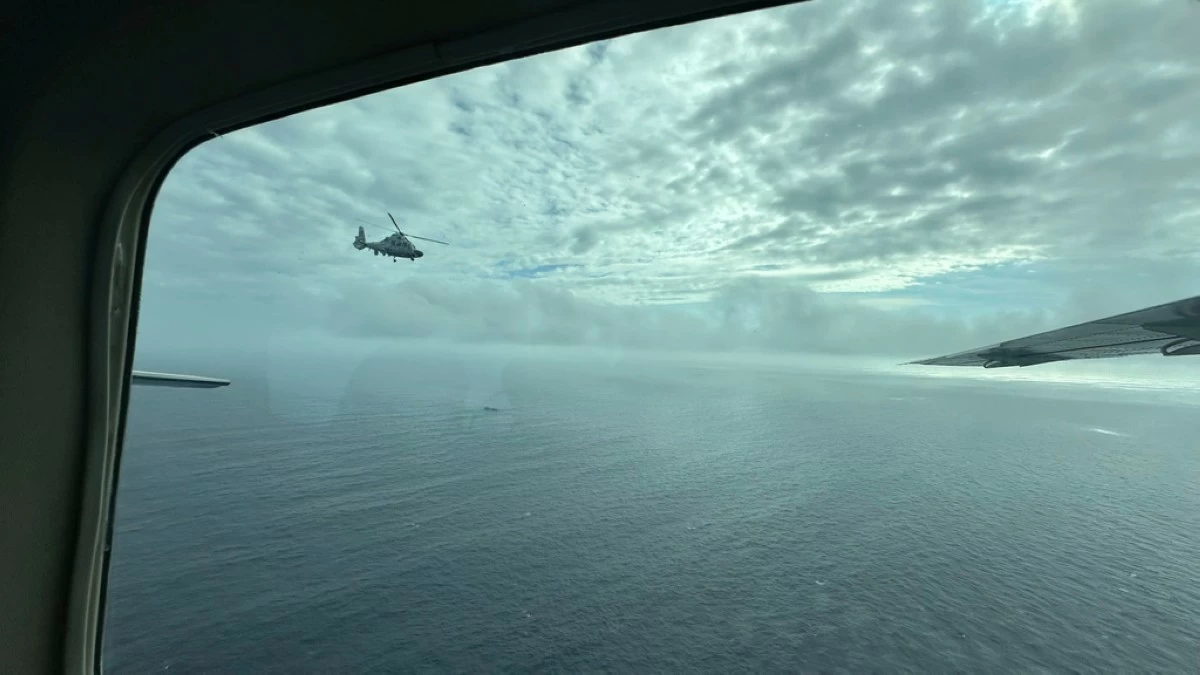
A Chinese military helicopter flies close to a Philippine Bureau of Fisheries and Aquatic (BFAR) aircraft above Scarborough shoal on Feb. 18, 2025. (AP Photo/Joeal Calupitan, File)
Negotiations on the South China Sea issue between the Philippines and China, as well as between the Association of Southeast Asian Nations (ASEAN) and China, are pushing through despite adjustments to in-person meetings placed by foreign governments to curb the effects of the looming oil supply problems.
The Department of Foreign Affairs (DFA) confirmed Friday, March 27, that the 24th Philippines-China Foreign Ministry Consultations (FMC) and the 11th Meeting of the Philippines-China Bilateral Consultation Mechanism on the South China Sea (BCM) are now being held in Quanzhou, China, until the next day.
DFA Undersecretary Leo Herrera-Lim is leading the Philippine delegation, just like what he did in January when Manila and Beijing resumed political dialogue on maritime issues.
"The two meetings [are] important bilateral dialogue mechanisms that are meant for frank and candid exchanges on bilateral issues and concerns, as well as exploring possible cooperation in non-sensitive areas," the DFA said, describing the current talks.
Meanwhile, DFA ASEAN Affairs spokesman Dax Imperial said discussions and engagements on the Code of Conduct in the South China Sea "will continue" among regional bloc members and China.
Imperial's confirmation came after President Marcos earlier stated that the upcoming ASEAN events, which are currently being held in the Philippines, might be shortened to only focus on "barebones" as the country is battling a national energy emergency.
"The streamlining is being done in response to the energy emergency," Imperial explained.
ASEAN, currently chaired by the Philippines, and China had already expressed hope to conclude talks on the future COC. It was the most remarkable pronouncement between the two sides after the decades-long conflict in the waterway.
"While we are putting more focus on the most important issues, we continue to work on other areas important to the country and the region," Imperial added.