







Salesforce reveals key insights of AI use in the country
Published Mar 27, 2026 10:50 am
|
Updated Mar 27, 2026 06:21 pm


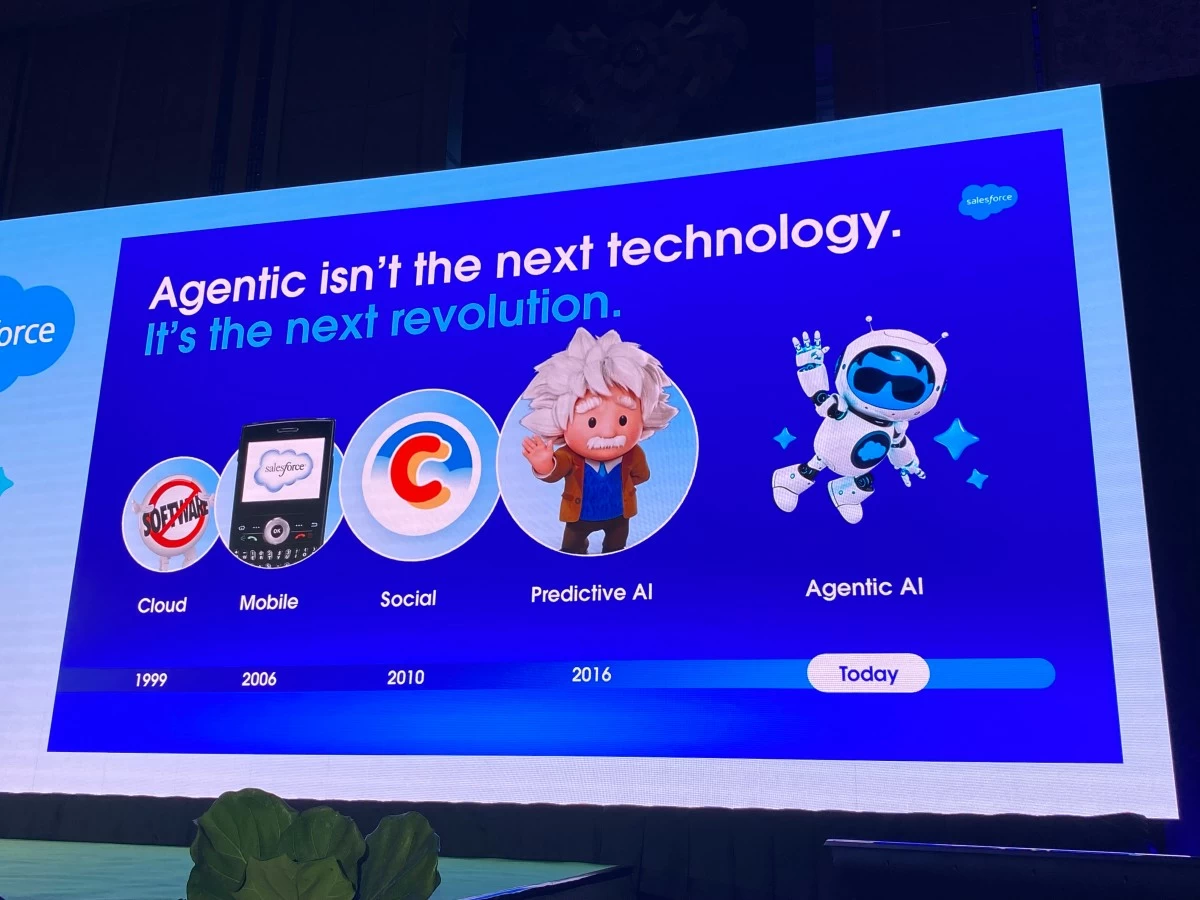
Agentforce World Tour Manila 2026 is a convention run by Salesforce to reveal new research and insight. This year, they highlight workers’ use of AI in their personal lives.
According to Salesforce research, 68% of knowledge workers said their personal use of AI has increased the trust they have in using AI tools at work. Salesforce adds that, “with increasing personal use, the time is ripe for enterprises in the Philippines to drive enterprise AI adoption and value by creating an AI-fluent workforce.”
A knowledge worker is someone whose job is to handle or use information.
Salesforce claims that with trust in AI on the rise, 70% of knowledge workers in the country said their personal use of AI has increased their confidence in using AI tools at work. They also mentioned that the highest percentage of those workers are Gen Z and that 74% of them reported that personal AI use has positively impacted their perception of AI at work.
The survey conducted by YouGov and commissioned by Salesforce, surveyed 1,057 knowledge workers in the Philippines to understand worker attitudes and perceptions of AI/agentic AI.
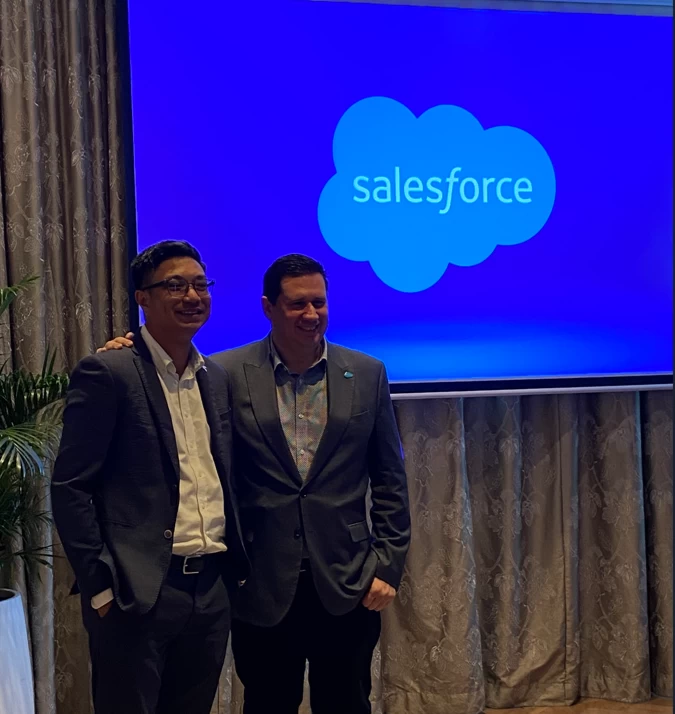
Abraham Cuevas, country general manager, Salesforce Philippines; and Gavin Barfield, vice president and chief technology officer, solutions, Salesforce ASEAN
Nearly all knowledge workers in the Philippines expect to use AI and AI agents at work, and for their jobs to change to some degree. Only 3% of knowledge workers in the Philippines expect never to use AI agents while over 56% are already making use of AI agents to help them perform better, faster or more creatively. However, despite a clear openness to adopting agentic AI, there is a skills and knowledge gap emerging, which can prevent businesses from activating Agentic AI to its fullest extent.
Salesforce claims that enterprises who fail to provide enterprise-grade AI may increase the risk of “shadow AI,” which is a term they use to describe workers using unapproved tools that operate outside the organization’s visibility or control. This would create security vulnerabilities and exposure of sensitive data.
“The growing trust in AI across the Philippines is being driven from the bottom up, with personal curiosity currently outpacing corporate strategy,” said Abraham Cuevas, country general manager, Salesforce Philippines. “However, individual use alone doesn't translate into enterprise-scale impact. With the government committing P2.6B to AI projects by 2028, businesses must act now to fuel our national transformation from a service economy into a knowledge-driven innovation hub and capture the projected P2.8 trillion in productivity gains from AI. The Filipino workforce is ready; it is now up to organizations to provide the secure, enterprise-grade frameworks and skills support that turn personal experimentation into a coordinated engine for growth and innovation in the Agentic Enterprise.”
When asked how AI will impact their work in the future, 45% of knowledge workers said they expect to use AI agents to both automate some tasks and augment others. 26% believe human-to-AI collaboration skills will be crucial in the future.
With human-AI collaboration increasingly a given, knowledge workers in the Philippines want clarity and high-quality tools in order to feel confident using AI agents.
Other factors include explicit reassurance from companies that human skills will remain central to work and strong guardrails to ensure security, privacy, and compliance (33%).
Abraham Cuevas added, “Our study shows that workers in the Philippines are willing to embrace AI, but this is only the first step. What we need now is AI fluency: the ability to confidently collaborate with AI to drive business impact at speed and scale. With Filipino knowledge workers already expecting to use AI agents to both automate and augment their roles, the mandate for organizations is clear. Providing transparency, access to tools, and skills development gives employees the agency to not only use AI, but to fundamentally redesign the way they work for the Agentic Enterprise.”