







PSEi declines after peso hits new record low
Published Mar 27, 2026 04:59 pm


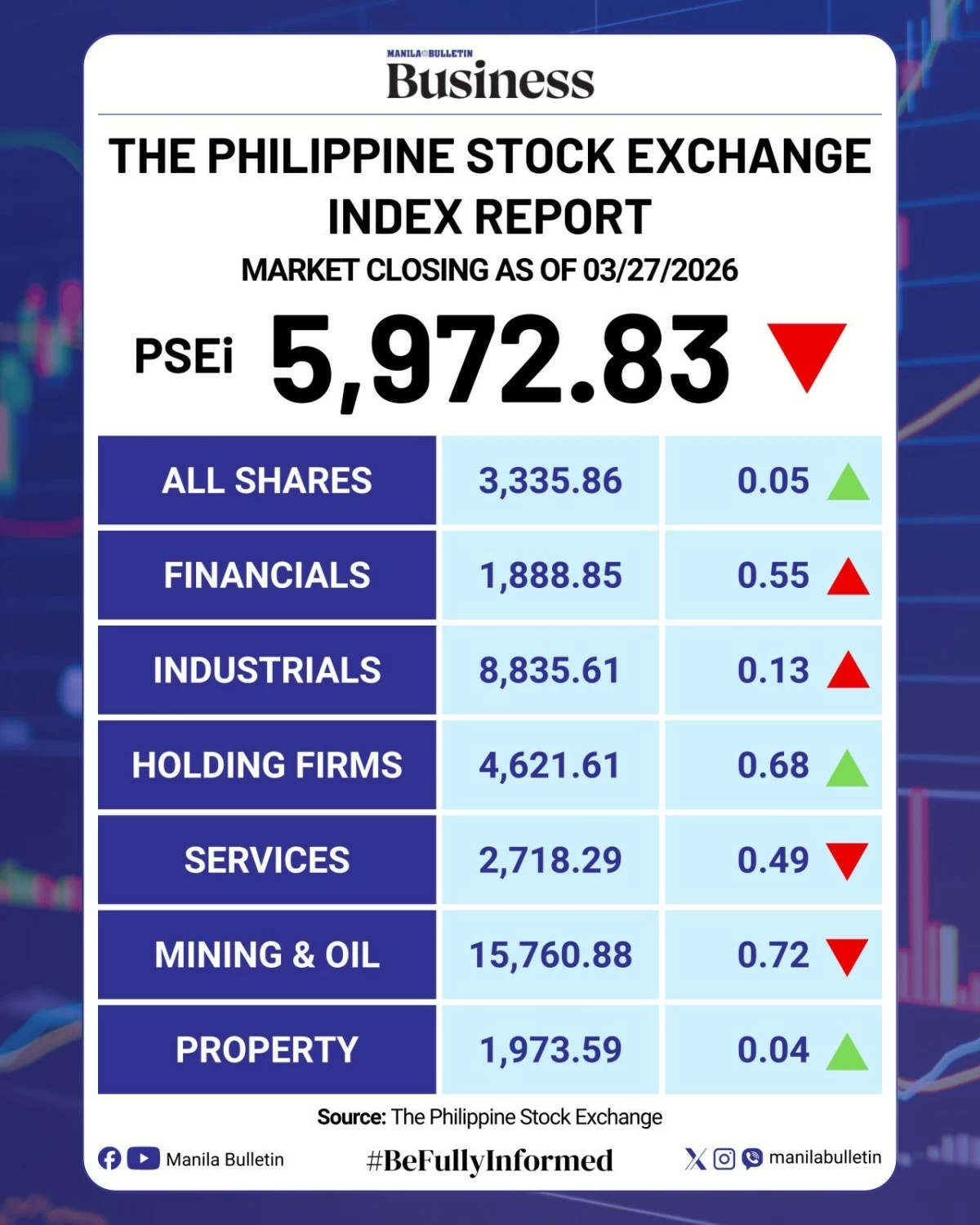
The Philippine Stock Exchange index (PSEi) was slightly lower on Friday, March 27, after the peso slid to a new low amid high oil prices fueled by the conflict in the Middle East.
The main index shed 11.37 points, or 0.19 percent, to close at 5,972.83. Miners led the correction, while conglomerates and property firms managed to advance.
Volume improved to 2.47 billion shares worth ₱8.95 billion. Gainers inched out losers—92 to 91, with 54 unchanged.
“The PSEi ended the week relatively flat as persistent geopolitical tensions and local currency depreciation continued to weigh on investor sentiment,” said Regina Capital Development Corp. managing director Luis Limlingan.
Risk appetite remained subdued, leading to selective buying and generally cautious trading activity. Market participants largely stayed on the sidelines, awaiting clearer signals on global developments.
Philstocks Financial Inc. research manager Japhet Tantiangco said, “The local market extended its decline amid rising inflation expectations as the duration of the United States (US)/Israel-Iran war remains uncertain.”
In its off-cycle policy meeting last Thursday, March 26, the Bangko Sentral ng Pilipinas (BSP) raised its inflation projection for 2026 from 3.6 percent to 5.1 percent.
Rizal Commercial Banking Corp. (RCBC) chief economist Michael Ricafort said the PSEi dipped for a second day after the peso posted a new intraday record low of ₱60.47 early on Friday following higher BSP inflation estimates for 2026 and 2027. The peso closed on Friday at a new historic low of ₱60.55 against the US dollar.
He cited market doubts on ceasefire on the war in Iran amid diverging conditions from the US and Iran.