







Japan extends loan for PH's Metro Manila Subway Project
Published Mar 27, 2026 03:02 pm


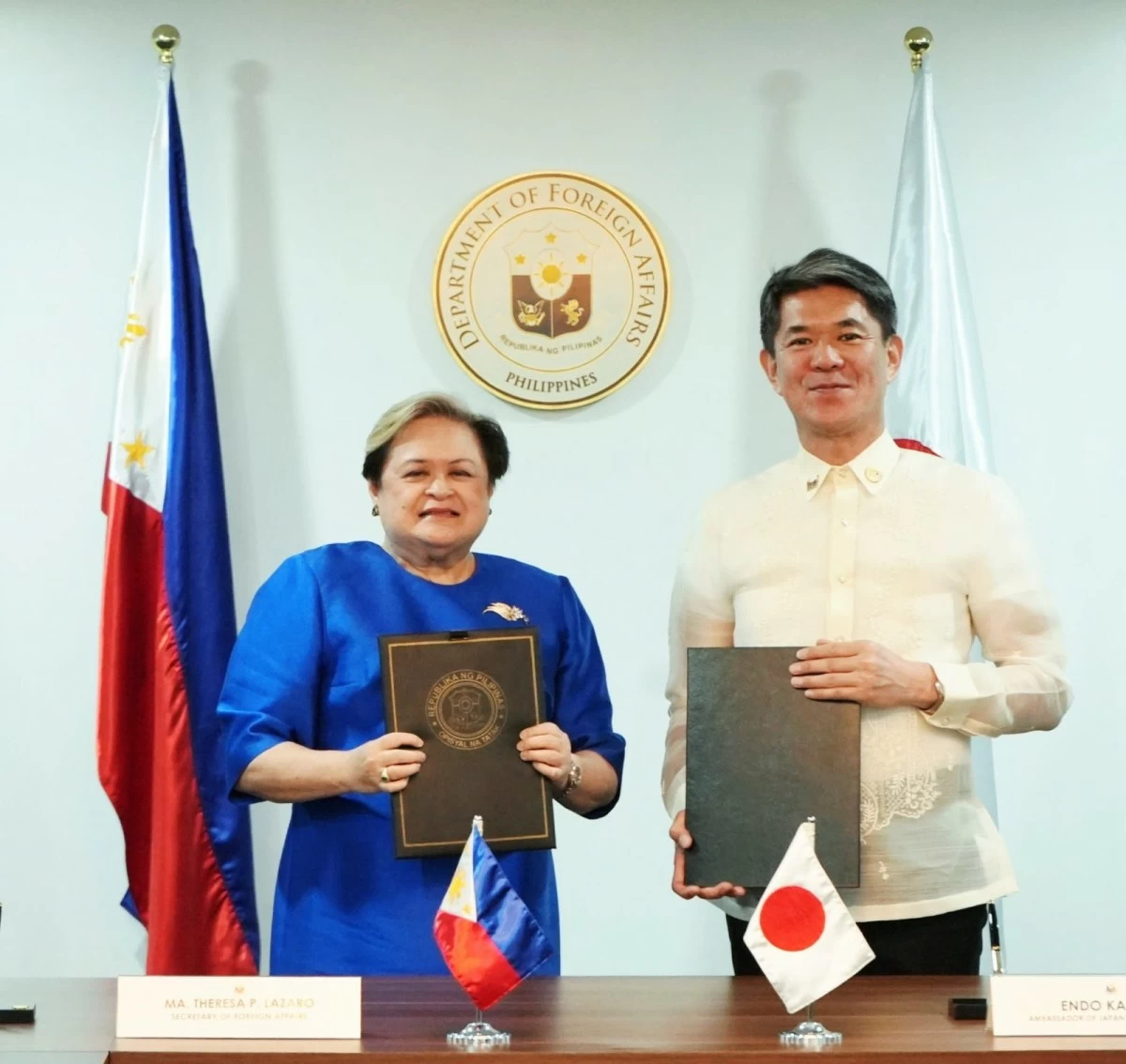
The Philippines and Japan on Friday, March 27, signed an exchange of notes for the fourth tranche of loan that Tokyo is extending for the construction of the Metro Manila Subway Project.
Department of Foreign Affairs (DFA) Secretary Ma. Theresa Lazaro and Japanese Ambassador to the Philippines Endo Kazuya exchanged notes for a loan amounting to 220 billion Japanese yen or P84.81 billion for the Phase 1 construction of the subway project.
Phase 1 of the project, according to the DFA, aims "to accommodate the increasing transport demand and alleviate traffic congestion in Metro Manila" as well as "mitigate air pollution and climate variation through the construction of a 27.5-kilometer subway line from Valenzuela to Bicutan NAIA Terminal 3."
The project will also involve the following:
- Installation of a 33.1 kilometer electromechanical system;
- Physical integration with the North-South Commuter Railway (NCSR) System, particularly the FTI to Bicutan segment;
- Construction of a depot and 17 stations, two of which will be constructed through a separate loan under the NCSR System; and
- Procurement of thirty (30) train sets.
Manila and Tokyo also exchanged notes for Japan's loan for the Central Mindanao High Standard Highway Construction Project (Cagayan de Oro–Malaybalay Section), amounting to 1.672 billion Japanese yen or P644 million.
That will cover the Engineering Services for Section 1 of the project, according to DFA.
The project, DFA said, is expected to reduce travel time between Cagayan de Oro and Malaybalay from 6.5 to 3.5 hours to enhance trade competitiveness within the region.
It will involve the following:
- Development of highway sections built to higher technical standards;
- Construction of approximately 64.7 kilometers of road with a four-lane design traversing Tagoloan and Cagayan de Oro in Misamis Oriental, as well as Manolo Fortich, Sumilao, Impasugong, and Malaybalay in Bukidnon;
- Construction of 47 bridges, including 9 special long-span bridges, each with main spans exceeding 100 meters
"Both reflect a single development imperative: to make progress felt by our people,
growth must be both efficient and inclusive," Lazaro said in her speech, describing the benefit of the projects.
"We must ease congestion and improve integration where economic activity is concentrated, and strengthen connectivity in areas where potential is still being unlocked," she added.