






Manila Bulletin
 Business
The Stock Market
Gov't takeover? RSA invites state to reacquire Petron stake
Business
The Stock Market
Gov't takeover? RSA invites state to reacquire Petron stake
Business
The Stock Market
Gov't takeover? RSA invites state to reacquire Petron stake
Gov't takeover? RSA invites state to reacquire Petron stake
Published Mar 27, 2026 03:45 pm


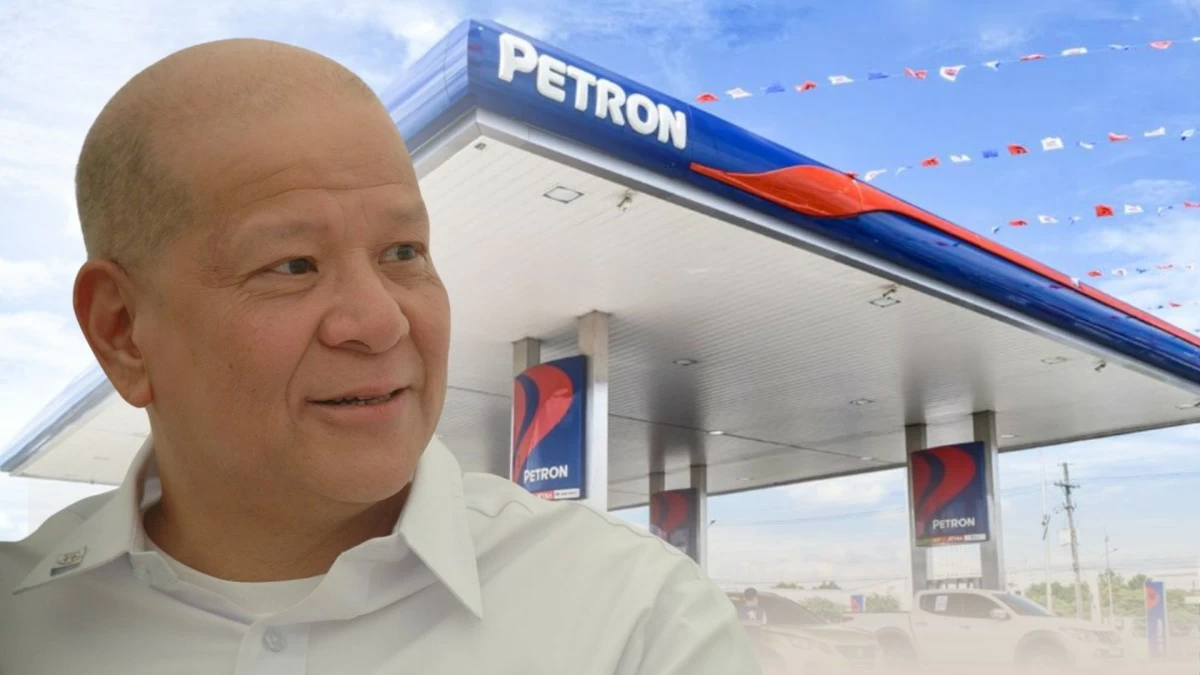
Billionaire Ramon S. Ang is reviving a proposal to sell Petron Corp. back to the government, framing the move as a way to bolster energy security while the nation grapples with a declared national energy emergency.
The offer from the San Miguel Corp. chairman and chief executive officer comes as lawmakers weigh the feasibility of renationalizing the country’s sole remaining oil refinery to gain more direct control over domestic fuel prices and supply chains.
Ang, who first floated the idea during congressional hearings in 2021, said the invitation for a state buyout remains on the table.
He noted that San Miguel is prepared to negotiate a deal that aligns with the government’s strategic interests, provided the state believes public ownership would better shield the economy from global market shocks.
“If the government believes that Petron under its ownership will better serve the Filipino people, especially in times like these, we are ready to sit down and make it happen,” Ang said in a statement.
To address potential concerns regarding the government’s fiscal constraints, Ang suggested that a transaction could be structured in tranches based on a fair market valuation. This phased approach would allow the Bureau of the Treasury to manage the acquisition without requiring an immediate, multi-billion-peso lump-sum payment during a period of tight budgetary overhead.
Ang defended Petron’s operational history under San Miguel’s leadership, emphasizing that the company has prioritized industrial stability over immediate bottom-line results.
He cited the ₱11 billion loss the refiner booked in 2020 as evidence of the volatility inherent in the sector. Despite such headwinds, the conglomerate invested $2 billion to modernize the Bataan refinery, a facility capable of processing 180,000 barrels per day.
Ang pointed out that while competitors opted to shutter local refining operations in favor of more cost-efficient imports, San Miguel maintained domestic production to ensure the Philippines retained its refining self-sufficiency.
The strategic value of the Bataan facility has intensified as geopolitical tensions in the Strait of Hormuz threaten global crude flows, contributing to localized price spikes. Petron currently supplies approximately one-third of the country's total fuel requirements.
According to Ang, the focus of any potential divestment is not a matter of corporate ownership, but rather a determination of which entity is best positioned to manage the country's long-term energy requirements.
Petron was originally established under the Philippine National Oil Co. during the 1973 oil embargo to insulate the economy from global supply crunches.
Saudi Arabian Oil Co. (Aramco) later became a major stakeholder before selling its interest to the Ashmore Group in 2008. San Miguel took control of the refiner in 2009.
While the buyout remains open, Rizal Commercial Banking Corp. (RCBC) economist Michael Ricafort expressed skepticism as it could be viewed as a fiscal concern that leaves the government with a larger debt.
“[This is] fiscally challenging given the budget deficits and the additional debt required. Though signals of openness, [there would be] additional budget deficits and debt to operate with possible subsidies,” he told Manila Bulletin.