ADVERTISEMENT

DepEd to launch largest school-based feeding program for 4.63M learners in June

P25.6B SBFP expansion to boost student nutrition; Angara pushes farm-to-school model in Batangas

Published Mar 27, 2026 01:43 pm
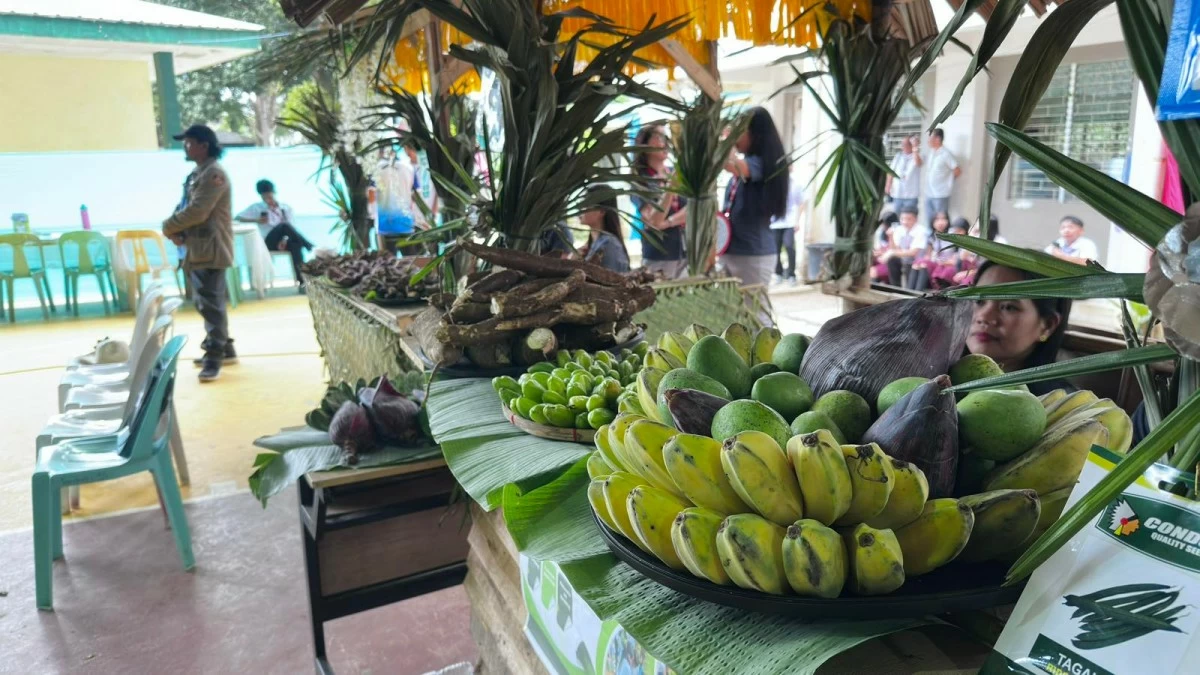
From farms to classrooms: The Department of Education (DepEd) strengthens school feeding by sourcing locally to improve nutrition and livelihoods. (DepEd photo)
The Department of Education (DepEd) will roll out its largest School-Based Feeding Program (SBFP) in June 2026, targeting 4.63 million learners nationwide as part of a major push to improve student nutrition.
In a statement issued on March 26, DepEd said the expanded feeding program is backed by a historic P25.6 billion budget for School Year 2026–2027—more than double the P11.8 billion allocation in 2025.
DepEd said the increased funding will allow the SBFP to reach over 4.6 million learners, making it one of the largest school nutrition programs in the Philippines.
Angara pushes farm-to-school model
During a visit to Batangas, DepEd Secretary Sonny Angara emphasized the importance of linking agriculture with education to sustain the expanded feeding program.
On March 26, Angara met with farmer cooperatives, school officials, and education stakeholders to strengthen farm-to-school partnerships under the SBFP.
At Tangway Integrated School, he led discussions with nine farmer cooperatives on directly supplying fresh vegetables to schools.
The farm-to-school model enables schools to source produce locally, ensuring fresher meals for learners while creating a stable market for farmers and supporting rural livelihoods.
“Kinikilala natin ang mahalagang papel ng ating mga magsasaka, lalo na sa gitna ng mga hamon na kanilang kinakaharap (We recognize the vital role of our farmers, especially amid the challenges they face),” Angara said.
“Malaki ang ambag nila sa Expanded School-Based Feeding Program na mas marami nang mag-aaral ang maaabot (They have made a significant contribution to the Expanded School-Based Feeding Program, which now reaches more students),” he added.
Expanded SBFP to benefit millions
DepEd said the enhanced School-Based Feeding Program will begin in June and is expected to benefit 4.63 million learners, particularly those who are undernourished.
Tangway Integrated School, which serves 895 learners, currently implements feeding initiatives using vegetables from its school garden and nearby farms.
For School Year 2025–2026, the school provided meals to 121 undernourished learners, resulting in improved attendance, better health outcomes, and increased classroom participation.
Pilot site for direct farmer supply
The school is being developed as a pilot site for a direct procurement model, allowing farmer cooperatives to supply produce directly to schools.
This approach is expected to improve food quality, reduce supply chain gaps, and ensure a consistent supply of nutritious meals. It also provides farmers with a reliable income stream while strengthening local agricultural economies.
Angara, together with Executive Secretary Ralph Recto, also inaugurated a four-storey, 16-classroom building at Padre Valerio Malabanan Elementary School in Lipa City.
The new facility supports efforts to address classroom shortages and improve learning environments in public schools.
Part of 'Matatag na Batangas' initiative
DepEd said the visit forms part of the “Matatag na Batangas Tungo sa Bagong Pilipinas” initiative, which promotes collaboration between national agencies and local governments.
The initiative integrates education, agriculture, and infrastructure development to deliver sustainable benefits for both learners and farming communities. 

Related Tags

DepEd school-based feeding program 2026 SBFP Philippines expansion feeding program budget 25.6 billion farm-to-school model Philippines student nutrition program Philippines DepEd Secretary Sonny Angara DepEd
ADVERTISEMENT
.most-popular .layout-ratio{ padding-bottom: 79.13%; } @media (min-width: 768px) and (max-width: 1024px) { .widget-title { font-size: 15px !important; } }

{{ articles_filter_1561_widget.title }}

.most-popular .layout-ratio{ padding-bottom: 79.13%; } @media (min-width: 768px) and (max-width: 1024px) { .widget-title { font-size: 15px !important; } }

{{ articles_filter_1562_widget.title }}

.most-popular .layout-ratio{ padding-bottom: 79.13%; } @media (min-width: 768px) and (max-width: 1024px) { .widget-title { font-size: 15px !important; } }

{{ articles_filter_1563_widget.title }}

{{ articles_filter_1564_widget.title }}

.mb-article-details { position: relative; } .mb-article-details .article-body-preview, .mb-article-details .article-body-summary{ font-size: 17px; line-height: 30px; font-family: "Libre Caslon Text", serif; color: #000; } .mb-article-details .article-body-preview iframe , .mb-article-details .article-body-summary iframe{ width: 100%; margin: auto; } .read-more-background { background: linear-gradient(180deg, color(display-p3 1.000 1.000 1.000 / 0) 13.75%, color(display-p3 1.000 1.000 1.000 / 0.8) 30.79%, color(display-p3 1.000 1.000 1.000) 72.5%); position: absolute; height: 200px; width: 100%; bottom: 0; display: flex; justify-content: center; align-items: center; padding: 0; } .read-more-background a{ color: #000; } .read-more-btn { padding: 17px 45px; font-family: Inter; font-weight: 700; font-size: 18px; line-height: 16px; text-align: center; vertical-align: middle; border: 1px solid black; background-color: white; } .hidden { display: none; }
function initializeAllSwipers() { // Get all hidden inputs with cms_article_id document.querySelectorAll('[id^="cms_article_id_"]').forEach(function (input) { const cmsArticleId = input.value; const articleSelector = '#article-' + cmsArticleId + ' .body_images'; const swiperElement = document.querySelector(articleSelector); if (swiperElement && !swiperElement.classList.contains('swiper-initialized')) { new Swiper(articleSelector, { loop: true, pagination: false, navigation: { nextEl: '#article-' + cmsArticleId + ' .swiper-button-next', prevEl: '#article-' + cmsArticleId + ' .swiper-button-prev', }, }); } }); } setTimeout(initializeAllSwipers, 3000); const intersectionObserver = new IntersectionObserver( (entries) => { entries.forEach((entry) => { if (entry.isIntersecting) { const newUrl = entry.target.getAttribute("data-url"); if (newUrl) { history.pushState(null, null, newUrl); let article = entry.target; // Extract metadata const author = article.querySelector('.author-section').textContent.replace('By', '').trim(); const section = article.querySelector('.section-info ').textContent.replace(' ', ' '); const title = article.querySelector('.article-title h1').textContent; // Parse URL for Chartbeat path format const parsedUrl = new URL(newUrl, window.location.origin); const cleanUrl = parsedUrl.host + parsedUrl.pathname; // Update Chartbeat configuration if (typeof window._sf_async_config !== 'undefined') { window._sf_async_config.path = cleanUrl; window._sf_async_config.sections = section; window._sf_async_config.authors = author; } // Track virtual page view with Chartbeat if (typeof pSUPERFLY !== 'undefined' && typeof pSUPERFLY.virtualPage === 'function') { try { pSUPERFLY.virtualPage({ path: cleanUrl, title: title, sections: section, authors: author }); } catch (error) { console.error('ping error', error); } } // Optional: Update document title if (title && title !== document.title) { document.title = title; } } } }); }, { threshold: 0.1 } ); function showArticleBody(button) { const article = button.closest("article"); const summary = article.querySelector(".article-body-summary"); const body = article.querySelector(".article-body-preview"); const readMoreSection = article.querySelector(".read-more-background"); // Hide summary and read-more section summary.style.display = "none"; readMoreSection.style.display = "none"; // Show the full article body body.classList.remove("hidden"); } document.addEventListener("DOMContentLoaded", () => { let loadCount = 0; // Track how many times articles are loaded const offset = [1, 2, 3, 4, 5, 6, 7, 8, 9, 10]; // Offset values const currentUrl = window.location.pathname.substring(1); let isLoading = false; // Prevent multiple calls if (!currentUrl) { console.log("Current URL is invalid."); return; } const sentinel = document.getElementById("load-more-sentinel"); if (!sentinel) { console.log("Sentinel element not found."); return; } function isSentinelVisible() { const rect = sentinel.getBoundingClientRect(); return ( rect.top < window.innerHeight && rect.bottom >= 0 ); } function onScroll() { if (isLoading) return; if (isSentinelVisible()) { if (loadCount >= offset.length) { console.log("Maximum load attempts reached."); window.removeEventListener("scroll", onScroll); return; } isLoading = true; const currentOffset = offset[loadCount]; window.loadMoreItems().then(() => { let article = document.querySelector('#widget_1690 > div:nth-last-of-type(2) article'); intersectionObserver.observe(article) loadCount++; }).catch(error => { console.error("Error loading more items:", error); }).finally(() => { isLoading = false; }); } } window.addEventListener("scroll", onScroll); });

Sign up by email to receive news.