






 Business
Banking & Finance
DBP extends ₱2-billion loan to Kabankalan for flood control
Business
Banking & Finance
DBP extends ₱2-billion loan to Kabankalan for flood control
DBP extends ₱2-billion loan to Kabankalan for flood control


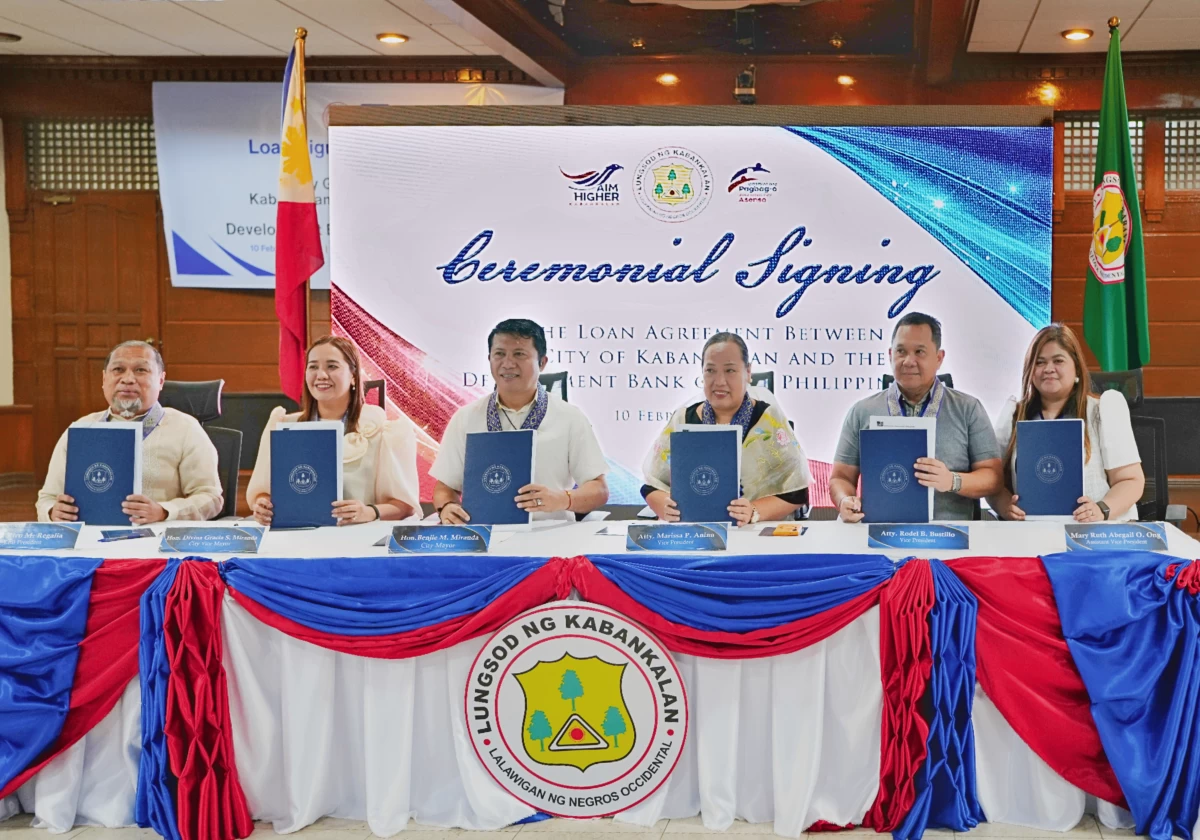
State-owned Development Bank of the Philippines (DBP) signed a ₱2-billion loan agreement with the City of Kabankalan to fund infrastructure and disaster resiliency projects, marking a significant escalation in state-backed efforts to combat chronic flooding in the Negros Occidental region.
In a statement, Michael O. de Jesus, DBP president and chief executive officer, said the state-owned lender approved three separate term loans under its Assistance for Economic and Social Development for LGUs Financing Program.
De Jesus said the financing package comprises a ₱1.68-billion loan with a 15-year maturity, a ₱318.7-million loan spanning 10 years, and a ₱1.3-million loan for five years.
DBP said the proceeds are earmarked for climate adaptation public works and engineering projects designed to mitigate the seasonal devastation caused by rising water levels.
Kabankalan City, the largest land area component city in Negros Occidental with a population exceeding 200,000, has struggled for decades with systemic flooding. The city is a primary rice producer for the province, but its agricultural output is frequently threatened by overflow from the Ilog-Hilabanga River.
The river acts as a natural catch basin for the province during the heavy rainfall and typhoons that regularly batter the archipelago, leading to significant economic disruptions and threats to regional food security.
De Jesus emphasized that DBP has maintained a long-standing partnership with Kabankalan that predates its incorporation as a city in 1997.
He noted that the latest initiative is intended to strengthen the bank’s relationship with the local government unit while addressing the specific infrastructure gaps that hinder the city's long-term economic stability.
The ASENSO program, which facilitated this deal, is designed to fund a broad range of local initiatives, including water supply systems, healthcare facilities, and the rehabilitation of public markets.
DBP, the ninth-largest bank in the Philippines by assets, continues to pivot its credit support toward four priority sectors: infrastructure and logistics, micro, small and medium enterprises, environmental protection, and social services.
The bank is aggressively pursuing a mandate to broaden its network of local government partners throughout 2026, positioning itself as a primary source of development financing for high-impact provincial projects.
As of December 2025, the ASENSO program has approved a cumulative ₱173.80 billion in loans across 456 projects nationwide.
De Jesus indicated that the bank remains eager to expand this portfolio, targeting local governments that require capital for projects with direct social and economic benefits to their constituents.