






Manila Bulletin
 Philippines
National
'Away from fear-based approaches': Health advocates launch community-led drug education modules
Philippines
National
'Away from fear-based approaches': Health advocates launch community-led drug education modules
Philippines
National
'Away from fear-based approaches': Health advocates launch community-led drug education modules
'Away from fear-based approaches': Health advocates launch community-led drug education modules
By Jel Santos
Published Mar 27, 2026 02:03 pm


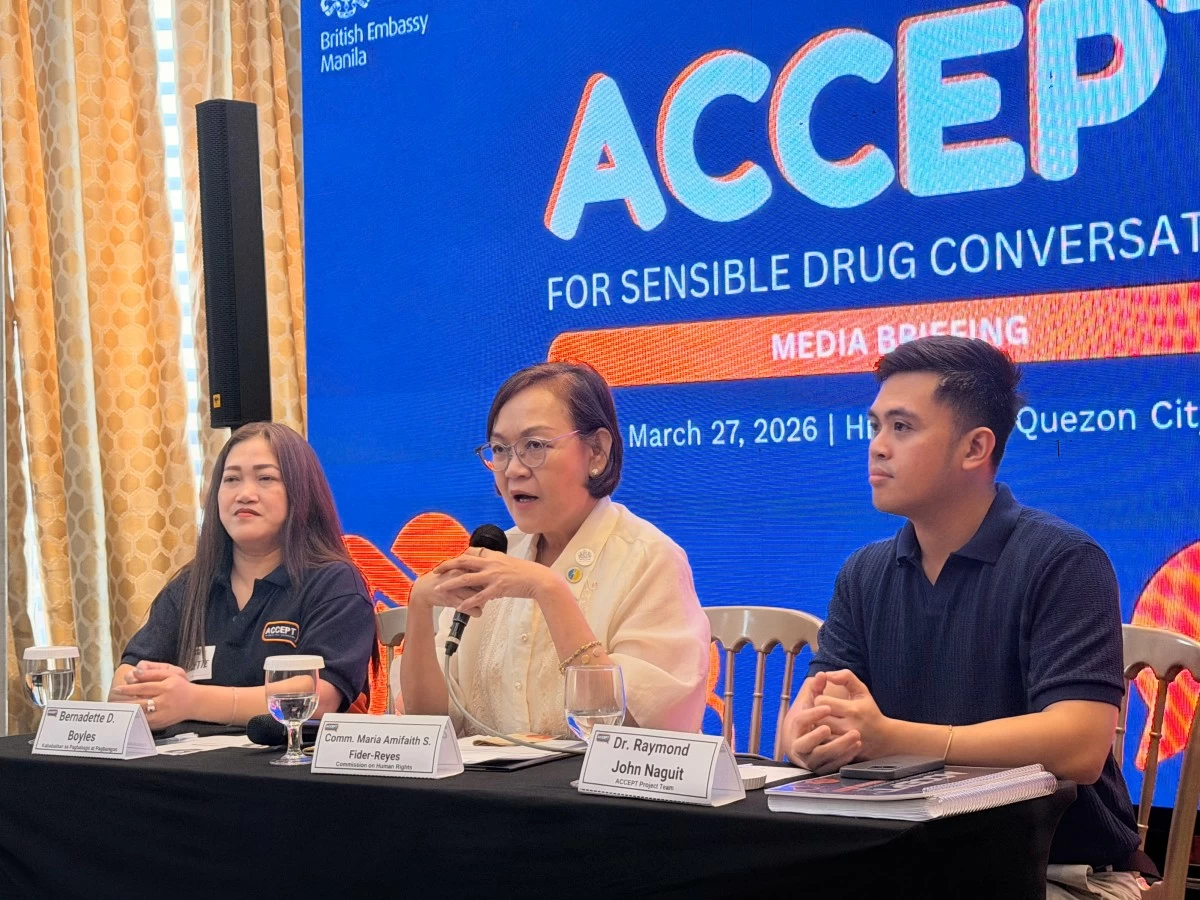
(JEL SANTOS/MB PHOTO)
Health advocates on Friday, March 26, launched the ACCEPT Drug Education Modules in Quezon City, promoting a shift away from fear-based approaches to drug education in the Philippines.
The modules, developed under the ACCEPT Project (Advancing Compassionate, Evidence-informed, Practical, and Transformative Modules for Sensible Drug Conversations), are a community-led initiative that seeks to shift toward public health- and human rights-based approaches to substance use.
Dr. Raymond John Naguit, the project lead of the ACCEPT Project, said drug education has long relied on fear.
“For too long, drug education has relied on fear. The ACCEPT modules prove that when we empower communities with evidence and empathy, we don’t just reduce stigma—we create community,” he said.
“This year’s implementation has shown that a public health framework to speaking about drug use is the most effective path forward for the Philippines,” he added.
Commissioner Maria Amifaith Fider-Reyes of the Commission on Human Rights (CHR) said a true public health approach entails viewing drug policy through a transitional justice lens, which examines the roles of all stakeholders.
“Under this framework, users will be reintegrated as productive community members, law enforcers will be reactivated as enforcers of human rights, and the entire legal ecosystem will be overhauled to shift justice away from prison, abuse, and impunity,” she said.
Meanwhile, Kababaihan sa Pagbabago at Pagbangon’s Bernadette Boyles said the voices of communities, especially women, have long been overlooked in drug-related discussions, stressing their role in driving reform.
“Sa ACCEPT modules, sila mismo ang nasa sentro. Kapag may tamang kaalaman at kasangkapan, hindi lang sila kalahok—sila ang nangunguna sa pagbabago (In the ACCEPT modules, they themselves are at the center. When they have the right knowledge and tools, they are not just participants—they lead the change),” she said.
Organizers said the launch forms part of a three-day activity titled “Designing Pathways for Public Health Approaches to Substance Use in the Philippines,” scheduled from March 27 to 29.
The activity will bring together frontline service providers, academics, non-government organizations, and communities of people who use drugs.
As such, the initiative intends to establish the ACCEPT Drug Education Network, a coalition to scale drug education efforts and refine strategies for nationwide drug policy reform.
The project is funded by the British Embassy Manila through the Chevening Alumni Program Fund (CAPF).