






 Philippines
National
Senators scrutinize, flag DA and PSA over excessive onion importation
Philippines
National
Senators scrutinize, flag DA and PSA over excessive onion importation
Senators scrutinize, flag DA and PSA over excessive onion importation


At A Glance
- Senators on Thursday, March 26 prodded the Department of Agriculture (DA) anew to address the rampant agricultural smuggling and its sloppy response on onion importation, which is pushing Filipino farmers to the brink.
Senators on Thursday, March 26 prodded the Department of Agriculture (DA) anew to address the rampant agricultural smuggling and its sloppy response on onion importation, which is pushing Filipino farmers to the brink.
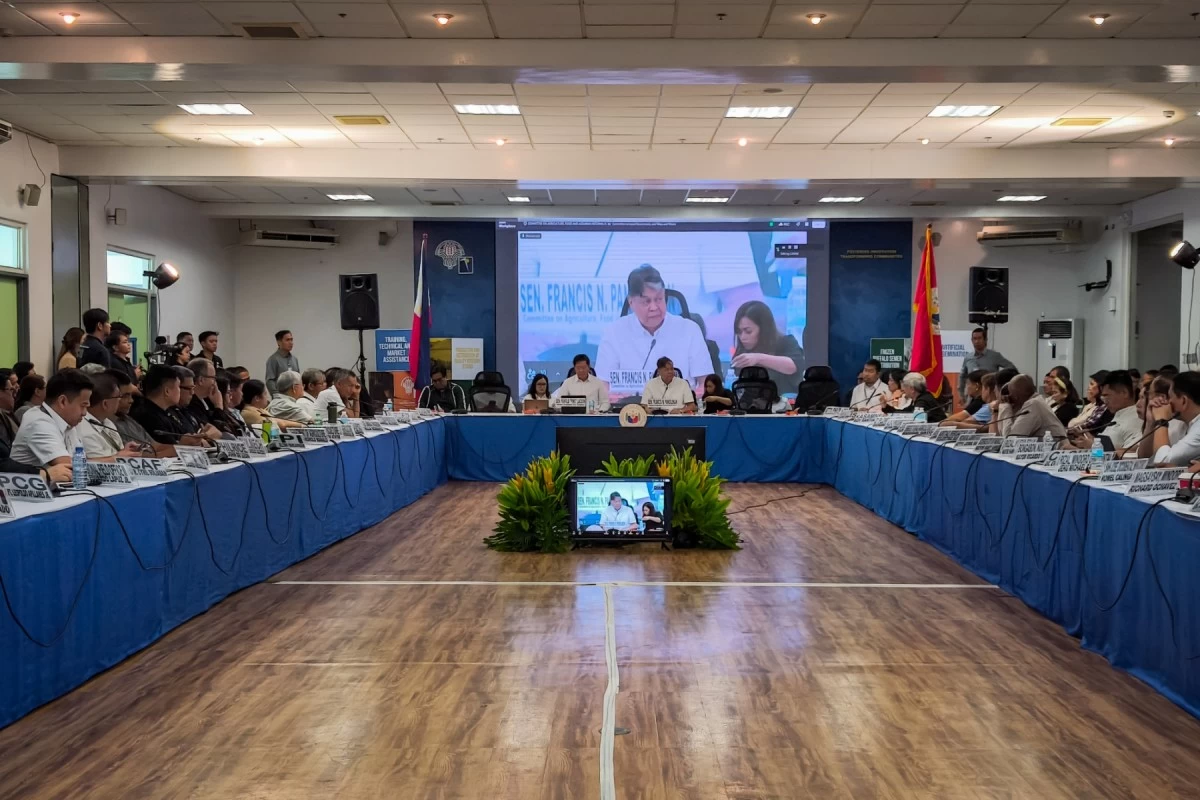
Senate President Pro Tempore Panfilo “Ping” Lacson pushed for concrete actions from the DA and the Philippine Statistics Authority (PSA), as he called out the agencies for the discrepancies in their data on onion production and consumption, during the joint hearing of the Senate Committees on Agriculture and Local Government on the systemic collapse of onion farm-gate prices.
Lacson said the inconsistencies in the data is hindering the government from making the necessary decisions to help the country’s onion farmers.
“It’s very important that your data is complete and accurate so we can plan properly. In military operations, if the assumptions are wrong, the soldiers get killed and we experience a debacle,” Lacson said during the hearing held at the Science City of Muñoz in Nueva Ecija.
During the hearing, Lacson presented the Philippine Onion Industry Road Map of 2021 to 2025 noting how the country needs to increase onion production from 229,539 metric tons to 279,270 metric tons in order to achieve self-sufficiency by 2025.
Citing PSA data, Lacson showed that the national onion harvest in 2024 had reached 264,000, which could have made the country nearly onion self-sufficient then.
Still the Philippines is still importing onions, and local farmers are being duped by importers who deliberately time shipments to coincide with the local harvest, undercutting the prices of homegrown onions.
“So the question is, how much was harvested in 2025? You said 279,000 metric tons is already self-sufficient, and we’ve even exceeded that. So why did we import so much—94,000 metric tons in total in 2025? Our shortfall wasn’t even close to 94,000 metric tons,” Lacson noted.
“Why are we importing? It’s to kill our farmers, there’s no other reason,” the senator lamented.
He also scored the DA for its “very wide communication gap with stakeholders, doubting the agency of even holding consultations with the farmers.
“Even if your consultations are held weekly but the DA does not listen to the stakeholders, the consultations are useless,” he pointed out.
He also scored the DA for not acting on the plight of onion farmers in Occidental Mindoro after a farmer from Magsaysay town said 40 percent of their 26,000 metric tons of onions could not be harvested and no buyer is available to buy their produce.
“Aren’t you supposed to monitor the situation? If your officials are like this, nothing good will happen to the agriculture sector,” Lacson told DA representatives present in the hearing.
He also pointed out that while the DA has promised to act on the procurement problem, the 2026 national budget has no funds for this. However, the President can realign funds to fill the gaps.
Overlapping with energy crisis
Meanwhile, Sen. Francis “Kiko” Pangilinan also expressed concern that the onion farmers’ struggle with importation could worsen, given the rising fuel and logistics costs resulting from the Middle East conflict.
Pangilinan said the continued importation of onion during the local harvest season could further reduce farmers’ income, noting that onion import clearances remained valid during the local harvest despite policies intended to prevent overlap with domestic production.
“It is questionable, especially since the policy is very clear that imports should not overlap with the harvest season of our local farmers,” Pangilinan, chairman of the Senate agriculture and food panel said during the hearing.
“When this happens, you cannot help but wonder whether our farmers are being deliberately denied access to cold storage while imported onions continue to enter the market and farmgate prices keep falling,” he pointed out.
“In the face of the energy emergency, this is not only a supply crisis but also a governance crisis,” he lamented.
Sen. Joseph Victor “JV” Ejercito echoed Pangilinan’s point of view, warning that the issue on onion importation goes beyod market fluctuations and points to structural problems the government ought to address immediately.
“The situation is no longer a simple issue of supply and demand. This is no longer just a matter of price fluctuations. This is a failure of the system...The issue is about serious neglect,” said Ejercito, who joined the hearing via Zoom.
“Excessive and poorly timed importation is not a solution—it is part of the problem. It displaces our farmers, distorts the market, and undermines our food security,” Ejercito added.
“If this continues, we will no longer face a crisis—but a complete collapse of local production,” he further warned.
As author of the Anti-Agricultural Economic Sabotage Act, which Congress passed into law for the protection of the country’s farmers, consumers and local industries, Ejercito said he remains dismayed that farmers are still losing money, and consumers are suffering from the high prices.
“That means there is someone making money in the middle—and it is not the farmer. The widening gap between farm-gate and retail prices is not normal. It is a red flag. It points to manipulation, inefficiency, or worse—exploitation. So explanation is no longer enough. It is time for accountability,” he stressed.