






Manila Bulletin
 Philippines
National
Palace: Gov't will do everything 'within bounds of law' to cushion oil woes
Philippines
National
Palace: Gov't will do everything 'within bounds of law' to cushion oil woes
Philippines
National
Palace: Gov't will do everything 'within bounds of law' to cushion oil woes
Palace: Gov't will do everything 'within bounds of law' to cushion oil woes
Published Mar 26, 2026 04:02 pm


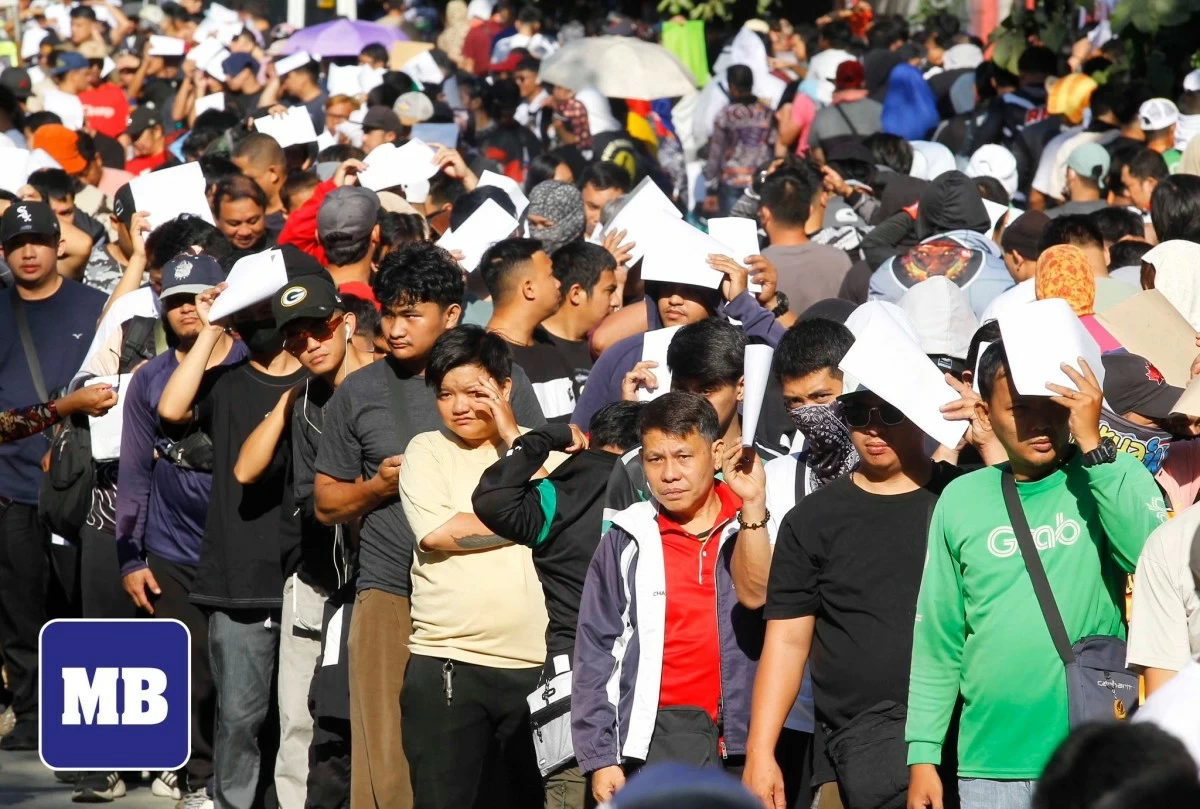
Delivery riders and drivers line up to claim financial assistance at the Kartilya ng Katipunan in Manila on March 26, 2026. (Mark Balmores)
Malacañang assured Filipinos that the government will take every action "within the bounds of the law" to cushion impacts caused by the ongoing crisis in the Middle East.
"Ang gobyerno po, lahat ng puwedeng gawin within the bounds of law ay gagawin po (The government will do everything it can within the bounds of the law)," Palace Press Officer and Communications Undersecretary Claire Castro said in a briefing on Thursday, March 26.
She said this when asked if the government can do so much in addressing the crisis, given that the government, according to the Energy Department, does not have the capacity to take over oil retailers.
President Marcos also said on Wednesday, March 25, that he does not want to get into such a discussion.
"Hindi naman po tayo maaaring kumilos tapos lalabag naman po tayo sa ating batas. So, kung ano po ang maaari lamang na gawin ng gobyerno para maibsan ang dulot nitong krisis sa Middle East, gagawin po lahat ng gobyerno (We cannot take action if it means violating our own laws. So whatever the government is legally able to do to ease the effects of the crisis in the Middle East, it will do)," Castro said.
On Wednesday, Marcos signed Republic Act (RA) No. 12316, which gives him emergency powers to suspend or reduce excise tax on petroleum products.
How much will be reduced from excise tax?
The government is still reviewing how much the reduction would be if the President opts to reduce the excise tax imposed on petroleum products, Castro said.
"[I]to ay under review sa ngayon dahil paiba-iba nga po ang presyo ng produkto ng petrolyo, so under review po siya (This is under review because right now, the prices of petroleum products are constantly changing)," she said.
Why 15-day grace period retained for emergency powers?
Like every law, the measure, which allows Marcos to have emergency powers to reduce or suspend the oil excise tax, will be effective 15 days after its publication.
This, according to Castro, is in compliance with Article 2 of the Civil Code.
She added that it refers to the usual grace period before a law is implemented or takes effect.
"Ito po ay para sa sinasabi nating right to due process para lahat ng stakeholders, lahat ng mga kababayan natin, lahat ng taong involved ay malaman dahil alam naman natin kapag ito ay na-publish (This is intended to uphold what we call the right to due process, so that all stakeholders, all our fellow citizens, and everyone involved are informed. As we know, once it is published)," Castro explained.
"It will be considered as an information or a notice to the whole world. So, para sila ay makapagbasa, maintindihan, makapag-assess at makapag-prepare (So, this gives them time to read, understand, assess, and prepare)," she added.
During that 15-day grace period, it provides them the opportunity to decide what actions they can take, Castro noted, adding that the 15-day grace period can only be changed by Congress, "so it is not within the authority of the President."
Tax the rich?
"Nothing is off the table," Castro echoed Marcos' statement during his public address on Wednesday as she reacted to the suggestion of former economic chief Winnie Monsod to tax the rich instead of declaring a national energy emergency.
"Ang sabi nga po ng Pangulo, ‘Nothing is off the table.’ So lahat po ng suhestiyon ay kinukonsidera (so all suggestions are being considered)," Castro said.
The Palace mouthpiece also conveyed Department of Economy, Planning, and Development (DEPDev) Secretary Arsenio Balisacan's take on the recommendation.
"Ang kanya pong opinyon at ang aking sasabihin, ang ganito pong klase na pagpapataw ng wealth tax ay talaga pong isang pangarap ng mga ekonomista (His opinion, and what I will say, is that this kind of imposition of a wealth tax is truly a dream of economists),” Castro said.
Balisacan said: Imposing a wealth tax on the super wealthy is an economist’s dream because wealth tends to compound. A wealth tax slows wealth concentration over generations. Such concentration translates into political and economic power, leading to market failures, slowing economic growth, and further weakening inclusivity.
He further said, "Implementing or administering a wealth tax is never easy. Most countries that have tried it, such as Germany, France, and Sweden abandoned it because of its administrative complexity and the low revenue it generated. Moreover, a wealth tax may encourage capital flight, especially when imposed during an economic crisis.”
Castro also stressed that at present, the fastest way to cushion the impact of the oil price hike is to ensure that prices of basic commodities do not follow suit.
Concerned Cabinet members, she said, have been coordinating with manufacturing companies and stakeholders to appeal to them not to increase the prices of commodities.
"So, sa ngayon po ay masasabi natin na ito ang pinakamabilis na aksyon na maaaring gawin ng gobyerno para maibsan ang epekto ng krisis sa Middle East (So, for now, we can say that this is the fastest action the government can take to ease the effects of the crisis in the Middle East)," Castro said.
'Repealing of oil deregulation law is only up to Congress'
The Palace official stressed that suspending the Oil Deregulation Law is only up to Congress.
She also pointed out that the state cannot interfere unless there is abuse.
"Alam po natin na mayroong oil deregulation law. Sa ngayon po talaga, kapag po may Oil Deregulation Law, hindi naman po kaagad makakapasok at makakapag-interfere ang state, maliban lamang po, sabi nga po ni Secretary Garin, kung may bad faith, may abuso, doon po maaari tayong mag-regulate at para po maiwasan ang pang-aabuso ng mga nananamantala (We know that there is an oil deregulation law). At present, when such a law is in place, the state cannot immediately step in or interfere, except—as Secretary Garin mentioned—if there is bad faith or abuse. In such cases, regulation may be imposed to prevent exploitation by those taking advantage," Castro said.
"So, sa ngayon po, ang maaari lamang gumawa para, let’s say, ma-suspend ang oil deregulation law, iyong provisions doon, tanging Kongreso lamang po ang maaaring magsagawa nito (So for now, the only body that can, for example, suspend the oil deregulation law or its provisions is Congress)," she added.
Special payout for PUV drivers
A special payout will be conducted for public utility vehicle (PUV) drivers and transport workers, who were initially not included in the lists of beneficiaries of fuel subsidies, Castro assured.
"Maglalaan kami ng araw for special payout para makatanggap din ang nasabing mga tsuper at driver ng limanlibong mula sa cash gift assistance program sa ilalim ng AICS (Assistance to Individuals in Crisis Situation) program ng DSWD (We will set aside a day for a special payout so that the said drivers can receive P5,000 from the cash gift assistance program under the AICS of the Department of Social Welfare and Development)," Castro announced.
This came after drivers were reportedly not provided with the cash assistance.
Castro said that DSWD Secretary Rex Gatchalian and DOTr Acting Secretary Giovanni Lopez noted that some drivers may have been excluded from the master list of the fuel subsidy program due to various reasons, such as duplicate entries, incorrect data, or failure to register with the Land Transportation and Franchising Regulatory Board (LTFRB).
Castro also reiterated Marcos’ assurance that no one will be left behind in the distribution of financial aid.
The Palace Press Officer also advised drivers to prepare the necessary documents to establish their eligibility ahead of the special payout.