

ADVERTISEMENT

Oil firms back 12% VAT removal on fuel imports

Published Mar 26, 2026 02:14 pm

At A Glance

  • Oil industries expressed support for the removal of the 12 percent value-added tax (VAT) on petroleum products at the point of importation, saying the move would be easier to implement and would directly lower pump prices.
Oil industries expressed support for the removal of the 12 percent value-added tax (VAT) on petroleum products at the point of importation, saying the move would be easier to implement and would directly lower pump prices.
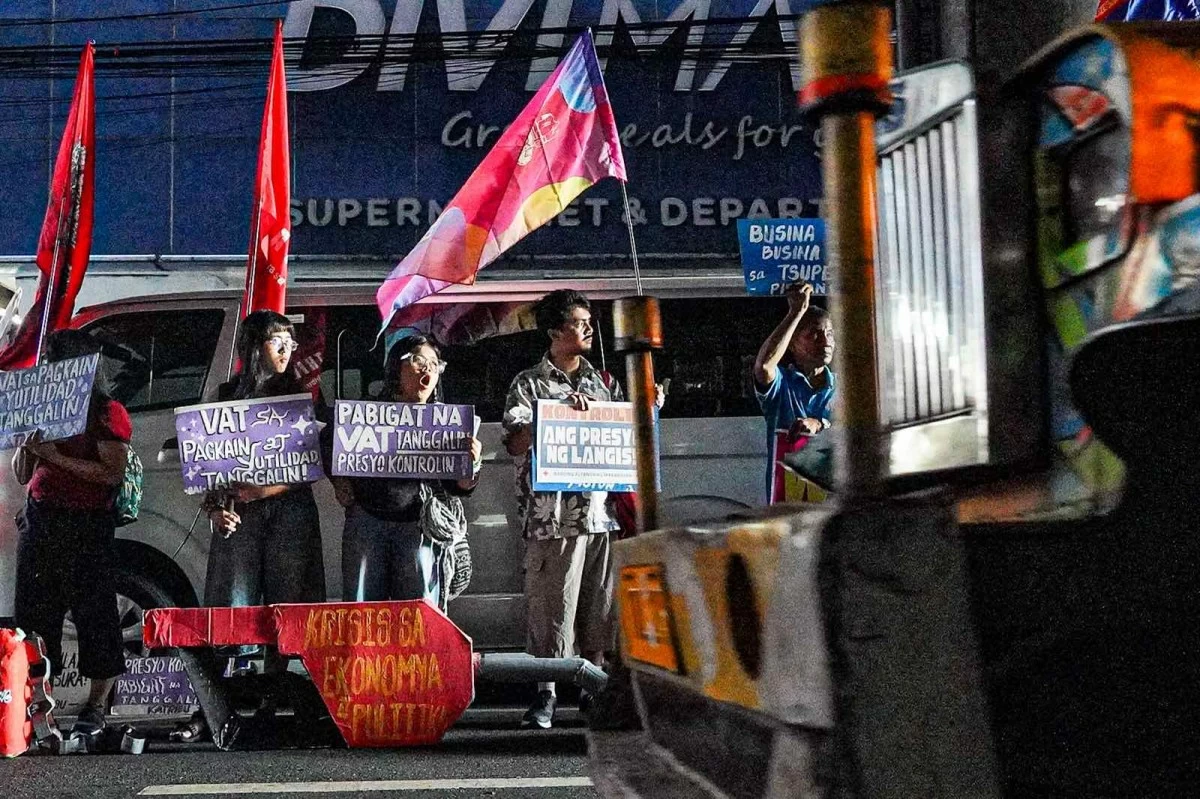
The No To Oil Price Hike Coalition, transport groups, and other PUV drivers officially launch a two-day transport strike at LRT Cubao, Quezon City on Thursday, March 26, 2026, opposing rising fuel costs. Protesters call for urgent government intervention amid continuing oil price increases.(John Louie Abrina)
During the second organization meeting of the Senate Proactive Response and Oversight for Timely and Effective Crisis Strategy (PROTECT) Committee, Senator Bam Aquino asked oil companies to clarify their position on proposals to suspend or reduce VAT on fuel, amid concerns that such a move could complicate industry accounting and pricing systems.
In response, Tanya Samillano, president of the Independent Philippine Petroleum Companies Association (IPPCA), said the industry favors removing VAT at the point of importation rather than at the retail level.
“In our position…it’s easier for us to implement reduced prices when VAT is removed,” Samillano said, explaining that if VAT is lifted upon cargo arrival, companies would no longer pay the tax upfront, effectively lowering their costs.
She noted that under this setup, VAT would no longer be embedded in the cost structure of fuel, unlike excise taxes which are already included in inventory and require more complex adjustments.
Aquino sought confirmation on whether the removal of VAT at importation would translate to lower prices for consumers.
“Yes, because it will reduce your cost,” Samillano replied, adding that a full 12% VAT removal could be reflected in pump prices.
“If it’s 100, it’s justifiable that…you don’t increase by P12,” she added.
Samillano affirmed that the reduction would be fully felt by consumers.
Major industry players echoed the same position.
Shell Pilipinas Corp. President and CEO Lorelie Quiambao-Osial said the VAT mechanism is “faster to implement” compared to other tax adjustments, noting that VAT, being a percentage-based tax, increases as fuel prices rise.
She added that any VAT removal should be applied “end-to-end,” from source to final sale, to ensure consistency in pricing.
Petron Corporation General Manager Lubin Nepomuceno also agreed, stating that this is the industry position when it comes to VAT.
Aquino noted that oil companies themselves do not see implementation difficulties if VAT is removed at the point of entry.
“So according to the industry, it can be done. Hindi sila mahihirapan kung magtanggal ng VAT at the point of entry,” he said.
The senator added that further discussions on the proposal are expected, with the Department of Finance (DOF) being asked to help assess the potential impact of VAT adjustments on fuel prices and consumers.
For DOF Undersecretary of Fiscal Policy and Monitoring Group Karlo Fermin Adriano added that further discussions on the proposal are expected, adding that the VAT system is complex, with both input and output VAT components.
“If the output is exempt and you have inputs wherein you paid the VAT, then you cannot claim your inputs,” he said.
He noted that for the oil industry, machinery, trucks, and other assets are subject to VAT, but if fuel is exempt, the input VAT cannot be claimed, and companies may pass on those costs to prices.

Related Tags

oil price adjustment Oil price hike Bam Aquino Department of Finance (DOF)
ADVERTISEMENT
.most-popular .layout-ratio{ padding-bottom: 79.13%; } @media (min-width: 768px) and (max-width: 1024px) { .widget-title { font-size: 15px !important; } }

{{ articles_filter_1561_widget.title }}

.most-popular .layout-ratio{ padding-bottom: 79.13%; } @media (min-width: 768px) and (max-width: 1024px) { .widget-title { font-size: 15px !important; } }

{{ articles_filter_1562_widget.title }}

.most-popular .layout-ratio{ padding-bottom: 79.13%; } @media (min-width: 768px) and (max-width: 1024px) { .widget-title { font-size: 15px !important; } }

{{ articles_filter_1563_widget.title }}

{{ articles_filter_1564_widget.title }}

.mb-article-details { position: relative; } .mb-article-details .article-body-preview, .mb-article-details .article-body-summary{ font-size: 17px; line-height: 30px; font-family: "Libre Caslon Text", serif; color: #000; } .mb-article-details .article-body-preview iframe , .mb-article-details .article-body-summary iframe{ width: 100%; margin: auto; } .read-more-background { background: linear-gradient(180deg, color(display-p3 1.000 1.000 1.000 / 0) 13.75%, color(display-p3 1.000 1.000 1.000 / 0.8) 30.79%, color(display-p3 1.000 1.000 1.000) 72.5%); position: absolute; height: 200px; width: 100%; bottom: 0; display: flex; justify-content: center; align-items: center; padding: 0; } .read-more-background a{ color: #000; } .read-more-btn { padding: 17px 45px; font-family: Inter; font-weight: 700; font-size: 18px; line-height: 16px; text-align: center; vertical-align: middle; border: 1px solid black; background-color: white; } .hidden { display: none; }
function initializeAllSwipers() { // Get all hidden inputs with cms_article_id document.querySelectorAll('[id^="cms_article_id_"]').forEach(function (input) { const cmsArticleId = input.value; const articleSelector = '#article-' + cmsArticleId + ' .body_images'; const swiperElement = document.querySelector(articleSelector); if (swiperElement && !swiperElement.classList.contains('swiper-initialized')) { new Swiper(articleSelector, { loop: true, pagination: false, navigation: { nextEl: '#article-' + cmsArticleId + ' .swiper-button-next', prevEl: '#article-' + cmsArticleId + ' .swiper-button-prev', }, }); } }); } setTimeout(initializeAllSwipers, 3000); const intersectionObserver = new IntersectionObserver( (entries) => { entries.forEach((entry) => { if (entry.isIntersecting) { const newUrl = entry.target.getAttribute("data-url"); if (newUrl) { history.pushState(null, null, newUrl); let article = entry.target; // Extract metadata const author = article.querySelector('.author-section').textContent.replace('By', '').trim(); const section = article.querySelector('.section-info ').textContent.replace(' ', ' '); const title = article.querySelector('.article-title h1').textContent; // Parse URL for Chartbeat path format const parsedUrl = new URL(newUrl, window.location.origin); const cleanUrl = parsedUrl.host + parsedUrl.pathname; // Update Chartbeat configuration if (typeof window._sf_async_config !== 'undefined') { window._sf_async_config.path = cleanUrl; window._sf_async_config.sections = section; window._sf_async_config.authors = author; } // Track virtual page view with Chartbeat if (typeof pSUPERFLY !== 'undefined' && typeof pSUPERFLY.virtualPage === 'function') { try { pSUPERFLY.virtualPage({ path: cleanUrl, title: title, sections: section, authors: author }); } catch (error) { console.error('ping error', error); } } // Optional: Update document title if (title && title !== document.title) { document.title = title; } } } }); }, { threshold: 0.1 } ); function showArticleBody(button) { const article = button.closest("article"); const summary = article.querySelector(".article-body-summary"); const body = article.querySelector(".article-body-preview"); const readMoreSection = article.querySelector(".read-more-background"); // Hide summary and read-more section summary.style.display = "none"; readMoreSection.style.display = "none"; // Show the full article body body.classList.remove("hidden"); } document.addEventListener("DOMContentLoaded", () => { let loadCount = 0; // Track how many times articles are loaded const offset = [1, 2, 3, 4, 5, 6, 7, 8, 9, 10]; // Offset values const currentUrl = window.location.pathname.substring(1); let isLoading = false; // Prevent multiple calls if (!currentUrl) { console.log("Current URL is invalid."); return; } const sentinel = document.getElementById("load-more-sentinel"); if (!sentinel) { console.log("Sentinel element not found."); return; } function isSentinelVisible() { const rect = sentinel.getBoundingClientRect(); return ( rect.top < window.innerHeight && rect.bottom >= 0 ); } function onScroll() { if (isLoading) return; if (isSentinelVisible()) { if (loadCount >= offset.length) { console.log("Maximum load attempts reached."); window.removeEventListener("scroll", onScroll); return; } isLoading = true; const currentOffset = offset[loadCount]; window.loadMoreItems().then(() => { let article = document.querySelector('#widget_1690 > div:nth-last-of-type(2) article'); intersectionObserver.observe(article) loadCount++; }).catch(error => { console.error("Error loading more items:", error); }).finally(() => { isLoading = false; }); } } window.addEventListener("scroll", onScroll); });

Sign up by email to receive news.