







Molding eco-conscious women into leaders with heart
Published Mar 26, 2026 06:37 am


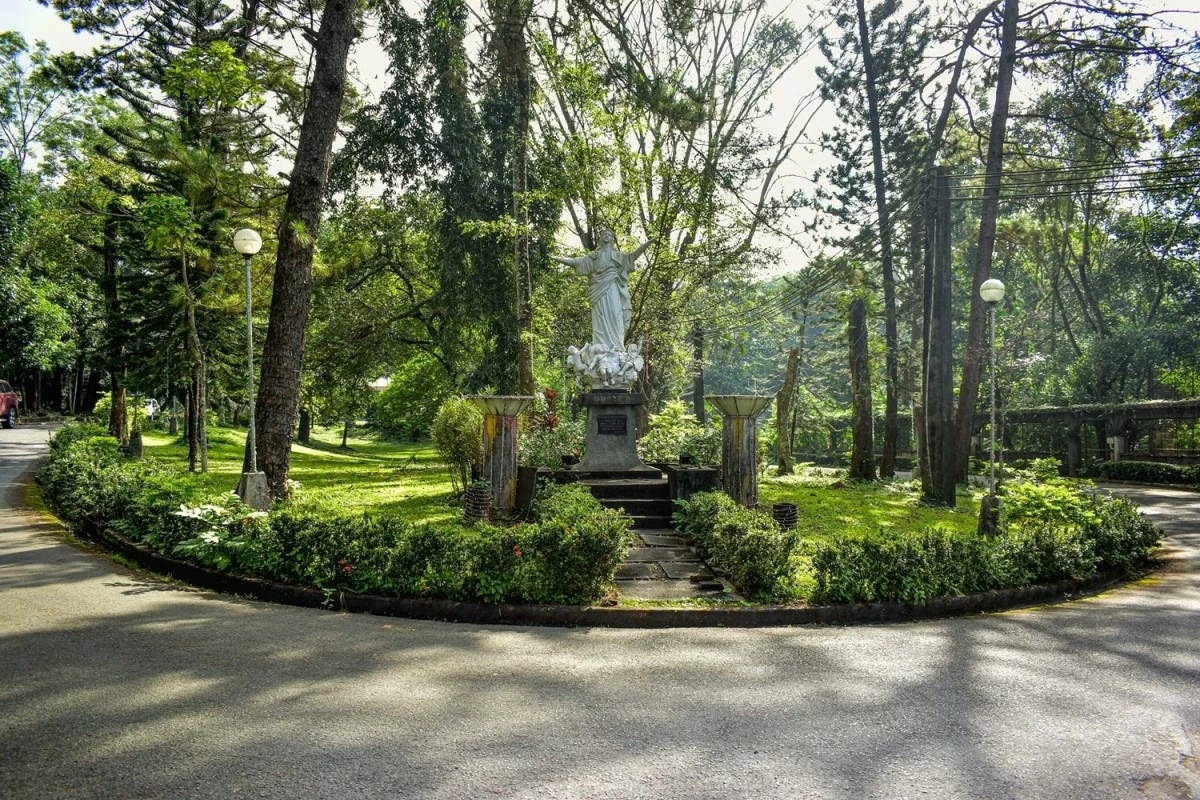
A statue of Our Lady of the Assumption stands at the front entrance of the campus.
“Sustainability” is often linked to protecting the environment. Yet putting it into practice can be difficult, especially when the systems that shape daily life rarely make eco-friendly choices easy. Families may introduce children to values, but schools equip them with the skills and habits that carry into the real world.
In eastern Metro Manila, Assumption Antipolo, a private Catholic school, approaches this responsibility by combining a green campus with programs that embed environmental stewardship into learning and leadership.
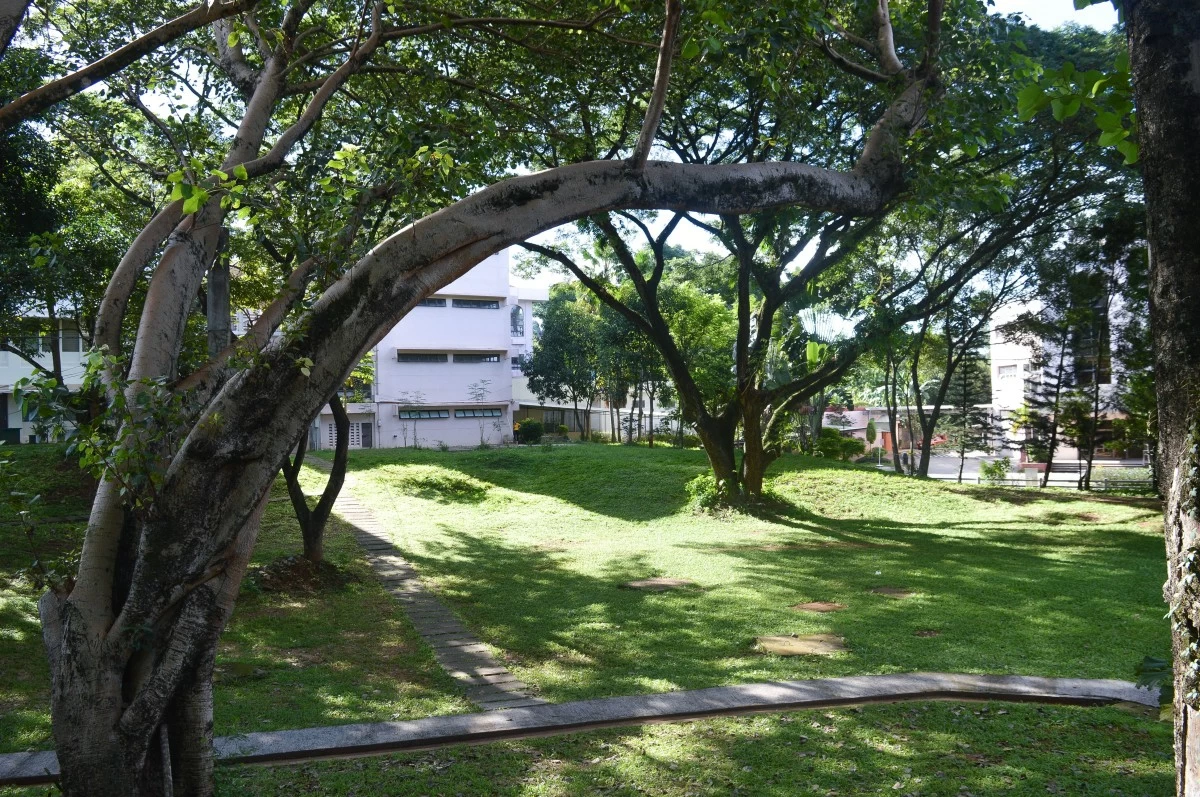
The Peace Garden sits inside the campus of Assumption Antipolo.
The 14-hectare campus reflects a deliberate approach to sustainability. Large green areas remain intact, natural landscapes are preserved, and buildings are spaced to allow sunlight and natural airflow through classrooms and corridors. Walkways and open fields run through the school, giving students daily contact with nature while supporting ecological balance.
“In a way, our campus design helped us more effectively in learning and forming our values, because we studied science and ecology not just from textbooks, but outside our classrooms. It was very real to us,” alumna Arlene Joy Hatcha-Arejola said.
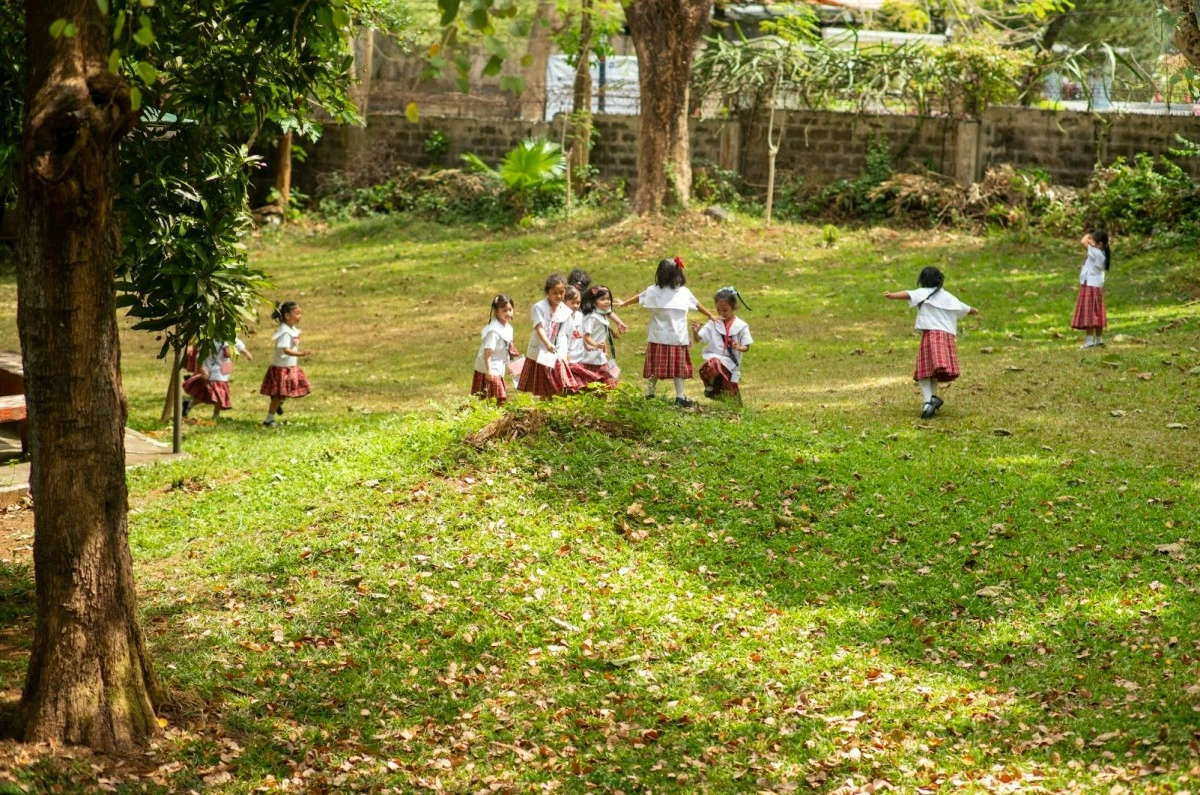
Grade school students run and play in an open campus space.
She added, “We saw environmental stewardship not just as an option, but a moral responsibility.”
This commitment extends into education through Alay Kapwa at Kalikasan (AKK), a flagship program from Grade 1 to Grade 12. As early as Grade 1, students are introduced to Earth as a “common home,” and by Grade 3, they begin practicing sustainability by sharing preloved items as a performance task in the subject.
As students progress, these lessons evolve into more meaningful engagement. Grade 8 students develop sustainability action plans, while Grade 9 students take part in inclusive environmental activities such as tree planting with learners from Antipolo SpEd School.
In Grade 10, students extend their service through community medical missions. In Grade 11, they deepen their understanding through immersion with the Dumagats. By Grade 12, this journey culminates in Community Livelihood Workshops for Sitio Nanays, where students help empower communities through sustainable practices.
Sustainability is woven into daily school life through activities that promote environmental awareness and hands-on community partnerships. Daily habits, such as bringing food in reusable containers, and school fairs where concessionaires are required to minimize packaging, reflect this approach.
“Before the pandemic, we had always practiced bringing our own containers. However, due to health restrictions, packaging was used. Now, we are gradually returning to our earlier practice of living sustainably. Parents are aware that, since preschool, snacks are placed in reusable containers; foil packs are discouraged. They carry this practice as they grow older,” explained Ria Lee, subject team leader of AKK.
Parents also reinforce sustainability at home, encouraging textbook exchanges, passing down uniforms, and sharing materials. For students, hand-me-downs and secondhand books are part of everyday life.
Lee added, “I cannot tell students to be eco-warriors if I myself am not one. Living it out is the best way to inspire them to do the same and create change. Living sustainably is not easy. There are challenges, but I try my best to walk my talk. To set an example.”
Peer leadership further strengthens this culture.
“If I set an example for the rest of the student body, it becomes easier for them to follow because we are at the same level. I am a student, and so are they. I have been conscious of how much paper I use and how much waste I produce, even outside school. It is something I have practiced since elementary, and I am still trying to be consistent because it can be difficult at times,” said Mikayla Haley Rolle, president of the Student Council of Assumption Antipolo.
This academic year, the council introduced a Sustainability Officer position to ensure that stewardship is actively planned and implemented at the leadership level.
“Nature also involves humans, and that is what we often forget. In being a servant leader, you serve not only people, but also the environment they live in. One of the most important things I learned in AKK is that what we do to the environment will define how it treats us in the future. Real change begins when institutions shape systems and when leaders take initiative. Only then can solutions become tangible,” said Sharmagne Alexa Bacongallo, Sustainability Officer of the student council.
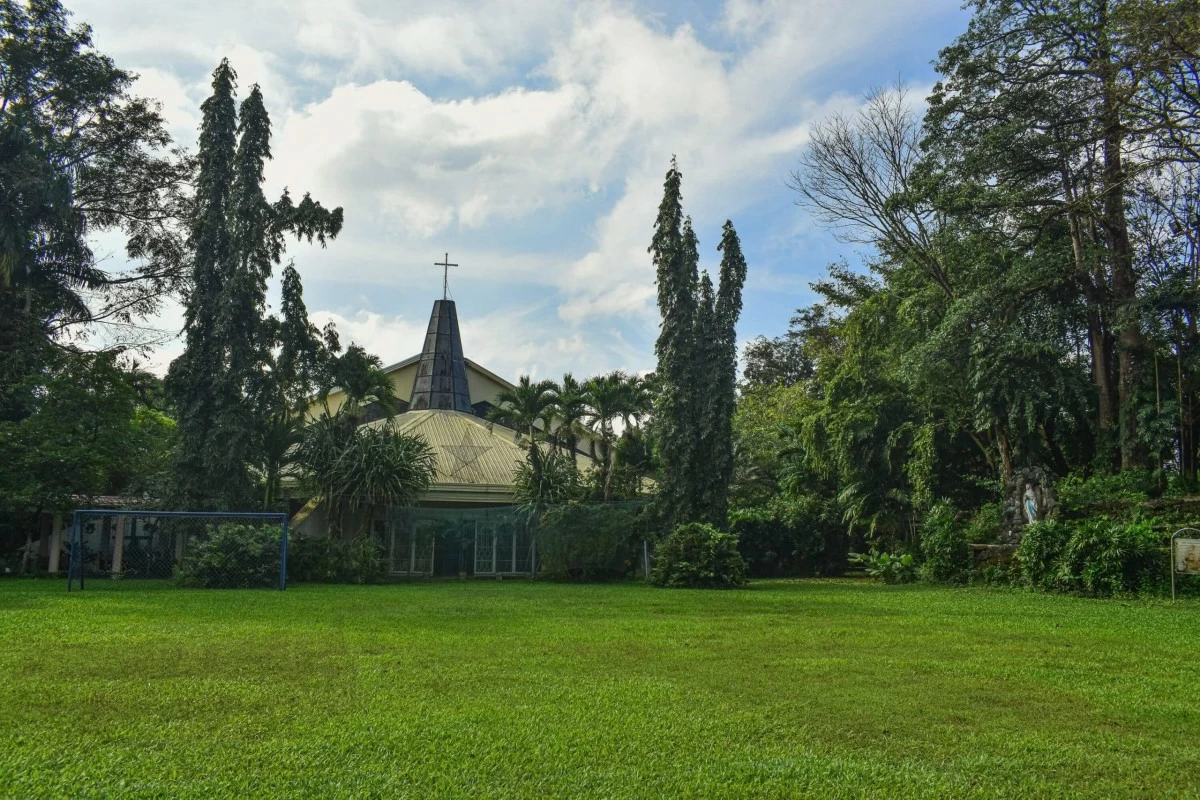
Assumption Antipolo Chapel
Through intentional campus design, programs like AKK, and a community that models sustainable habits, Assumption Antipolo demonstrates that forming eco-conscious women goes beyond knowledge. It involves nurturing leaders who carry a sense of responsibility for others and the environment in every decision—a generation prepared to help shape a future where sustainability becomes second nature. (The author is Zabrina L. Hong, a journalism student at Colegio de San Juan de Letran Manila, editor in chief of The LANCE, and vice president of SCRIBE, the Journalism Society.)