






Manila Bulletin
 Philippines
National
Metro, provincial bus groups urge PBBM to implement fare hike as long-term solution to oil price woes
Philippines
National
Metro, provincial bus groups urge PBBM to implement fare hike as long-term solution to oil price woes
Philippines
National
Metro, provincial bus groups urge PBBM to implement fare hike as long-term solution to oil price woes
Metro, provincial bus groups urge PBBM to implement fare hike as long-term solution to oil price woes
Published Mar 26, 2026 09:51 am


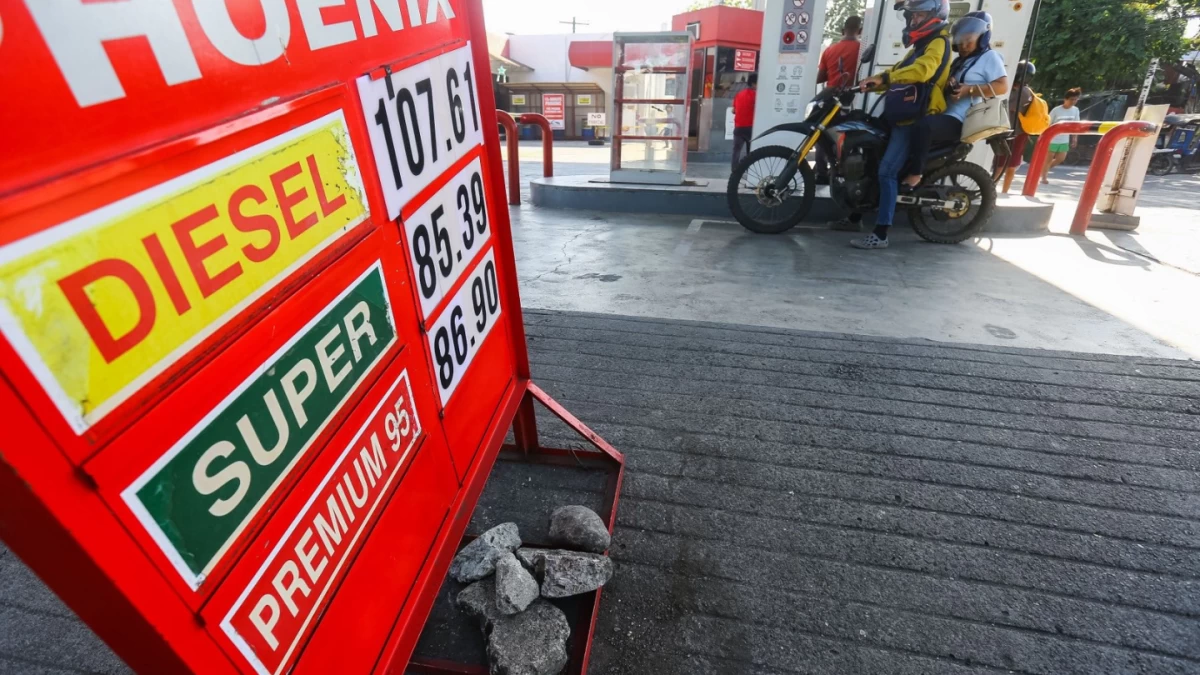
Fuel prices at a gas station in Davao City show a significant jump on Tuesday, March 17. Local motorists are feeling the pinch as oil companies implement a "big-time" price hike across the board. (Photo by Keith Bacongco I MB)
Amid the series of big-time oil price increases in the past few weeks, at least two major groups of bus operators urged President Marcos to reconsider his decision to suspend the implementation of the fare adjustments for public utility vehicles (PUVs).
In two separate letters addressed to the Chief Executive, the Mega Manila Consortium Corporation (MMCC) and the Nagkakaisang Samahan ng Nangangasiwa ng Panlalawigan Bus sa Pilipinas Inc (NSNP-BPI), said the approved fare hike is a long-term solution to help the transport sector fully recover from the adverse effects of the Middle East tensions to oil prices in the country.
“We understand the need to cushion the blow, but the transport sector is hurting too. We have taken the slight fare adjustment with optimism despite the instability of the market, since we were also at one point, willing to share the burden,” the MMCC.
The MMCC is a group of bus operators in Metro Manila and nearby areas.
“It is for this reason that we appeal to your wisdom and good sense of compassion to immediately address the need for an adequate and uninterrupted transport service to commuters. At this time, we could no longer shoulder the high cost of fuel, and any delay in fare adjustment or financial subsidy will only pull us to the brink of collapse,” the groups said.
“We have therefore taken the liberty to request the implementation of the previously announced fare increase,” it added.
Earlier, it was announced that a P2 increase for the minimum fare of Metro Manila and city ordinary buses-or from P13 to P15 for the first five kilometers, and 0.24 centavos for every succeeding kilometer, or from P2.25 to P2.49.
On the other hand, the aircon buses for Metro Manila and city operations will have a P3 increase, or from P15 to p18 for the first five kilometer and 33 centavos increase for every succeeding kilometer, or from P2.65 per kilometer to P2.98.
For ordinary buses with provincial operations, a P1 increase was approved for the first five kilometers but the increase in the succeeding kilometers varies depending on the types of passenger buses.
For ordinary buses, the additional charge is 30 centavos per succeeding kilometer or from P1.90 to P2.20); 35 centavos for airconditioned buses deluxe and super deluxe buses (from P2.10 to P2.45); and, 45 centavos for luxury buses, or from P2.90 to P3.35 per succeeding kilometer.
The implementation, however, was suspended by President Marcos.
The statement of Metro Manila bus operators was echoed by the NSNP-BPI, a group of provincial bus operators, which stated in a separate letter that the current price of diesel is forcing them to operate at a loss that now runs into millions.
“To contain this problem, necessarily we will have to reduce our number of trips and at worst, downsize our workforce. Trips will have to be reduced from a minimum of 30% to 50%. This scenario does not even consider payment of bank loans,” the group said.
“For this reason, we humbly and urgently appeal to you to recall your directive to suspend the fare hike,” the NSNP-BPI said.
The group said it conducted its own survey and the result stated that commuters have accepted the adjusted rates.