







Gov't in talks with lenders for emergency energy loans
By Derco Rosal


At A Glance
- President Marcos' chief economic manager said the economic team is in dialogue with the Philippines' development partners, including the Asian Development Bank (ADB), to secure ample funding for the country's power and fuel needs.
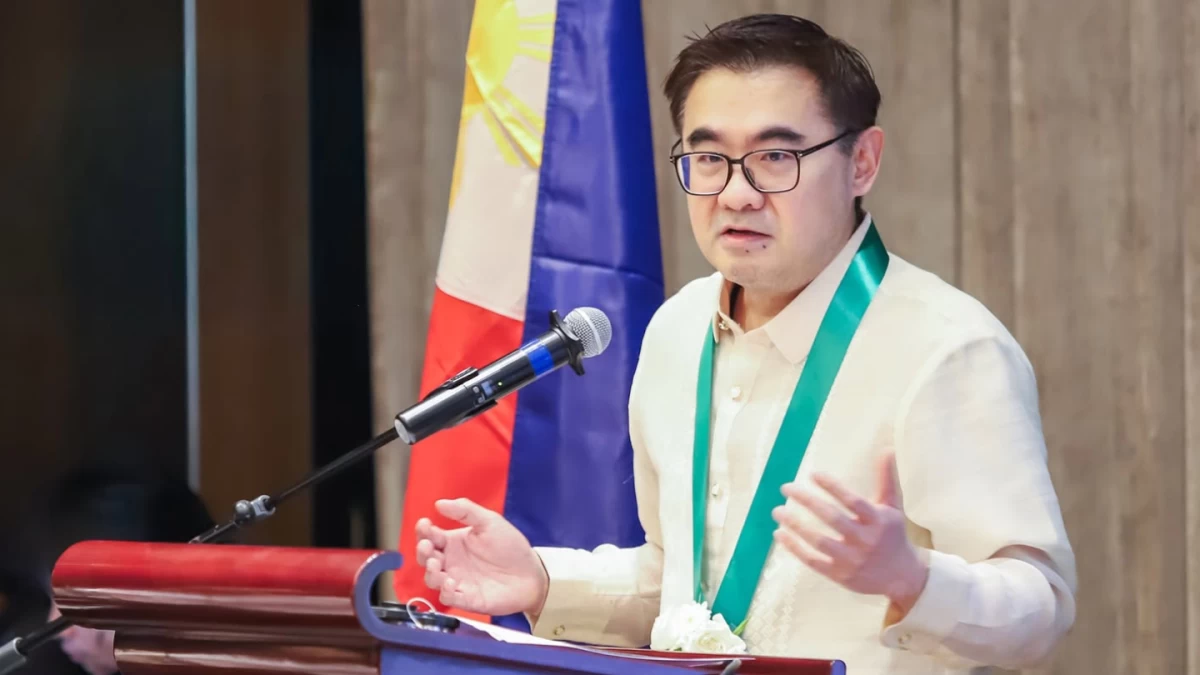
President Ferdinand R. Marcos Jr.’s chief economic manager said the economic team is in dialogue with the Philippines’ development partners, including the Asian Development Bank (ADB), to secure ample funding for the country’s power and fuel needs.
“We are in constant discussion with our development partners. We have gone through external shocks before; thus, these facilities have been refined to address the country’s needs,” Finance Secretary Frederick D. Go told Manila Bulletin on Thursday, March 26.
This was Go’s response to Manila Bulletin’s query on whether the national government (NG) has already taken steps to seal financing deals with the Manila-based multilateral lender related to the state of national energy emergency in its host country.
While refusing to disclose the size the government has set its sights on, Go explained that credit facilities being extended by the country’s development partners are designed to cushion government spending. This, he said, directly ripples through health, education, and social spending, which seriously burdens vulnerable sectors.
For the current global oil crisis, the economy warrants pumping up its resources to safeguard the country’s power and fuel reserves. Go, who is also the country’s investment czar, said this particular aid, when extended to the Philippines, will bolster employment and investments.
The ADB earlier said it intends to back, on financial matters, its developing member countries (DMCs) to mitigate the economic and financial impacts that the escalating military hostilities in the Middle East would cause.
Marcos last Tuesday, March 24, declared a state of national energy emergency amid persistent oil price and supply risks, threatening to drain the country’s energy reserves and destabilize the economy.
“The ADB will deliver rapid, flexible, and scalable assistance to help countries manage immediate pressures and strengthen long-term resilience, notably fast-disbursing budget support and trade and supply chain finance to secure the import of essential goods, now including oil,” ADB president Masato Kanda said in a March 24 statement.
The ADB said it has ample resources to cover current and planned projects, adding that it can scale emergency aid to developing economies as needed. It will use its countercyclical lending buffer—a tool the lender uses to offer extra funds during economic downturns.
This lending buffer acts as a reserve that can be tapped when demand for loans or emergency support rises, helping stabilize the economy.
Recall that the Philippines’ external debt climbed to a record $147.65 billion at the end of 2025, driven by an uptick in foreign borrowing from both the public and private sectors. This represented a 7.3-percent increase from $137.63 billion in 2024.
Of the total, the public sector remained the primary borrower, accounting for nearly two-thirds at $94.87 billion, while the private sector held the remaining $52.78 billion.
Bondholders and noteholders accounted for the largest share of the country’s foreign loans, at $48.95 billion. They were followed by multilateral lenders, such as the ADB and the World Bank Group’s (WBG) International Bank for Reconstruction and Development (IBRD), accounting for $41.39 billion. IBRD is the WBG’s lending arm for developing countries like the Philippines.