







Business groups hail passage of fuel tax relief law
Published Mar 26, 2026 08:24 pm


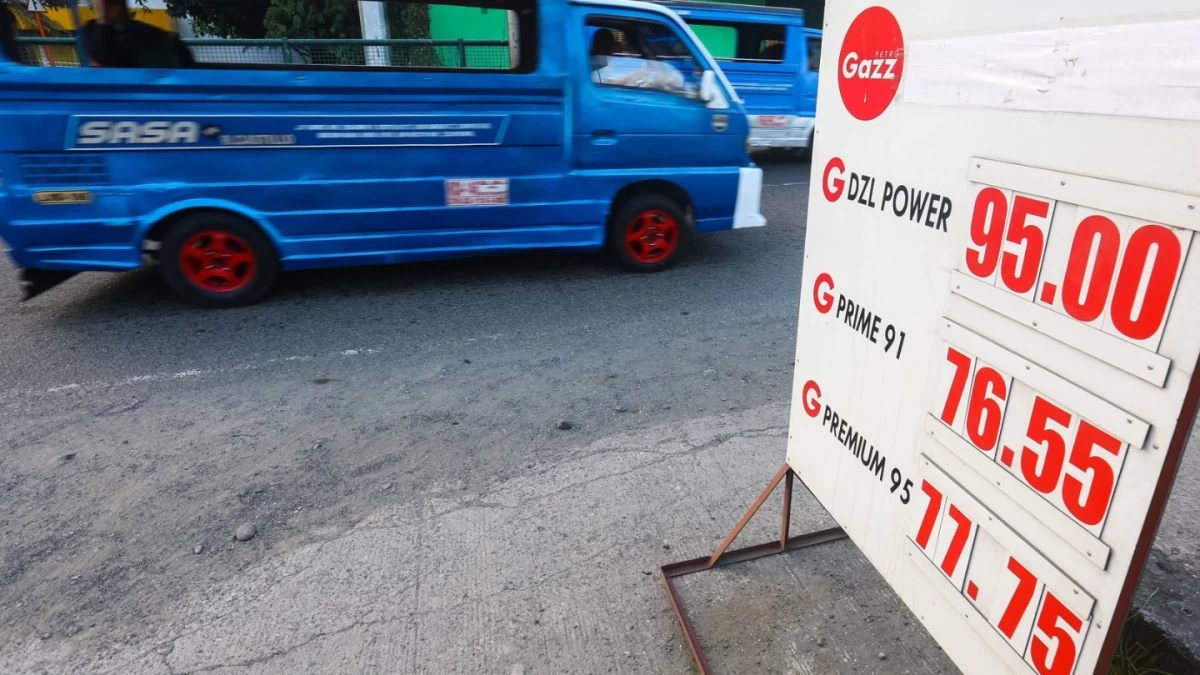
Fuel prices are displayed at a pump in Davao City on Tuesday. The Philippine Department of Energy is urging companies to stagger price increases as the country’s fuel supply buffer narrows to 38 days. (Photo by Keith Bacongco I MB)
Business groups expect the full implementation of the law suspending or reducing excise taxes on petroleum products to cushion the impact of rising prices on the operations of businesses across the country.
In a statement, the Philippine Exporters Confederation Inc. (Philexport) said it welcomes the passage of Republic Act (RA) No. 12316, which allows the President to suspend or reduce fuel excise taxes if the price of Dubai crude oil hits $80 per barrel for a month.
Philexport President Sergio Ortiz-Luis Jr. said the law is a much-needed policy tool to help businesses, especially exporters, cope with the impact of fuel prices, which have been increasing in recent weeks due to the conflict in the Middle East.
“For exporters, especially MSMEs (micro, small, and medium enterprises), transport and logistics costs are a major component of overall expenses,” said Ortiz-Luis.
“Any relief on fuel costs will help preserve competitiveness in already volatile global markets,” he added.
Ortiz-Luis said the surging fuel prices have triggered a domino effect that has affected costs in freight, trucking, power, and production. This has prompted some exporters to consider reducing work hours due to higher input costs.
“The ability of the President to suspend or reduce excise taxes on fuel can help cut operating costs, prevent further price pass-through, and ultimately protect jobs and
livelihoods,” he said.
Following the recent declaration of a state of national energy emergency, the United Portusers Confederation of the Philippines Inc. (UPC) said the new law will help stabilize logistics costs and protect the country’s trade competitiveness.
“Fuel is the single most critical cost driver in port operations and logistics. When oil prices spike, the impact cascades immediately—from trucking and shipping lines to warehousing and last-mile delivery,” said UPC President Ma. Flordeliza Leong.
“The declaration of an energy emergency and the flexibility to adjust oil taxes are timely lifelines that can temper cost surges and prevent further disruption across the supply chain,” she added.
By keeping logistics costs stable for both exporters and importers, Leong said this would benefit consumers and maintain the competitiveness of local goods in markets abroad.
“These measures help contain inflationary pressures and support jobs across the trade ecosystem,” she said.
By suspending or reducing fuel excise taxes, the Financial Executives Institute of the Philippines (FINEX) said this would provide economy-wide relief from exceptional global price volatility.
The business group said such a measure upholds transparency and preserves investor confidence, helping the country weather the shock and lay the foundation for more resilient and inclusive growth.
“When time-bound and anchored in a clear fiscal framework, such measures can help stabilize prices without distorting market signals, underscoring the value of predictable, rules-based tools during systemic shocks,” said FINEX.
“At the same time, clarity on duration, funding implications, and fiscal offsets will be important to preserving medium-term sustainability and investor confidence,” it added.
The American Chamber of Commerce of the Philippines (AmCham) said the government’s ongoing measures are critical to maintaining the business community’s operational stability, investment planning, and overall competitiveness.
“We underscore the importance of implementing these measures in a transparent, predictable, and well-coordinated manner to minimize disruption while strengthening long-term energy security,” AmCham.
To complement the government’s efforts, the business group said the conflict in the Middle East is an opportune time to advance amendments to the Electric Power Industry Reform Act (EPIRA), strengthen the energy regulatory framework, accelerate renewable energy development, improve grid infrastructure, and encourage greater private sector participation.
“Moving these measures forward collaboratively can reinforce investor confidence and demonstrate the Philippines’ commitment to a stable, forward-looking energy sector,” it said.