






 Business
The Economy
BSP holds rates in rare off-cycle move despite expectations of hike on war-driven inflation risks
Business
The Economy
BSP holds rates in rare off-cycle move despite expectations of hike on war-driven inflation risks
BSP holds rates in rare off-cycle move despite expectations of hike on war-driven inflation risks
By Derco Rosal


At A Glance
- Even as foreign lenders expect the Bangko Sentral ng Pilipinas (BSP) to tighten sooner rather than later as inflation could breach what is deemed manageable this year, the central bank decided to keep the policy rate unchanged in a rare off-cycle meeting on Thursday, March 2.
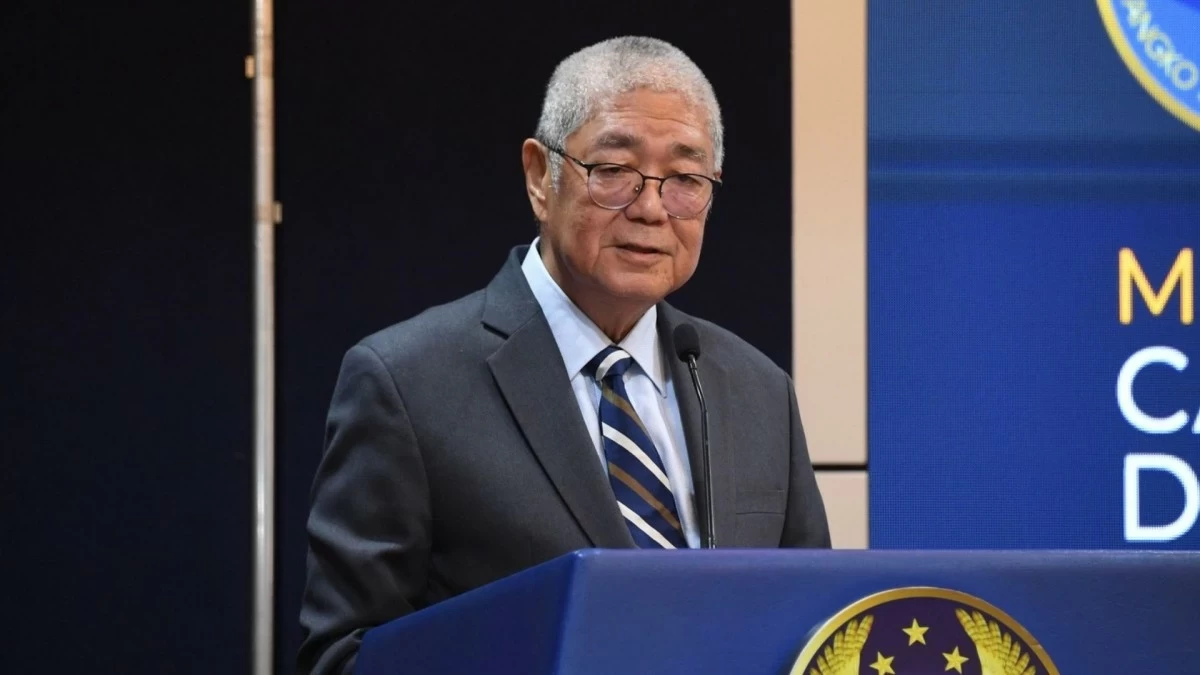
Even as foreign lenders expect the Bangko Sentral ng Pilipinas (BSP) to tighten sooner rather than later, as inflation could breach what is deemed manageable this year, the central bank decided to keep the policy rate unchanged in a rare off-cycle meeting on Thursday, March 26.
While inflation is seen overshooting the target level, the BSP argued that it would soon ease back toward the tolerance band by next year.
To justify its decision, the policy-making Monetary Board (MB) said it has forecast inflationary pressures to be largely influenced by supply, “for which monetary policy has limited effectiveness.”
“Latest BSP projections indicate that inflation in 2026 would breach the four-percent ceiling but move back toward the tolerance range by 2027. Inflation expectations, however, remain well-anchored,” the BSP said.
“To raise the policy rate at this time would delay the recovery,” the BSP further said, jumping off from its assumption that the economic growth softness experienced in 2025 will continue to be felt this year.
Oil price shocks have been pushing the Philippine peso on edge and consumer prices higher—factors that financial markets are banking on as they expect local monetary authorities to deliver the largest hike in interest rates over the next year.
Japanese financial giant MUFG Bank Ltd. said this is to tame the surging transport and power costs amid the ongoing military hostilities in the Middle East, a region through which a large volume of the world’s oil supply is channeled.
“Market pricing continues to reflect expectations of further policy tightening across the Asia region, rather than imminent easing. This is most pronounced in the Philippines,” MUFG senior currency analyst Lloyd Chan wrote in a March 26 commentary.
What has raised expectations for the BSP to deliver the largest benchmark rate hike is the Philippines’ sensitivity to sharp price volatility.
“Inflation risks across Asia remain asymmetric to the upside, driven by energy prices and the risk of second-round pass-through into transportation and food costs,” Chan said, noting that such risks are particularly pronounced for the Philippines and its peers (Thailand, India, and Vietnam), where food accounts for more than 30 percent of the consumer basket.
This high weight suggests that surging energy prices are more likely to lead to higher food and transportation costs.
Additionally, the Philippine peso’s standing as among the weakest-performing currencies amid current geopolitical shocks reinforces market anticipation that the BSP will tighten the monetary belt.
Prior to the supply shocks, the BSP had signaled it was nearing the end of its monetary policy easing cycle, which began two years ago in August 2024. Key borrowing costs have so far been reduced by a cumulative 225 basis points (bps) to 4.25 percent.
Based on foreign exchange (forex) data monitored by MUFG, the local currency emerged as one of the hardest-hit currencies in the region since the eruption of the military rift between the United States (US)-backed Israel and Iran.
Chan’s report showed the peso has so far weakened by 4.1 percent, the same scale as that of the South Korean won. Meanwhile, the Thai baht has seen the largest decline at 4.8 percent. These declines reflect these currencies’ vulnerability to “oil prices and risk sentiment.”
MUFG data showed the market expects a cumulative 140 basis points (bps) of tightening over the next year, which would bring the current 4.25 percent rate to over 5.5 percent after a year of a hiking cycle.
Based on market expectations, the Philippines has emerged as an outlier, leading all other listed countries in expected policy tightening. South Korea follows the Philippines with an expected hike of roughly 115 bps, while Hong Kong sits at approximately 90 bps.
India (75 bps), Japan (60 bps), and Australia (55 bps) show mid-range expectations for rate hikes over the next year.
Meanwhile, markets expect very little adjustment for the US, China, and Malaysia.
For its part, the BSP said escalating risks to price growth will warrant “sustained vigilance,” adding that monetary policy will focus on tackling looming second-round effects stemming from global oil disruptions.
It vowed to act “as needed” to carry out the central bank’s primary mandate of maintaining price stability.