







Yamsuan bill to make cheap transport easier, safer for Pinoys
Published Mar 25, 2026 07:59 am


At A Glance
- Parañaque City 2nd district Rep. Brian Raymund Yamsuan highlighted the need to pass a measure that would institutionalize active transport by establishing a network of pedestrian-friendly and safe "bike-able" pathways throughout the country.
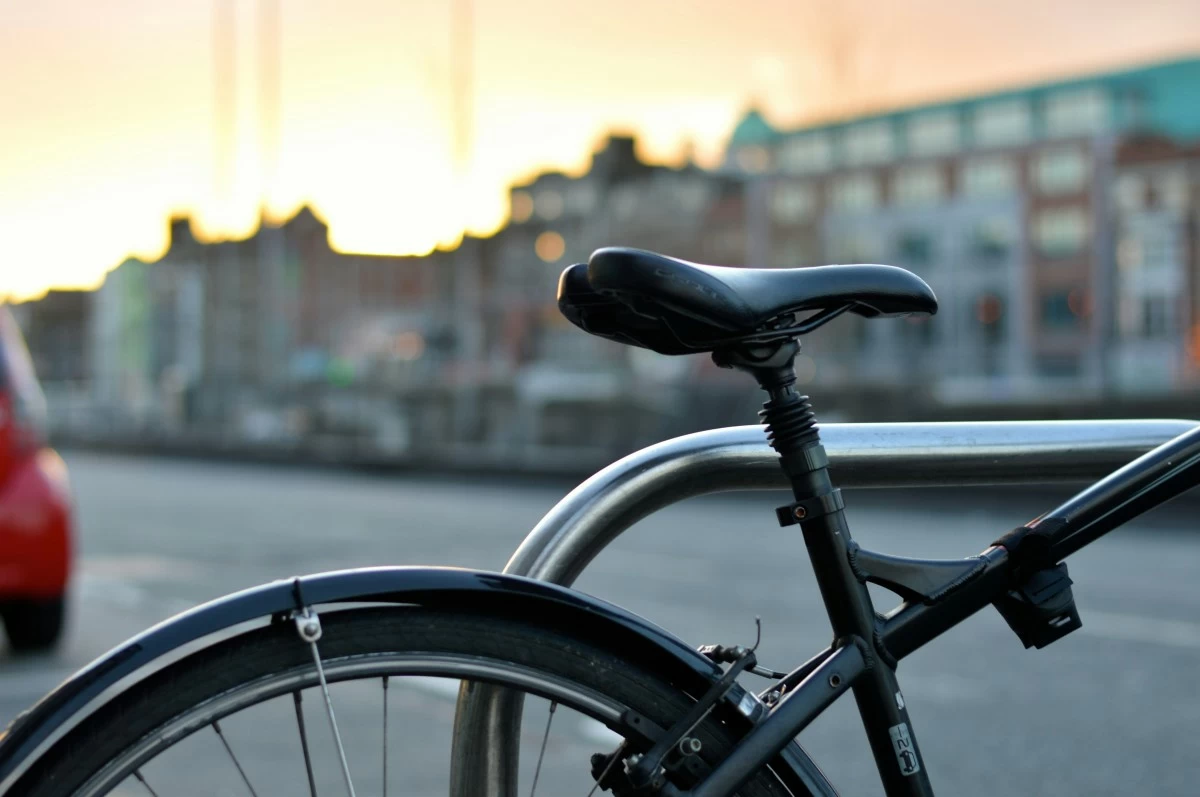
(Unsplash)
Cheap transport has become the name of the game for Filipinos as a result of the runaway prices of fuel.
In this regard, Parañaque City 2nd district Rep. Brian Raymund Yamsuan highlighted the need to pass a measure that would institutionalize active transport by establishing a network of pedestrian-friendly and safe "bike-able" pathways throughout the country.
Yamsuan reckoned that walking, bicycling, and other means of active or non-motorized transport have become practical options for many Filipinos as a means to help soften the impact of current and future oil price shocks.
His measure, House Bill (HB) No. 7863 or the proposed Safe Pathways Network Act, aims to provide Filipinos with these alternative means of travel by mandating cities and municipalities, in coordination with national government agencies, to identify and develop walkable and bike-friendly lanes in their respective localities.
“The disruption in global oil prices that we are experiencing likely won’t be the last. Many of our kababayans prefer to commute, bike or walk in order to save money. But our roads have been built mainly to favor cars, with sidewalks either too narrow or blocked, and bike lanes missing, disconnected and unsafe,” said Yamsuan, a vice chairperson of the House Committee on Transportation.
“Our proposed Safe Pathways Act responds to this reality. It recognizes the fact that most trips are not made by private vehicles. Millions of Filipinos commute and complete their journey on foot when they travel, while others prefer to use bikes. Ang problema ay hindi ligtas ang ating mga kalsada at mga sidewalk para sa kanila. Ito ang gusto nating baguhin (The problem is that our roads and sidewalks are not safe for them. This is what we want to change),” he added.
Yamsuan noted that under the administration of President Marcos, the government has been prioritizing the welfare of commuters and pedestrians in implementing public infrastructure projects, as shown by the ongoing commuter-centric phase of the EDSA rehabilitation project, which includes sidewalk improvements and bike lanes.
“This is an opportune time to enact the Safe Pathways Act considering that our ever-reliable Public Works Secretary, Vince Dizon, has been at the forefront of advocating for, and building, safe and more inclusive public spaces for pedestrians and commuters. Simulan natin sa EDSA at ituloy-tuloy na natin ito (Let’s start in EDSA and keep on going with these initiatives),” he said.
The first-time districts solon that aside from mitigating the effect of establishing a network of walkable and bike-friendly pathways will also help ease traffic congestion, promote healthy lifestyles, and benefit the environment by lessening air pollution and reducing greenhouse gas emissions from motorized vehicles.
At the global level, active transport is widely recognized as essential to achieving the Sustainable Development Goals under the United Nations (UN) 2030 Agenda for Sustainable Development, Yamsuan also pointed out.
Under HB No.7863, the local government units (LGUs), in consultation with the Department of Transportation (DOTr) and the Department of Public Works and Highways (DPWH) shall identify and establish a temporary or permanent network of bicycle lanes.
Along national roads in Metro Manila, the establishment of bike lanes shall be done by the DOTr in coordination with the DPWH and the Metro Manila Development Authority (MMDA).
The LGUs are also tasked with designating or constructing walkways, which may be shared with non-motorized vehicles or personal mobility devices, taking into account the safety of pedestrians.
To complement these safe pathways, the bill also mandates LGUs to designate a network of temporary or permanent “slow streets,” which will have limited access or speed limits for motorized vehicles at certain days or hours.
Under the measure, the government will also mandate public places, government offices, schools, places of work, and commercial establishments like malls, banks, and hospitals to provide adequate racks and other end-of-trip facilities for bicycles and other non-motorized vehicles.
If enacted into law, the funds necessary for the implementation of the measure shall be sourced from the amounts set aside by LGUs for infrastructure projects within their jurisdiction, as well as from the appropriations of the DOTr and DPWH under the General Appropriations Act, and the Special Road Fund from the Motor Vehicle User’s Charge.