ADVERTISEMENT

PAGASA raises El Niño Watch: What it means for the Philippines

Published Mar 25, 2026 01:20 pm
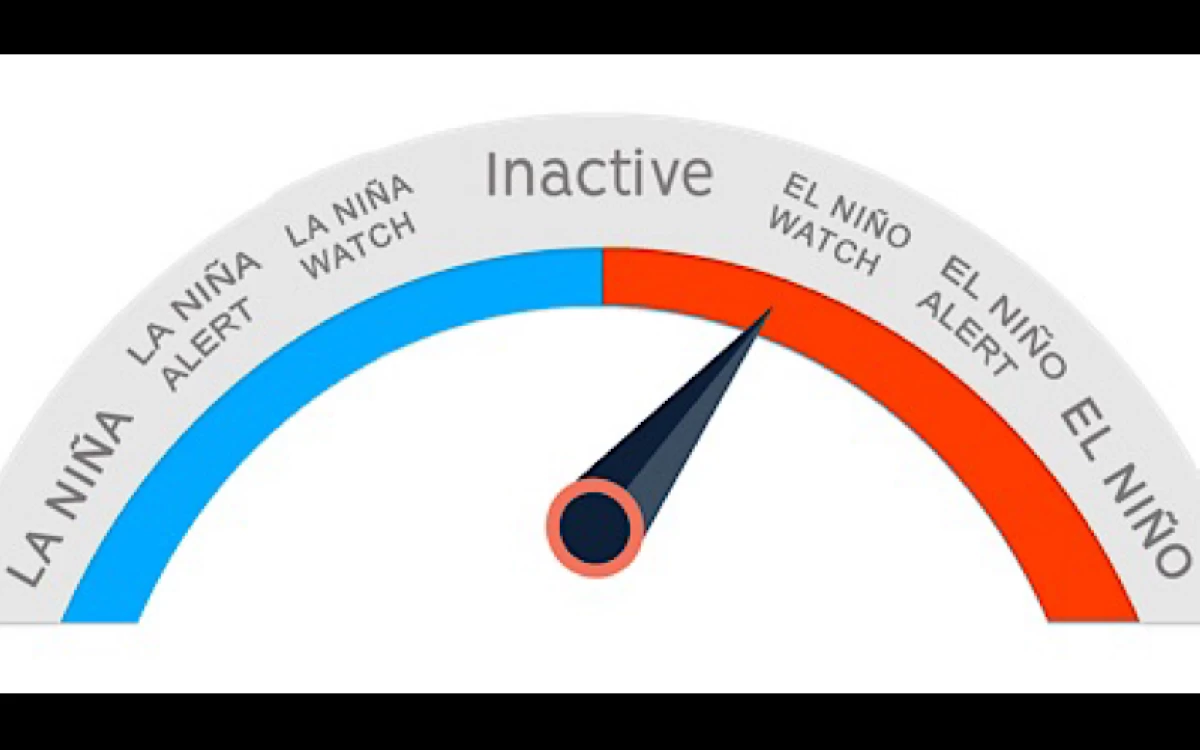
PAGASA ENSO Alert and Warning System
The Philippine Atmospheric, Geophysical and Astronomical Services Administration (PAGASA) on Wednesday, March 25, raised an El Niño Watch due to an increasing chance of El Niño developing within the next six months.
In an advisory, the agency said that following the end of the recent La Niña event on March 9, the country is currently under El Niño Southern Oscillation (ENSO)-neutral conditions, meaning neither El Niño nor La Niña is prevailing.
However, climate models suggest that El Niño could develop as early as the July to September 2026 season.
“El Niño Watch is issued when conditions are favorable for the development of El Niño, with a forecast probability of 55 percent or more within the next six months,” PAGASA senior weather specialist Dr. Joseph Basconcillo said.
He said the developing El Niño has a 62 percent chance of being weak from June to August, with an 83 percent chance it will persist through the end of 2026.
There is also a 56 percent chance it could be moderate from September to November and 60 percent from October to December.
PAGASA Deputy Administrator for Administration and Engineering Services Shirley David clarified that the watch does not mean El Niño has already arrived.
“This is an early advisory that gives lead time for preparedness,” she said.
“Historically, El Niño brings below-normal rainfall, which may lead to dry spells and drought in some areas, but during the southwest monsoon, some western parts of the country may still experience near-normal to above-normal rainfall,” she added.
El Niño is the warm phase of the ENSO, a climate phenomenon characterized by warmer-than-average sea surface temperatures in the central and eastern Pacific Ocean.
Its impacts extend to water resources, agriculture, and energy supply across the country.
PAGASA-Climatology and Agrometeorology Division chief Thelma Cinco said that during the early stages of El Niño development, a phenomenon called “reversal”—a temporary shift in the typical rainfall pattern of the southwest monsoon—may bring above-normal rainfall to western parts of the country.
However, she warned that in the latter months, as El Niño strengthens, rainfall is expected to decline, increasing the risk of dry spells and drought in other areas.
Supporting this, Basconcillo said probabilistic forecasts indicate that May may still see near-normal to above-normal rainfall in western areas, but as El Niño develops in June through August, the seasonal reversal will shift, leading to drier conditions in central and eastern regions.
He also noted that this El Niño is likely to be persistent, unlike previous short-lived episodes.
Cinco and Basconcillo’s explanations show that while some western areas may temporarily receive more rainfall early on, the overall trend later in the year will be toward dry conditions, particularly in areas most affected by El Niño.
PAGASA said it will continue to closely monitor developments and provide regular updates.
It also urged government agencies and the public to begin reviewing preparedness measures against the potential impacts of El Niño, including water shortages, reduced agricultural yields, and energy supply challenges.

Related Tags

PAGASA EL NINO PHILIPPINES
ADVERTISEMENT
.most-popular .layout-ratio{ padding-bottom: 79.13%; } @media (min-width: 768px) and (max-width: 1024px) { .widget-title { font-size: 15px !important; } }

{{ articles_filter_1561_widget.title }}

.most-popular .layout-ratio{ padding-bottom: 79.13%; } @media (min-width: 768px) and (max-width: 1024px) { .widget-title { font-size: 15px !important; } }

{{ articles_filter_1562_widget.title }}

.most-popular .layout-ratio{ padding-bottom: 79.13%; } @media (min-width: 768px) and (max-width: 1024px) { .widget-title { font-size: 15px !important; } }

{{ articles_filter_1563_widget.title }}

{{ articles_filter_1564_widget.title }}

.mb-article-details { position: relative; } .mb-article-details .article-body-preview, .mb-article-details .article-body-summary{ font-size: 17px; line-height: 30px; font-family: "Libre Caslon Text", serif; color: #000; } .mb-article-details .article-body-preview iframe , .mb-article-details .article-body-summary iframe{ width: 100%; margin: auto; } .read-more-background { background: linear-gradient(180deg, color(display-p3 1.000 1.000 1.000 / 0) 13.75%, color(display-p3 1.000 1.000 1.000 / 0.8) 30.79%, color(display-p3 1.000 1.000 1.000) 72.5%); position: absolute; height: 200px; width: 100%; bottom: 0; display: flex; justify-content: center; align-items: center; padding: 0; } .read-more-background a{ color: #000; } .read-more-btn { padding: 17px 45px; font-family: Inter; font-weight: 700; font-size: 18px; line-height: 16px; text-align: center; vertical-align: middle; border: 1px solid black; background-color: white; } .hidden { display: none; }
function initializeAllSwipers() { // Get all hidden inputs with cms_article_id document.querySelectorAll('[id^="cms_article_id_"]').forEach(function (input) { const cmsArticleId = input.value; const articleSelector = '#article-' + cmsArticleId + ' .body_images'; const swiperElement = document.querySelector(articleSelector); if (swiperElement && !swiperElement.classList.contains('swiper-initialized')) { new Swiper(articleSelector, { loop: true, pagination: false, navigation: { nextEl: '#article-' + cmsArticleId + ' .swiper-button-next', prevEl: '#article-' + cmsArticleId + ' .swiper-button-prev', }, }); } }); } setTimeout(initializeAllSwipers, 3000); const intersectionObserver = new IntersectionObserver( (entries) => { entries.forEach((entry) => { if (entry.isIntersecting) { const newUrl = entry.target.getAttribute("data-url"); if (newUrl) { history.pushState(null, null, newUrl); let article = entry.target; // Extract metadata const author = article.querySelector('.author-section').textContent.replace('By', '').trim(); const section = article.querySelector('.section-info ').textContent.replace(' ', ' '); const title = article.querySelector('.article-title h1').textContent; // Parse URL for Chartbeat path format const parsedUrl = new URL(newUrl, window.location.origin); const cleanUrl = parsedUrl.host + parsedUrl.pathname; // Update Chartbeat configuration if (typeof window._sf_async_config !== 'undefined') { window._sf_async_config.path = cleanUrl; window._sf_async_config.sections = section; window._sf_async_config.authors = author; } // Track virtual page view with Chartbeat if (typeof pSUPERFLY !== 'undefined' && typeof pSUPERFLY.virtualPage === 'function') { try { pSUPERFLY.virtualPage({ path: cleanUrl, title: title, sections: section, authors: author }); } catch (error) { console.error('ping error', error); } } // Optional: Update document title if (title && title !== document.title) { document.title = title; } } } }); }, { threshold: 0.1 } ); function showArticleBody(button) { const article = button.closest("article"); const summary = article.querySelector(".article-body-summary"); const body = article.querySelector(".article-body-preview"); const readMoreSection = article.querySelector(".read-more-background"); // Hide summary and read-more section summary.style.display = "none"; readMoreSection.style.display = "none"; // Show the full article body body.classList.remove("hidden"); } document.addEventListener("DOMContentLoaded", () => { let loadCount = 0; // Track how many times articles are loaded const offset = [1, 2, 3, 4, 5, 6, 7, 8, 9, 10]; // Offset values const currentUrl = window.location.pathname.substring(1); let isLoading = false; // Prevent multiple calls if (!currentUrl) { console.log("Current URL is invalid."); return; } const sentinel = document.getElementById("load-more-sentinel"); if (!sentinel) { console.log("Sentinel element not found."); return; } function isSentinelVisible() { const rect = sentinel.getBoundingClientRect(); return ( rect.top < window.innerHeight && rect.bottom >= 0 ); } function onScroll() { if (isLoading) return; if (isSentinelVisible()) { if (loadCount >= offset.length) { console.log("Maximum load attempts reached."); window.removeEventListener("scroll", onScroll); return; } isLoading = true; const currentOffset = offset[loadCount]; window.loadMoreItems().then(() => { let article = document.querySelector('#widget_1690 > div:nth-last-of-type(2) article'); intersectionObserver.observe(article) loadCount++; }).catch(error => { console.error("Error loading more items:", error); }).finally(() => { isLoading = false; }); } } window.addEventListener("scroll", onScroll); });

Sign up by email to receive news.