






Manila Bulletin
 Business
Trade & Industry
Middle East conflict threatens key Philippine electronics exports
Business
Trade & Industry
Middle East conflict threatens key Philippine electronics exports
Business
Trade & Industry
Middle East conflict threatens key Philippine electronics exports
Middle East conflict threatens key Philippine electronics exports
Published Mar 25, 2026 05:00 pm
|
Updated Mar 25, 2026 01:32 pm


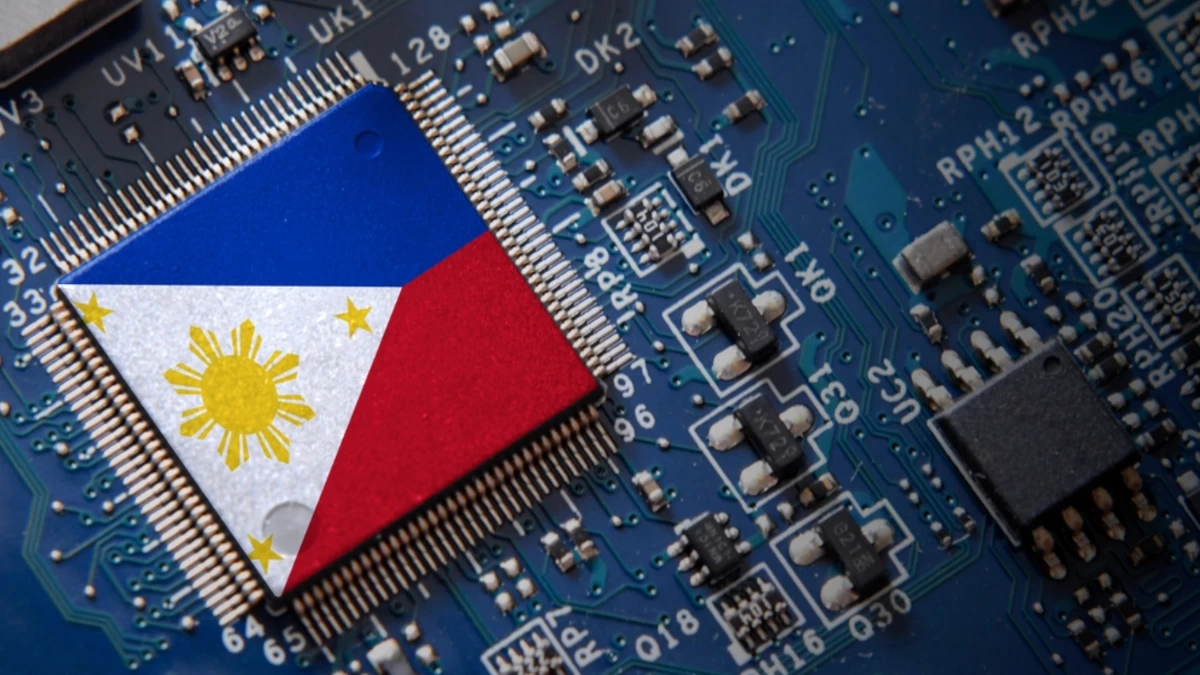
(IMI | Global Manufacturing Solutions photo)
The Philippine electronics industry, the nation’s primary engine for trade, faces a potential “disastrous” disruption as escalating conflict in the Middle East threatens to ground cargo flights and sever just-in-time supply chains.
Semiconductor and Electronics Industries in the Philippines Foundation Inc. (SEIPI) President Danilo Lachica said the prospect of grounded planes would have consequences for the country’s electronic exports, particularly semiconductors.
“That’s disastrous for JIT (just-in-time) deliveries,” he told Manila Bulletin, noting that this could have a substantial impact on the global supply chain.
Under the JIT model, the country’s semiconductor exports are shipped to overseas customers as needed for their production lines, as it keeps minimal inventory to remain efficient.
Any disruption to this process—such as grounded planes—risks halting the manufacturing of key products abroad and affecting potential revenues for semiconductor firms.
Philippine Exporters Confederation Inc. (Philexport) President Sergio Ortiz-Luis Jr. said electronic products are the main export commodity transported by air to foreign markets.
While their volume is relatively minimal compared to products transported through sea freight, he said grounded planes would affect the country’s overall export earnings, as electronic exports account for half of the total.
“[The impact] is substantial. It can make a difference,” Ortiz-Luis told Manila Bulletin.
Based on data from the Department of Trade and Industry (DTI), electronic products reached $45.96 billion last year, or 54 percent of total merchandise exports valued at $84.44 billion.
Before the war launched by the United States (US) and Israel against Iran, SEIPI had projected that electronic exports would surpass $50 billion this year, setting a new record.
Due to these escalating tensions that have no clear end in sight, Ortiz-Luis said some exporters are now facing order cancellations, as rising jet fuel prices are making deliveries more expensive.
“Even now, some of those imported products have already been canceled. Even domestically, in the transfer of goods, there are already a lot of cancellations,” he added.
As jet fuel prices continue to rise, the Philippines is also facing a shortage, as it relies heavily on the Middle East for its supply.
President Ferdinand “Bongbong” Marcos Jr. said in an interview with Bloomberg that there is a “distinct possibility” that planes may have to be grounded due to a shortage of jet fuel.
Marcos warned that long-haul flights could become a “much more serious problem” given the supply crunch.
In a statement, flag carrier Philippine Airlines (PAL) assured passengers that it has secured enough jet fuel supply to support scheduled operations, such as long-haul flights, “for the foreseeable future.”
“As part of prudent planning, PAL continues to work closely with fuel suppliers, industry partners, and government stakeholders to ensure stable and efficient operations over the longer term,” it said.
Meanwhile, budget carrier Cebu Pacific said it is working to extend its fuel supply for May and the succeeding months, having recently secured supply until the end of April.
The airline earlier announced that it is suspending and reducing the frequency of several international routes through October to “ensure stable and sustainable operations.”
According to estimates of the Department of Transportation (DOTr), the cost of jet fuel has more than doubled to over $200 per barrel from approximately $89 per barrel before the Middle East conflict.