







Local stocks reclaim 6,000 level on US-Iran peace hopes
Published Mar 25, 2026 04:29 pm


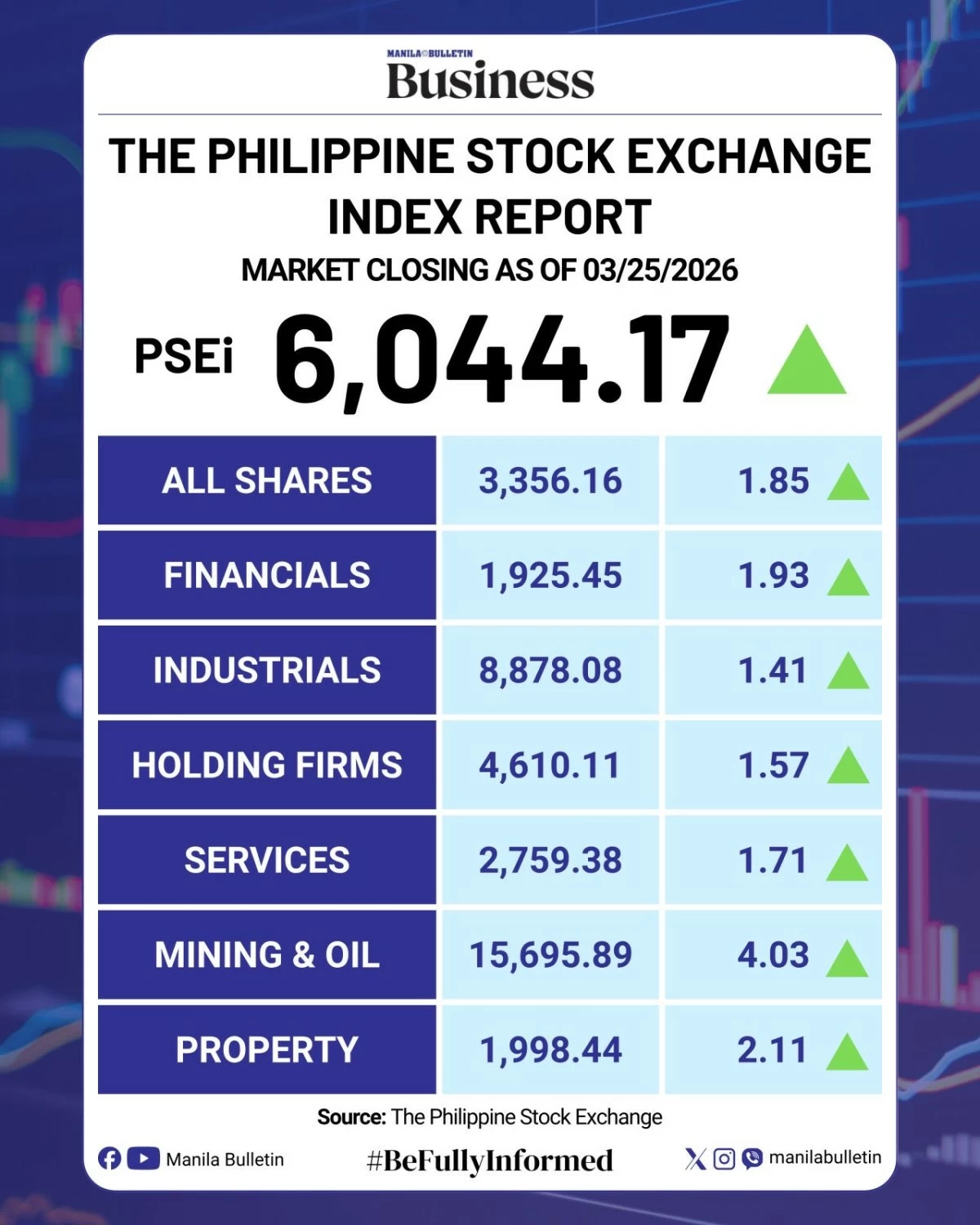
Local stocks surged back above the 6,000 threshold on Wednesday, March 25, as investor sentiment shifted toward optimism following reports that the United States (US) has entered formal negotiations with Iran.
The prospect of a diplomatic resolution to Middle East tensions sparked a broad-based rally, lifting the benchmark index to its highest level in over a week.
The Philippine Stock Exchange index (PSEi) gained 107.97 points, or 1.82 percent, to finish at 6,044.17. While gains were seen across most sectors, mining companies led the advance as global risk appetite returned.
Market activity remained robust, with 1.15 billion shares changing hands valued at ₱7.35 billion. Advancing issues outpaced decliners 118 to 81, while 54 stocks remained unchanged.
Luis Limlingan, managing director at Regina Capital Development Corp., noted that the market was ripe for a reversal.
He said bargain hunting among participants, following a series of declines, lifted the market. Sentiment improved after US President Donald Trump announced that talks with Iran were continuing and suggested that Tehran had made significant concessions regarding energy markets.
The geopolitical thaw provided a much-needed catalyst for regional markets, which have been weighed down by the threat of supply chain disruptions and energy price spikes.
Japhet Tantiangco, research manager at Philstocks Financial, said the local market rallied on hopes that an agreement between the US and Iran would effectively end the conflict. These expectations were bolstered by reports that Washington had submitted a 15-point peace plan to Tehran, signaling a more structured approach to de-escalation than previously anticipated.
For the Philippines, a net oil importer, the cooling of tensions in the Persian Gulf has direct implications for inflation and corporate margins.
Michael Ricafort, chief economist at Rizal Commercial Banking Corp., said the PSEi’s second day of gains was fueled by signals of diplomacy that have already begun to impact commodity markets.
He noted that the shift toward a diplomatic track led to a downward correction in global crude oil prices, which have retreated toward two-week lows.