






Manila Bulletin
 World
US offers plan for a ceasefire but Iran's military says Washington is in no position to negotiate
World
US offers plan for a ceasefire but Iran's military says Washington is in no position to negotiate
World
US offers plan for a ceasefire but Iran's military says Washington is in no position to negotiate
US offers plan for a ceasefire but Iran's military says Washington is in no position to negotiate
Published Mar 25, 2026 01:18 pm


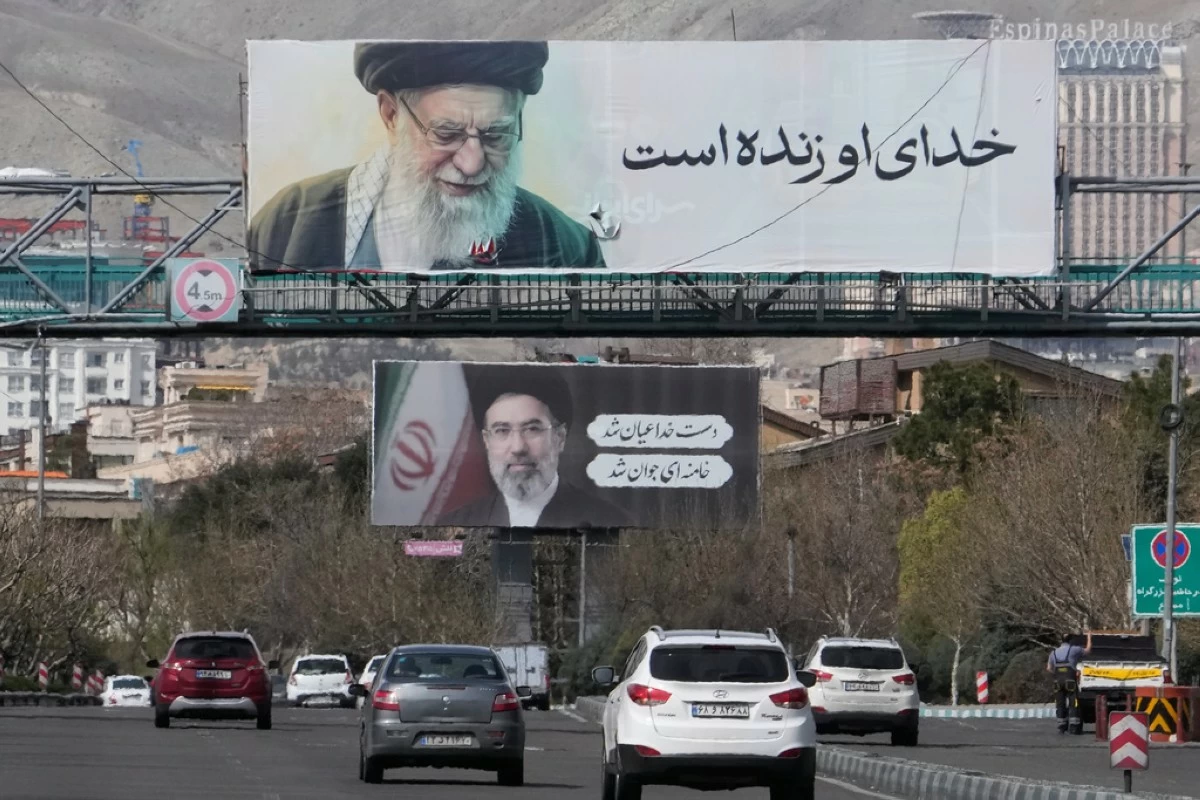
Vehicles drive under billboards showing portraits of the late Iranian Supreme Leader Ayatollah Ali Khamenei, foreground, and his son Ayatollah Mojtaba Khamenei, the successor to him, along a highway in Tehran, Iran, Tuesday, March 24, 2026. (AP Photo/Vahid Salemi)
DUBAI, United Arab Emirates (AP) — The United States sent a 15-point plan to Iran for a possible ceasefire, an official said, even as it began to move paratroopers to the Mideast to back up a contingent of Marines heading there on Wednesday.
Iran's military scoffed at the diplomatic effort and launched more attacks on Israel and the Persian Gulf region, including an assault that sparked a fire at Kuwait International Airport.
With growing pressure on the U.S. to end the war as it nears the end of its first month, Washington submitted the plan to Iran through intermediaries from Pakistan who have offered to host renewed negotiations, according to a person briefed on the contours of the proposal who spoke on condition of anonymity because they were not authorized to speak publicly.
Iran’s attacks on regional energy infrastructure and its chokehold on the Strait of Hormuz, a strategic waterway through which a fifth of the world’s oil is shipped, has sent oil prices skyrocketing and rocked world markets over fears of a global energy crisis.
More US troops on the way even as diplomacy continues
At least 1,000 troops from the 82nd Airborne Division will be sent top the Mideast in the coming days, three people with knowledge of the plans told The Associated Press.
The Pentagon is also in the process of deploying two Marine units that will add about 5,000 Marines and thousands of sailors to the region. The moves are being framed as U.S. President Donald Trump maneuvering to give himself “max flexibility” on what he will do next, the person added.
Trump has said that American officials are in negotiations with Iran, though he hasn't said who they are in contact with. Iran's Khatam Al-Anbiya Central Headquarters, which commands both the regular military and the paramilitary Revolutionary Guard, suggested there are no talks.
“Have your internal conflicts reached the point where you are negotiating with yourselves?” said Lt. Col. Ebrahim Zolfaghari, a spokesman for the headquarters.
“Our first and last word has been the same from day one, and it will stay that way: Someone like us will never come to terms with someone like you,” Zolfaghari said in the video statement aired on state television. “Not now, not ever.”
Israeli officials, who have been advocating for Trump to continue the war against Iran, were surprised by the submission of a ceasefire plan, the official said.
The White House did not respond to requests for comment.
Israel launches new wide-scale strikes on Iran
The Israeli military announced it had begun new wide-scale attacks early Wednesday on Iran targeting government infrastructure, and witnesses reported airstrikes in the northwestern city of Qazvin.
Missile alert sirens began early in the morning in Israel as Iran launched its own attacks, which have been a daily occurrence since Israel and the U.S. attacked Iran on Feb. 28 to start the war.
Iran also kept up the pressure on its Gulf Arab neighbors, with Saudi Arabia's Defense Ministry saying it had destroyed at least eight drones in the kingdom's oil-rich Eastern Province, and missile alert sirens sounding in Bahrain.
Kuwait said it shot down multiple drones but one hit a fuel tank at Kuwait International Airport, sparking a fire, the General Civil Aviation Authority said. Firefighters were working to contain the blaze.
Diplomatic efforts calm energy prices but face huge hurdles
Brent crude oil, the international standard, has neared US$120 a barrel during the conflict but was trading just below $100 in morning trading as talks of a possible ceasefire helped calm prices. That's still up nearly 40% from the start of the war.
Any talks between the U.S. and Iran would face monumental challenges. Many of Washington’s shifting objectives, particularly over Iran’s ballistic missile and nuclear programs, remain difficult to achieve.
It’s not clear who in Iran’s government has the authority to negotiate — or would be willing to, as Israel has vowed to continue killing the country’s leaders.
Iran remains highly suspicious of the United States, which twice under the Trump administration has attacked during high-level diplomatic talks, including with the strikes that started the current war.
“We have a very catastrophic experience with U.S. diplomacy,” Iranian Foreign Ministry spokesperson Esmail Baghaei said in an interview with India Today on Tuesday.
He said Iran's foreign minister, Abbas Araghchi, had been in contact with Pakistani and other regional diplomats but that “there are no talks or negotiations between Iran and the United States.”
Zolfaghari said that the U.S. was in no position to negotiate.
“The strategic power you used to talk about has turned into a strategic failure,” he said. “The one claiming to be a global superpower would have already gotten out of this mess if it could.”
Speaking Tuesday at the White House, Trump said the U.S. is “in negotiations right now” and that the participants included special envoy Steve Witkoff, his son-in-law Jared Kushner, Secretary of State Marco Rubio and Vice President JD Vance.
“We have a number of people doing it,” Trump said. “And the other side, I can tell you, they’d like to make a deal.”
In an overnight call, Saudi Arabia’s powerful crown prince spoke to Pakistan’s prime minister about Islamabad’s efforts at supporting ceasefire talks.
The state-run Saudi Press Agency said Crown Prince Mohammed bin Salman, the day-to-day ruler of the kingdom, discussed the “the repercussions of the ongoing military escalation on the security and stability of the region and the world” with Pakistani Prime Minister Shehbaz Sharif.
When Trump was previously asked about reports that Saudi Arabia had been pushing him to continue the fight, the U.S. president called Prince Mohammed "a warrior.”
“He’s fighting with us, by the way,” Trump said, without elaborating. “Saudi Arabia has been excellent and UAE -- excellent. And I will tell you, Qatar, incredible.”