ADVERTISEMENT

GSIS begins accepting applications for solar energy loans

Published Mar 25, 2026 02:20 pm
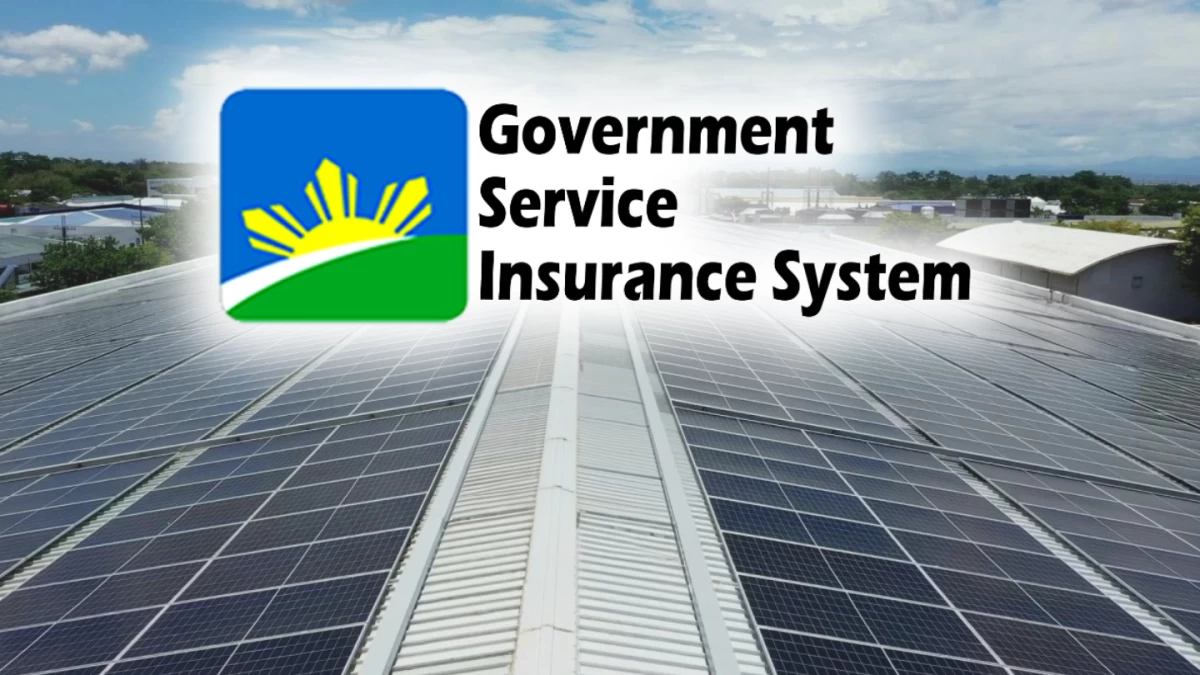
State-run Government Service Insurance System (GSIS) began accepting applications on Wednesday, March 25, for its Ginhawa Solar Energy Loan (GSEL), a move intended to provide government employees with affordable financing for renewable energy as the country grapples with rising utility costs.
The rollout follows President Ferdinand Marcos Jr.’s issuance of Executive Order No. 110, which declared a national energy emergency. The decree seeks to accelerate measures to stabilize the power grid and reduce the financial burden on consumers.
By providing consumer financing for rooftop solar, GSIS is positioning itself as one of the first state-run pension funds in the Philippines to directly subsidize small-scale renewable adoption.
GSIS President and General Manager Wick Veloso said the initiative allows the agency’s members to participate directly in the nation’s energy transition. The goal is to move from awareness to action, shifting to solar to lower long-term costs and invest in a more stable and sustainable future, Veloso said in a statement.
He added that the program aligns with the president's call for Filipinos to contribute to energy security solutions.
Under the terms of the facility, eligible members can borrow as much as ₱500,000 to cover the purchase and installation of solar power systems. The loans carry a fixed interest rate of five percent per annum with a five-year repayment term.
Notably, the state fund has waived service fees for the program to further lower the barrier to entry for civil servants.
The program is designed to help borrowers recoup their initial investment through monthly savings on electricity bills. It also allows for the reimbursement of solar systems installed since the beginning of 2026, a provision intended to support early adopters.
Furthermore, participants may leverage the government’s net metering system, which permits households to sell surplus electricity back to the national grid, providing an additional offset to household expenses.
To maintain its push toward digital service delivery, GSIS is requiring all applications to be filed exclusively through its GSIS Touch mobile application.
Once an application is approved, proceeds are credited to the borrower’s bank account within three business days. Loan repayments will be managed via automatic salary deductions, provided the borrower maintains the required minimum net take-home pay.
The facility is open to active GSIS members with permanent, regular, or non-career status, including special members, provided they have at least three years of government service. Applicants must submit a formal quotation from a solar provider, an installation agreement, or proof of purchase certified by an authorized agency officer.
To mitigate credit and physical risks, the GSIS is bundling the loan with three-year insurance coverage against natural disasters, including typhoons, earthquakes, and fire, at no extra cost to the member.
The package also includes credit redemption insurance to settle outstanding balances in the event of a borrower’s death. The GSEL program is scheduled to run for an initial period of three years.

Related Tags

Government Service Insurance System (GSIS) renewable energy (RE)
ADVERTISEMENT
.most-popular .layout-ratio{ padding-bottom: 79.13%; } @media (min-width: 768px) and (max-width: 1024px) { .widget-title { font-size: 15px !important; } }

{{ articles_filter_1561_widget.title }}

.most-popular .layout-ratio{ padding-bottom: 79.13%; } @media (min-width: 768px) and (max-width: 1024px) { .widget-title { font-size: 15px !important; } }

{{ articles_filter_1562_widget.title }}

.most-popular .layout-ratio{ padding-bottom: 79.13%; } @media (min-width: 768px) and (max-width: 1024px) { .widget-title { font-size: 15px !important; } }

{{ articles_filter_1563_widget.title }}

{{ articles_filter_1564_widget.title }}

.mb-article-details { position: relative; } .mb-article-details .article-body-preview, .mb-article-details .article-body-summary{ font-size: 17px; line-height: 30px; font-family: "Libre Caslon Text", serif; color: #000; } .mb-article-details .article-body-preview iframe , .mb-article-details .article-body-summary iframe{ width: 100%; margin: auto; } .read-more-background { background: linear-gradient(180deg, color(display-p3 1.000 1.000 1.000 / 0) 13.75%, color(display-p3 1.000 1.000 1.000 / 0.8) 30.79%, color(display-p3 1.000 1.000 1.000) 72.5%); position: absolute; height: 200px; width: 100%; bottom: 0; display: flex; justify-content: center; align-items: center; padding: 0; } .read-more-background a{ color: #000; } .read-more-btn { padding: 17px 45px; font-family: Inter; font-weight: 700; font-size: 18px; line-height: 16px; text-align: center; vertical-align: middle; border: 1px solid black; background-color: white; } .hidden { display: none; }
function initializeAllSwipers() { // Get all hidden inputs with cms_article_id document.querySelectorAll('[id^="cms_article_id_"]').forEach(function (input) { const cmsArticleId = input.value; const articleSelector = '#article-' + cmsArticleId + ' .body_images'; const swiperElement = document.querySelector(articleSelector); if (swiperElement && !swiperElement.classList.contains('swiper-initialized')) { new Swiper(articleSelector, { loop: true, pagination: false, navigation: { nextEl: '#article-' + cmsArticleId + ' .swiper-button-next', prevEl: '#article-' + cmsArticleId + ' .swiper-button-prev', }, }); } }); } setTimeout(initializeAllSwipers, 3000); const intersectionObserver = new IntersectionObserver( (entries) => { entries.forEach((entry) => { if (entry.isIntersecting) { const newUrl = entry.target.getAttribute("data-url"); if (newUrl) { history.pushState(null, null, newUrl); let article = entry.target; // Extract metadata const author = article.querySelector('.author-section').textContent.replace('By', '').trim(); const section = article.querySelector('.section-info ').textContent.replace(' ', ' '); const title = article.querySelector('.article-title h1').textContent; // Parse URL for Chartbeat path format const parsedUrl = new URL(newUrl, window.location.origin); const cleanUrl = parsedUrl.host + parsedUrl.pathname; // Update Chartbeat configuration if (typeof window._sf_async_config !== 'undefined') { window._sf_async_config.path = cleanUrl; window._sf_async_config.sections = section; window._sf_async_config.authors = author; } // Track virtual page view with Chartbeat if (typeof pSUPERFLY !== 'undefined' && typeof pSUPERFLY.virtualPage === 'function') { try { pSUPERFLY.virtualPage({ path: cleanUrl, title: title, sections: section, authors: author }); } catch (error) { console.error('ping error', error); } } // Optional: Update document title if (title && title !== document.title) { document.title = title; } } } }); }, { threshold: 0.1 } ); function showArticleBody(button) { const article = button.closest("article"); const summary = article.querySelector(".article-body-summary"); const body = article.querySelector(".article-body-preview"); const readMoreSection = article.querySelector(".read-more-background"); // Hide summary and read-more section summary.style.display = "none"; readMoreSection.style.display = "none"; // Show the full article body body.classList.remove("hidden"); } document.addEventListener("DOMContentLoaded", () => { let loadCount = 0; // Track how many times articles are loaded const offset = [1, 2, 3, 4, 5, 6, 7, 8, 9, 10]; // Offset values const currentUrl = window.location.pathname.substring(1); let isLoading = false; // Prevent multiple calls if (!currentUrl) { console.log("Current URL is invalid."); return; } const sentinel = document.getElementById("load-more-sentinel"); if (!sentinel) { console.log("Sentinel element not found."); return; } function isSentinelVisible() { const rect = sentinel.getBoundingClientRect(); return ( rect.top < window.innerHeight && rect.bottom >= 0 ); } function onScroll() { if (isLoading) return; if (isSentinelVisible()) { if (loadCount >= offset.length) { console.log("Maximum load attempts reached."); window.removeEventListener("scroll", onScroll); return; } isLoading = true; const currentOffset = offset[loadCount]; window.loadMoreItems().then(() => { let article = document.querySelector('#widget_1690 > div:nth-last-of-type(2) article'); intersectionObserver.observe(article) loadCount++; }).catch(error => { console.error("Error loading more items:", error); }).finally(() => { isLoading = false; }); } } window.addEventListener("scroll", onScroll); });

Sign up by email to receive news.