






Manila Bulletin
 Business
Trade & Industry
Business groups call for clear plan after Marcos declares energy emergency
Business
Trade & Industry
Business groups call for clear plan after Marcos declares energy emergency
Business
Trade & Industry
Business groups call for clear plan after Marcos declares energy emergency
Business groups call for clear plan after Marcos declares energy emergency
Published Mar 25, 2026 02:43 pm


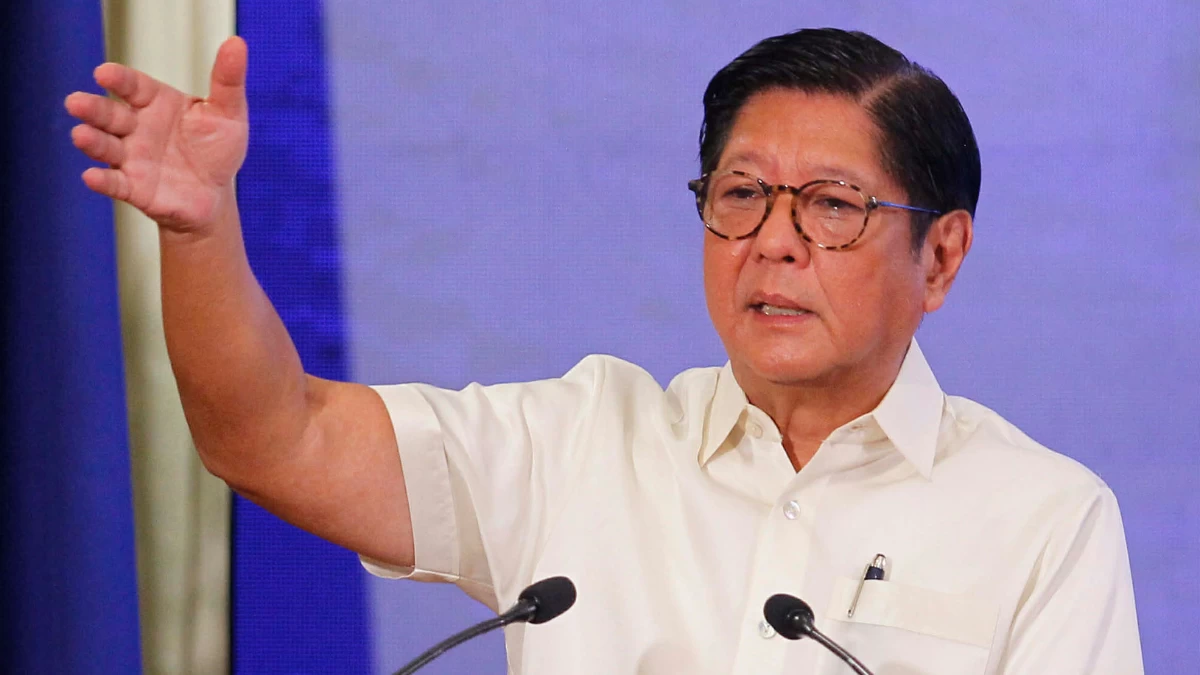
The Philippines’ most influential business groups are calling on the Marcos administration to ensure the “well-calibrated” execution of a newly declared state of national energy emergency, warning that the policy’s success hinges on transparent implementation rather than mere bureaucracy.
Management Association of the Philippines (MAP) President Donald Lim said the country’s top business executives welcomed the government’s move to safeguard energy security through the declaration.
He said it reflects the government’s initiative to ensure reliable and affordable power amid rising energy challenges stemming from the escalating war in the Middle East.
“From a business perspective, this move can help accelerate critical investments and address supply constraints essential to sustaining economic growth,” Lim told Manila Bulletin.
“However, the success of this declaration will depend on swift, transparent, and well-coordinated execution, with strong collaboration between government and the private sector,” he noted.
Lim said the government should ensure that well-calibrated policy actions are implemented within the next 30 days to set the direction for investor confidence, energy stability, and the country’s overall economic resilience.
President Ferdinand “Bongbong” Marcos Jr. signed Executive Order (EO) No. 110 on Tuesday, March 24, to formally declare a state of national energy emergency due to the “imminent danger posed to the availability and stability of the country’s energy supply.”
Through this order, Marcos directed the adoption of a whole-of-government approach to ease the burden on affected sectors under the Unified Package for Livelihood, Industry, Food, and Transport (UPLIFT).
Chaired by the President, the UPLIFT Committee will comprise the secretaries of energy, transportation, social welfare and development, agriculture, finance, budget and management, economy, planning and development, as well as the executive secretary.
The committee will ensure the continued supply of fuel, food, medicines, agricultural products, and other essential goods, as well as safeguard the country’s economic stability, among other functions.
“The UPLIFT framework provides a coordinated approach to cushion industries and communities from global energy shocks,” said Federation of Philippine Industries (FPI) chairperson Elizabeth Lee in a statement.
Lee emphasized that this is especially critical for local manufacturers and producers, as surging fuel costs are now straining production capacity.
“These pressures are expected under current conditions. Manufacturers are responding with a strong focus on continuity, cost discipline, and resilience,” she said.
Under EO No. 110, the private sector is urged to partner with government agencies to mitigate the impact of rising fuel prices through measures such as implementing energy conservation efforts and adopting flexible work arrangements.
Lee said manufacturers are already implementing such measures to keep operating costs down, including optimizing production schedules to off-peak energy hours, enhancing workforce flexibility, and applying remote work arrangements for non-production functions.
She added that companies are renegotiating supplier contracts, improving energy efficiency, and streamlining logistics to reduce fuel consumption.
The Philippine Exporters Confederation Inc. (Philexport) said exporters are also expanding energy-efficient practices while exploring alternative markets and transport strategies to mitigate risks.
Employers Confederation of the Philippines (ECOP) President Sergio Ortiz-Luis Jr., who also heads Philexport, said that while businesses support these measures, the government should not take them further by making them compulsory.
“They assume that everybody will do it but 90 percent of our enterprises are mostly micro. They can't do it,” Ortiz-Luis told Manila Bulletin.
“Let the company decide what is best for them because they will always choose the best for them and for their employees. They don't need orders,” he stressed.
To further protect the local export industry, Philexport wants the government to support its energy emergency measures with more targeted assistance.
The industry group is pushing for temporary relief mechanisms for fuel and logistics costs, expedited implementation of fuel subsidy programs, acceleration of trade facilitation and digitalization efforts, and more robust coordination with logistics providers to prevent excessive rate increases.