







When AI meets the cloud: A new era for work and security
Published Mar 24, 2026 11:05 am


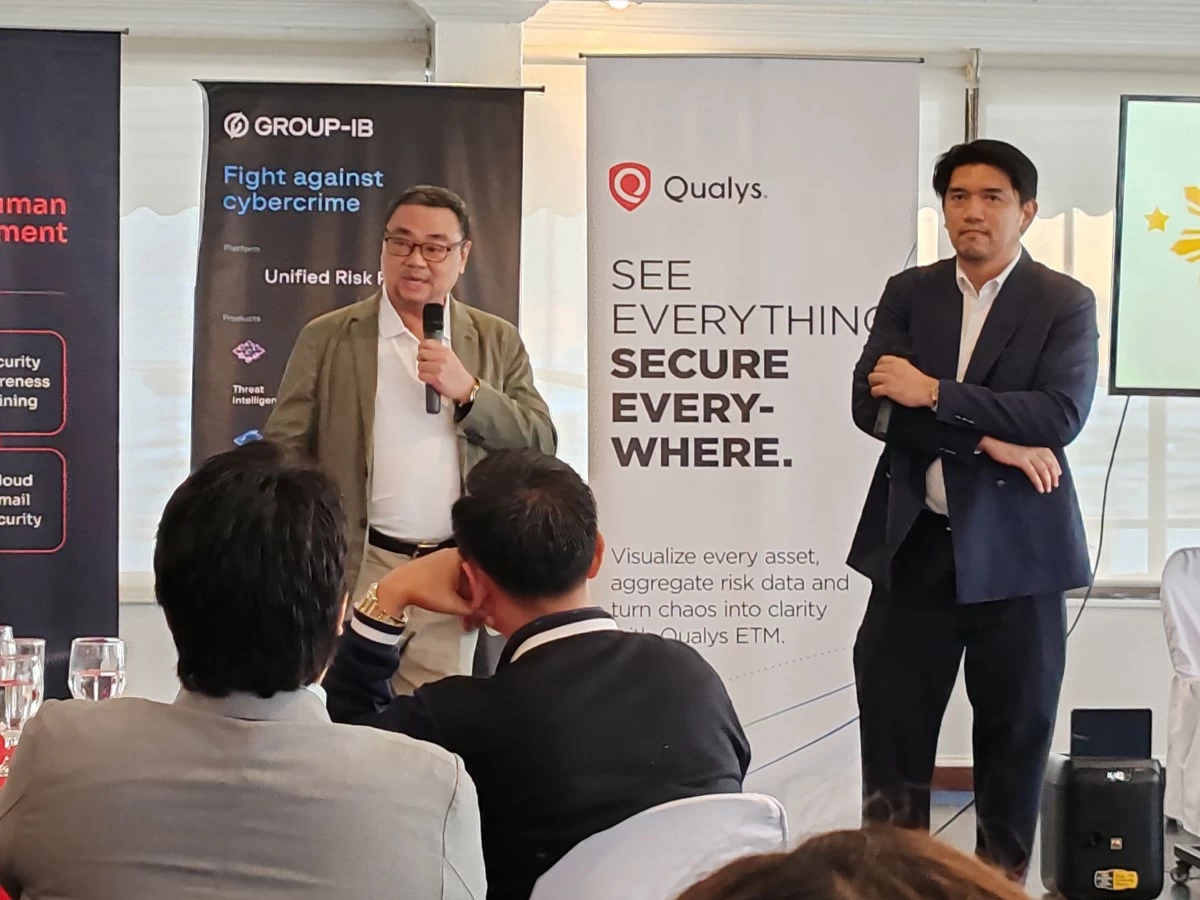
From right: CSA Philippines Chair Ryan Ty and President Ronald Gonzales at the 2026 Community Exchange and Fellowship.
Artificial intelligence is rapidly reshaping the modern workplace, but its true potential comes into focus when paired with cloud computing. Together, these technologies are not only accelerating productivity across industries—they are also redefining how organizations protect themselves in an increasingly complex digital landscape.
These insights were among the key highlights of the 2026 Community Exchange and Fellowship hosted by the Cloud Security Alliance (CSA) Philippines at the Manila Yacht Club last March 7. Led by CSA Philippines Chair Ryan Ty and President Ronald Gonzales, the exclusive gathering brought together information security professionals and cloud security advocates from across various industries.
During the event, Jazmine de Luna, chief systems architect at LUNA AI Systems, emphasized that AI is not a replacement for human workers but a powerful tool that enhances their capabilities. Tasks that once required entire teams—such as report analysis, customer inquiry handling, and application processing—can now be completed in a fraction of the time. Supported by scalable cloud infrastructure and centralized data access, AI systems can operate continuously, delivering real-time insights and enabling faster, more informed decisions.
This transformation is unfolding in stages. Many organizations begin by adopting personal productivity tools, such as writing assistants or chatbots. Over time, they progress toward team-level collaboration, enterprise-wide intelligence, and eventually fully autonomous systems. At this advanced stage, AI moves beyond assistance—it takes action, managing workflows, generating reports, and even making decisions with minimal human intervention.
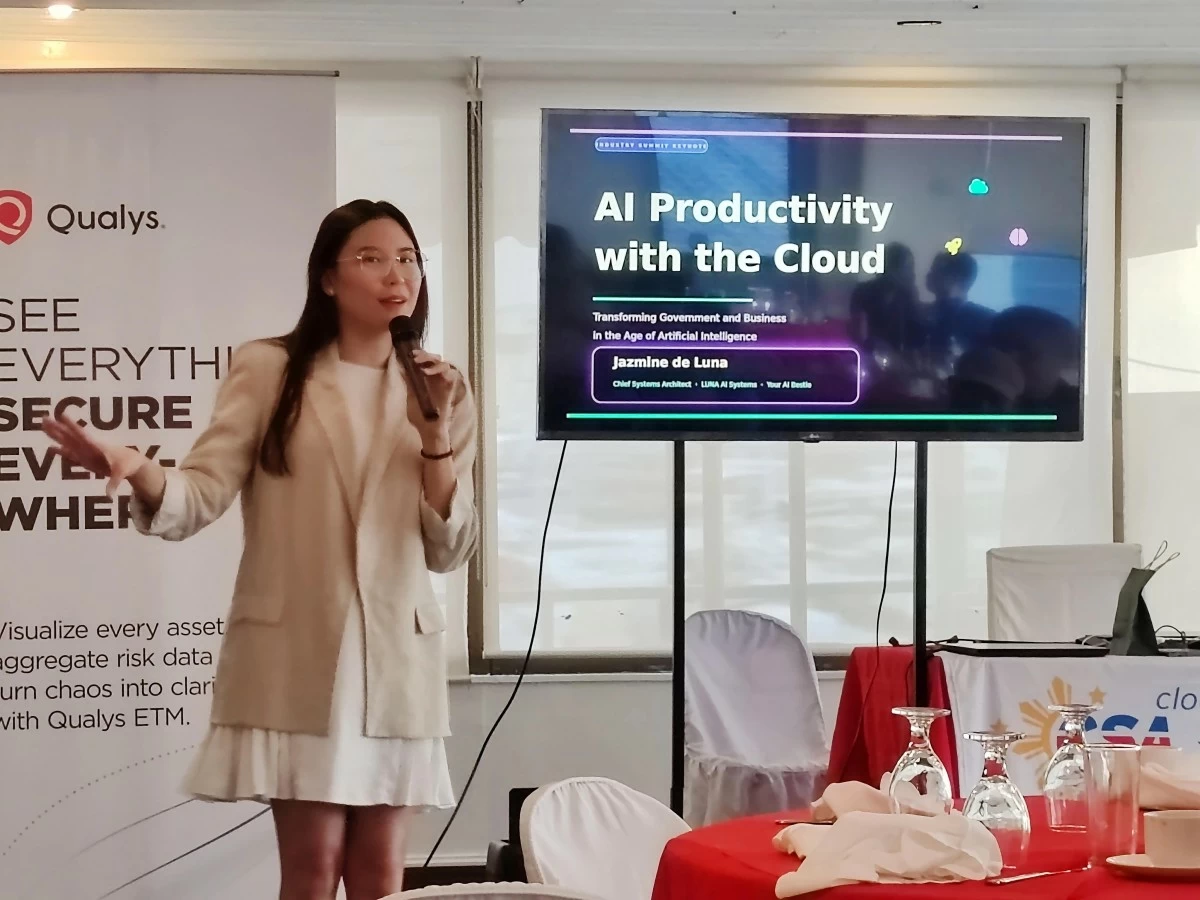
Jazmine de Luna, chief systems architect at LUNA AI Systems.
Nowhere is this evolution more apparent than in cybersecurity.
Traditionally, penetration testing—the process of identifying system vulnerabilities—has been a manual, time-intensive task performed periodically by skilled professionals. Today, autonomous AI agents are reshaping this model. Built on multi-agent architectures, these systems assign specialized roles to agents, enabling parallel reconnaissance, scanning, exploitation, and validation. Working in coordination, they can simulate real-world attacks and continuously identify vulnerabilities, rather than only during scheduled assessments.
The impact is profound. Security testing that once took days can now be completed in minutes—and, more importantly, run around the clock. This ensures that systems are constantly evaluated against evolving threats. Beyond speed, these AI agents are becoming increasingly strategic, adapting their methods based on what they uncover.
However, this technological leap comes with a critical caveat: the same tools that strengthen defenses can also be used offensively. Autonomous AI systems can execute coordinated attacks, identify vulnerabilities at scale, and operate at speeds far beyond human capability. As access to these technologies expands, organizations must be prepared to face adversaries equipped with similar tools.
This dual-use nature of AI highlights the importance of readiness. Many organizations fall into the trap of adopting AI without establishing the necessary foundation. Successful implementation requires more than just technology—it demands a clear strategy, robust cloud infrastructure, clean and centralized data, and a workforce equipped to collaborate with intelligent systems. Strong governance is equally essential, particularly when deploying autonomous agents capable of independent action.
Despite these challenges, the opportunities are vast. Governments are using AI to streamline public services, from automated permit processing to real-time fraud detection. Businesses, meanwhile, are leveraging it to enhance customer experiences, optimize supply chains, and generate predictive insights. Across sectors, the result is faster decision-making, improved efficiency, and the ability to operate at an unprecedented scale.
For countries like the Philippines, this moment presents a unique opportunity. With a young, digitally engaged workforce and steadily expanding cloud infrastructure, the nation is well-positioned to leapfrog traditional development paths and embrace an AI-driven future.
Ultimately, the convergence of AI and cloud computing signals the emergence of a new operational paradigm—one defined by speed, intelligence, and continuous adaptation. Organizations that succeed will be those that adopt these technologies with intention, balancing innovation with responsibility.