

ADVERTISEMENT

PalawanPay eyes 1 million savers with PalaSave

Published Mar 24, 2026 02:35 pm

At A Glance

  • Palawan Group of Companies (PGC) is aiming high with its PalaSave digital savings product, targeting one million depositors in its first year after already attracting 60,000 users in just the first three months of launch in partnership with Rizal Commercial Banking Corp.
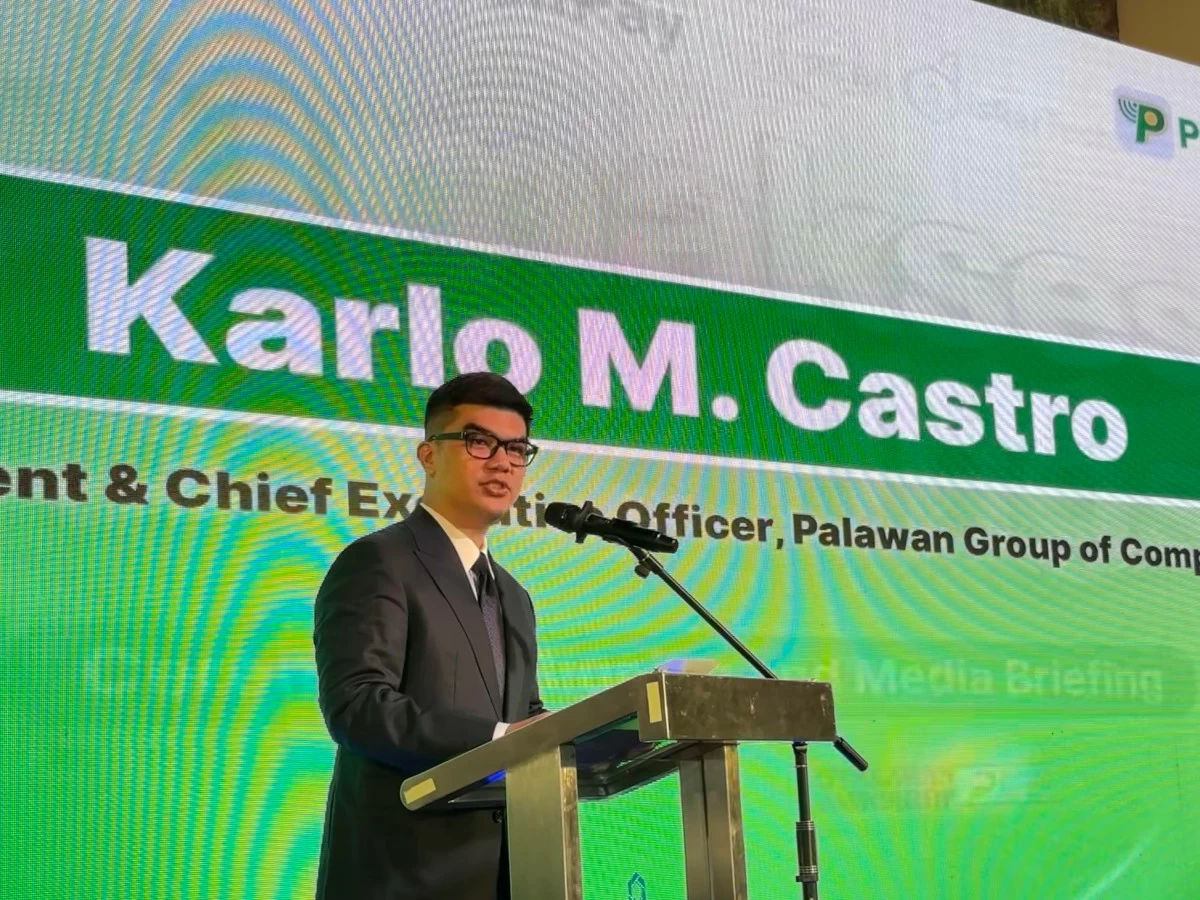
Palawan Group of Companies (PGC) is aiming high with its PalaSave digital savings product, targeting one million depositors in its first year after already attracting 60,000 users in just the first three months of its launch in partnership with Yuchengco-led Rizal Commercial Banking Corp. (RCBC).

“We crossed 60,000 accounts yesterday, and our goal is to make it a million in the first 12 months,” PGC president and chief executive officer (CEO) Karlo M. Castro told a press briefing during its PalaSave launch on Tuesday, March 24.

PalaSave is a digital savings feature within the PalawanPay app that allows users to open an account with no initial deposit and zero maintaining balance.

PGC’s bullish growth outlook for PalaSave is anchored on RCBC’s banking expertise and PalawanPay’s 23 million clients.

This savings account offers an interest rate of four percent, and users can begin building their funds with deposits as low as ₱200.

Regulated as a basic deposit account (BDA) by the Bangko Sentral ng Pilipinas (BSP), the product currently has a maximum balance ceiling of ₱50,000.

To date, the 60,000 sign-ups have generated approximately ₱50 million in savings. Castro said if this product attracts one million depositors, it could “easily” yield ₱1 billion in savings.

Castro told reporters after the event that PGC aims to encourage underserved Filipinos—farmers, fisherfolk, drivers, domestic helpers, vendors, etc.—to begin saving. Meanwhile, he admitted that the firm remains far from the target figure.

He also shared the gradual impact of the escalating military conflict in the Middle East on remittances from overseas Filipino workers (OFWs). The Manila-based Asian Development Bank (ADB) earlier said the Middle East is a primary destination for the Philippines’ overseas workforce.

With about a fifth of Filipino migrants in the region, the ADB warned that a prolonged conflict between United States (US)-backed Israel and Iran could curb the record-breaking capital inflows that bolster the nation’s consumption-led economy.

“It’s no secret that overall OFW remittances have nosedived because of the crisis in the Middle East. We can clearly see that they have been affected, especially those coming from the region,” Castro said.

For its customers alone, Castro said remittance growth has so far been flat compared to the same period in 2025, signaling that the ongoing war is stifling cash inflows from the Middle East.

Further, the one-percent remittance tax that the US imposes has so far had minimal impact on remittances. While minimal, Castro said this is essentially an additional fee, “so it will definitely have an effect.”

“For now, we are seeing a real dip in both volume and value because of it,” Castro added.

Recall that Filipinos working and living abroad sent home a record $35.63 billion in cash in 2025, driven by year-end bonuses and holiday spending. This represents a 3.3-percent increase from the $34.49 billion recorded in 2024.

ADVERTISEMENT
.most-popular .layout-ratio{ padding-bottom: 79.13%; } @media (min-width: 768px) and (max-width: 1024px) { .widget-title { font-size: 15px !important; } }

{{ articles_filter_1561_widget.title }}

.most-popular .layout-ratio{ padding-bottom: 79.13%; } @media (min-width: 768px) and (max-width: 1024px) { .widget-title { font-size: 15px !important; } }

{{ articles_filter_1562_widget.title }}

.most-popular .layout-ratio{ padding-bottom: 79.13%; } @media (min-width: 768px) and (max-width: 1024px) { .widget-title { font-size: 15px !important; } }

{{ articles_filter_1563_widget.title }}

{{ articles_filter_1564_widget.title }}

.mb-article-details { position: relative; } .mb-article-details .article-body-preview, .mb-article-details .article-body-summary{ font-size: 17px; line-height: 30px; font-family: "Libre Caslon Text", serif; color: #000; } .mb-article-details .article-body-preview iframe , .mb-article-details .article-body-summary iframe{ width: 100%; margin: auto; } .read-more-background { background: linear-gradient(180deg, color(display-p3 1.000 1.000 1.000 / 0) 13.75%, color(display-p3 1.000 1.000 1.000 / 0.8) 30.79%, color(display-p3 1.000 1.000 1.000) 72.5%); position: absolute; height: 200px; width: 100%; bottom: 0; display: flex; justify-content: center; align-items: center; padding: 0; } .read-more-background a{ color: #000; } .read-more-btn { padding: 17px 45px; font-family: Inter; font-weight: 700; font-size: 18px; line-height: 16px; text-align: center; vertical-align: middle; border: 1px solid black; background-color: white; } .hidden { display: none; }
function initializeAllSwipers() { // Get all hidden inputs with cms_article_id document.querySelectorAll('[id^="cms_article_id_"]').forEach(function (input) { const cmsArticleId = input.value; const articleSelector = '#article-' + cmsArticleId + ' .body_images'; const swiperElement = document.querySelector(articleSelector); if (swiperElement && !swiperElement.classList.contains('swiper-initialized')) { new Swiper(articleSelector, { loop: true, pagination: false, navigation: { nextEl: '#article-' + cmsArticleId + ' .swiper-button-next', prevEl: '#article-' + cmsArticleId + ' .swiper-button-prev', }, }); } }); } setTimeout(initializeAllSwipers, 3000); const intersectionObserver = new IntersectionObserver( (entries) => { entries.forEach((entry) => { if (entry.isIntersecting) { const newUrl = entry.target.getAttribute("data-url"); if (newUrl) { history.pushState(null, null, newUrl); let article = entry.target; // Extract metadata const author = article.querySelector('.author-section').textContent.replace('By', '').trim(); const section = article.querySelector('.section-info ').textContent.replace(' ', ' '); const title = article.querySelector('.article-title h1').textContent; // Parse URL for Chartbeat path format const parsedUrl = new URL(newUrl, window.location.origin); const cleanUrl = parsedUrl.host + parsedUrl.pathname; // Update Chartbeat configuration if (typeof window._sf_async_config !== 'undefined') { window._sf_async_config.path = cleanUrl; window._sf_async_config.sections = section; window._sf_async_config.authors = author; } // Track virtual page view with Chartbeat if (typeof pSUPERFLY !== 'undefined' && typeof pSUPERFLY.virtualPage === 'function') { try { pSUPERFLY.virtualPage({ path: cleanUrl, title: title, sections: section, authors: author }); } catch (error) { console.error('ping error', error); } } // Optional: Update document title if (title && title !== document.title) { document.title = title; } } } }); }, { threshold: 0.1 } ); function showArticleBody(button) { const article = button.closest("article"); const summary = article.querySelector(".article-body-summary"); const body = article.querySelector(".article-body-preview"); const readMoreSection = article.querySelector(".read-more-background"); // Hide summary and read-more section summary.style.display = "none"; readMoreSection.style.display = "none"; // Show the full article body body.classList.remove("hidden"); } document.addEventListener("DOMContentLoaded", () => { let loadCount = 0; // Track how many times articles are loaded const offset = [1, 2, 3, 4, 5, 6, 7, 8, 9, 10]; // Offset values const currentUrl = window.location.pathname.substring(1); let isLoading = false; // Prevent multiple calls if (!currentUrl) { console.log("Current URL is invalid."); return; } const sentinel = document.getElementById("load-more-sentinel"); if (!sentinel) { console.log("Sentinel element not found."); return; } function isSentinelVisible() { const rect = sentinel.getBoundingClientRect(); return ( rect.top < window.innerHeight && rect.bottom >= 0 ); } function onScroll() { if (isLoading) return; if (isSentinelVisible()) { if (loadCount >= offset.length) { console.log("Maximum load attempts reached."); window.removeEventListener("scroll", onScroll); return; } isLoading = true; const currentOffset = offset[loadCount]; window.loadMoreItems().then(() => { let article = document.querySelector('#widget_1690 > div:nth-last-of-type(2) article'); intersectionObserver.observe(article) loadCount++; }).catch(error => { console.error("Error loading more items:", error); }).finally(() => { isLoading = false; }); } } window.addEventListener("scroll", onScroll); });

Sign up by email to receive news.