ADVERTISEMENT

Feeling the heat? Here's what heat index means

Published Mar 24, 2026 01:12 pm
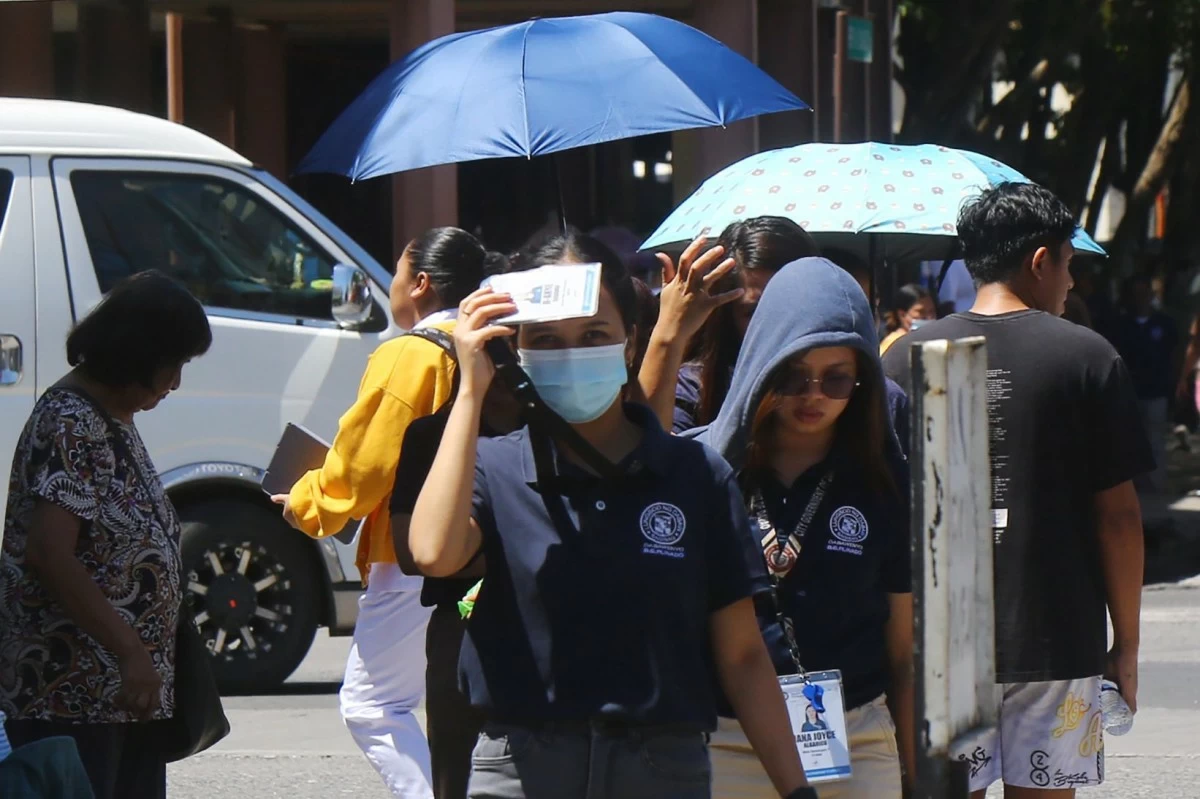
Pedestrians endure the heat in downtown Davao City as the Philippine Atmospheric, Geophysical and Astronomical Services Administration (PAGASA) on Monday, March 23, declared the start of the warm and dry season. (Keith Bacongco/Manila Bulletin)
With the end of the northeast monsoon season (amihan) on March 23, the Philippines is entering its warm and dry season, when rising temperatures and humidity make the heat more intense.
The Philippine Atmospheric, Geophysical and Astronomical Services Administration (PAGASA) monitors how this heat is actually experienced by the body using the heat index (damang init).
“The heat actually felt by the human body (apparent temperature) cannot be accurately measured by air temperature alone. It is more accurately estimated by including data on heat and humidity (relative humidity),” PAGASA said.
The heat index combines air temperature with relative humidity to estimate the apparent temperature felt by the human body.
How heat index affects the body
PAGASA classifies the heat index into levels of risk to indicate how the body may be affected under various temperature and humidity conditions.
At the caution level (27–32°C), prolonged exposure or physical activity may cause fatigue, and heat cramps can occur.
Extreme caution (33–41°C) increases the likelihood of heat cramps and heat exhaustion, and continued activity could result in heat stroke.
The danger level (42–51°C) carries a high risk of heat cramps, heat exhaustion, and possible heat stroke.
At extreme danger (52°C and above), the risk of heat stroke is severe and requires immediate action.
PAGASA also warned that certain groups are more vulnerable to heat-related illness.
Infants and elderly individuals, people with obesity, those performing strenuous activity in hot and humid conditions, and individuals consuming excessive alcohol are particularly at risk.
Symptoms may include heavy sweating, fatigue, dizziness, rapid pulse, fainting, or loss of consciousness in severe cases.
How to stay safe in the heat
PAGASA advised the public to limit outdoor exposure during the hottest hours, drink plenty of water, wear light clothing, and use umbrellas or hats for shade.
Heavy physical activity should be done during cooler hours of the day, and tea, coffee, soft drinks, or alcohol should be avoided to prevent dehydration.
If a person shows signs of heatstroke, they should be moved to a shaded area and cooled with water or ice applied to pulse points such as the armpits, neck, wrists, ankles, or groin.
Fluids may be given if the person is conscious, but severe cases, including loss of consciousness, require immediate hospital care.
From March to June, PAGASA provides updated heat index monitoring and forecasts online at its website to help the public stay safe during the hottest months of the year.

Related Tags

PAGASA HEAT INDEX DRY SEASON SUMMER RISING TEMPERATURE
ADVERTISEMENT
.most-popular .layout-ratio{ padding-bottom: 79.13%; } @media (min-width: 768px) and (max-width: 1024px) { .widget-title { font-size: 15px !important; } }

{{ articles_filter_1561_widget.title }}

.most-popular .layout-ratio{ padding-bottom: 79.13%; } @media (min-width: 768px) and (max-width: 1024px) { .widget-title { font-size: 15px !important; } }

{{ articles_filter_1562_widget.title }}

.most-popular .layout-ratio{ padding-bottom: 79.13%; } @media (min-width: 768px) and (max-width: 1024px) { .widget-title { font-size: 15px !important; } }

{{ articles_filter_1563_widget.title }}

{{ articles_filter_1564_widget.title }}

.mb-article-details { position: relative; } .mb-article-details .article-body-preview, .mb-article-details .article-body-summary{ font-size: 17px; line-height: 30px; font-family: "Libre Caslon Text", serif; color: #000; } .mb-article-details .article-body-preview iframe , .mb-article-details .article-body-summary iframe{ width: 100%; margin: auto; } .read-more-background { background: linear-gradient(180deg, color(display-p3 1.000 1.000 1.000 / 0) 13.75%, color(display-p3 1.000 1.000 1.000 / 0.8) 30.79%, color(display-p3 1.000 1.000 1.000) 72.5%); position: absolute; height: 200px; width: 100%; bottom: 0; display: flex; justify-content: center; align-items: center; padding: 0; } .read-more-background a{ color: #000; } .read-more-btn { padding: 17px 45px; font-family: Inter; font-weight: 700; font-size: 18px; line-height: 16px; text-align: center; vertical-align: middle; border: 1px solid black; background-color: white; } .hidden { display: none; }
function initializeAllSwipers() { // Get all hidden inputs with cms_article_id document.querySelectorAll('[id^="cms_article_id_"]').forEach(function (input) { const cmsArticleId = input.value; const articleSelector = '#article-' + cmsArticleId + ' .body_images'; const swiperElement = document.querySelector(articleSelector); if (swiperElement && !swiperElement.classList.contains('swiper-initialized')) { new Swiper(articleSelector, { loop: true, pagination: false, navigation: { nextEl: '#article-' + cmsArticleId + ' .swiper-button-next', prevEl: '#article-' + cmsArticleId + ' .swiper-button-prev', }, }); } }); } setTimeout(initializeAllSwipers, 3000); const intersectionObserver = new IntersectionObserver( (entries) => { entries.forEach((entry) => { if (entry.isIntersecting) { const newUrl = entry.target.getAttribute("data-url"); if (newUrl) { history.pushState(null, null, newUrl); let article = entry.target; // Extract metadata const author = article.querySelector('.author-section').textContent.replace('By', '').trim(); const section = article.querySelector('.section-info ').textContent.replace(' ', ' '); const title = article.querySelector('.article-title h1').textContent; // Parse URL for Chartbeat path format const parsedUrl = new URL(newUrl, window.location.origin); const cleanUrl = parsedUrl.host + parsedUrl.pathname; // Update Chartbeat configuration if (typeof window._sf_async_config !== 'undefined') { window._sf_async_config.path = cleanUrl; window._sf_async_config.sections = section; window._sf_async_config.authors = author; } // Track virtual page view with Chartbeat if (typeof pSUPERFLY !== 'undefined' && typeof pSUPERFLY.virtualPage === 'function') { try { pSUPERFLY.virtualPage({ path: cleanUrl, title: title, sections: section, authors: author }); } catch (error) { console.error('ping error', error); } } // Optional: Update document title if (title && title !== document.title) { document.title = title; } } } }); }, { threshold: 0.1 } ); function showArticleBody(button) { const article = button.closest("article"); const summary = article.querySelector(".article-body-summary"); const body = article.querySelector(".article-body-preview"); const readMoreSection = article.querySelector(".read-more-background"); // Hide summary and read-more section summary.style.display = "none"; readMoreSection.style.display = "none"; // Show the full article body body.classList.remove("hidden"); } document.addEventListener("DOMContentLoaded", () => { let loadCount = 0; // Track how many times articles are loaded const offset = [1, 2, 3, 4, 5, 6, 7, 8, 9, 10]; // Offset values const currentUrl = window.location.pathname.substring(1); let isLoading = false; // Prevent multiple calls if (!currentUrl) { console.log("Current URL is invalid."); return; } const sentinel = document.getElementById("load-more-sentinel"); if (!sentinel) { console.log("Sentinel element not found."); return; } function isSentinelVisible() { const rect = sentinel.getBoundingClientRect(); return ( rect.top < window.innerHeight && rect.bottom >= 0 ); } function onScroll() { if (isLoading) return; if (isSentinelVisible()) { if (loadCount >= offset.length) { console.log("Maximum load attempts reached."); window.removeEventListener("scroll", onScroll); return; } isLoading = true; const currentOffset = offset[loadCount]; window.loadMoreItems().then(() => { let article = document.querySelector('#widget_1690 > div:nth-last-of-type(2) article'); intersectionObserver.observe(article) loadCount++; }).catch(error => { console.error("Error loading more items:", error); }).finally(() => { isLoading = false; }); } } window.addEventListener("scroll", onScroll); });

Sign up by email to receive news.