







DOT-7 launches campaign vs online booking scams
Published Mar 24, 2026 07:35 pm


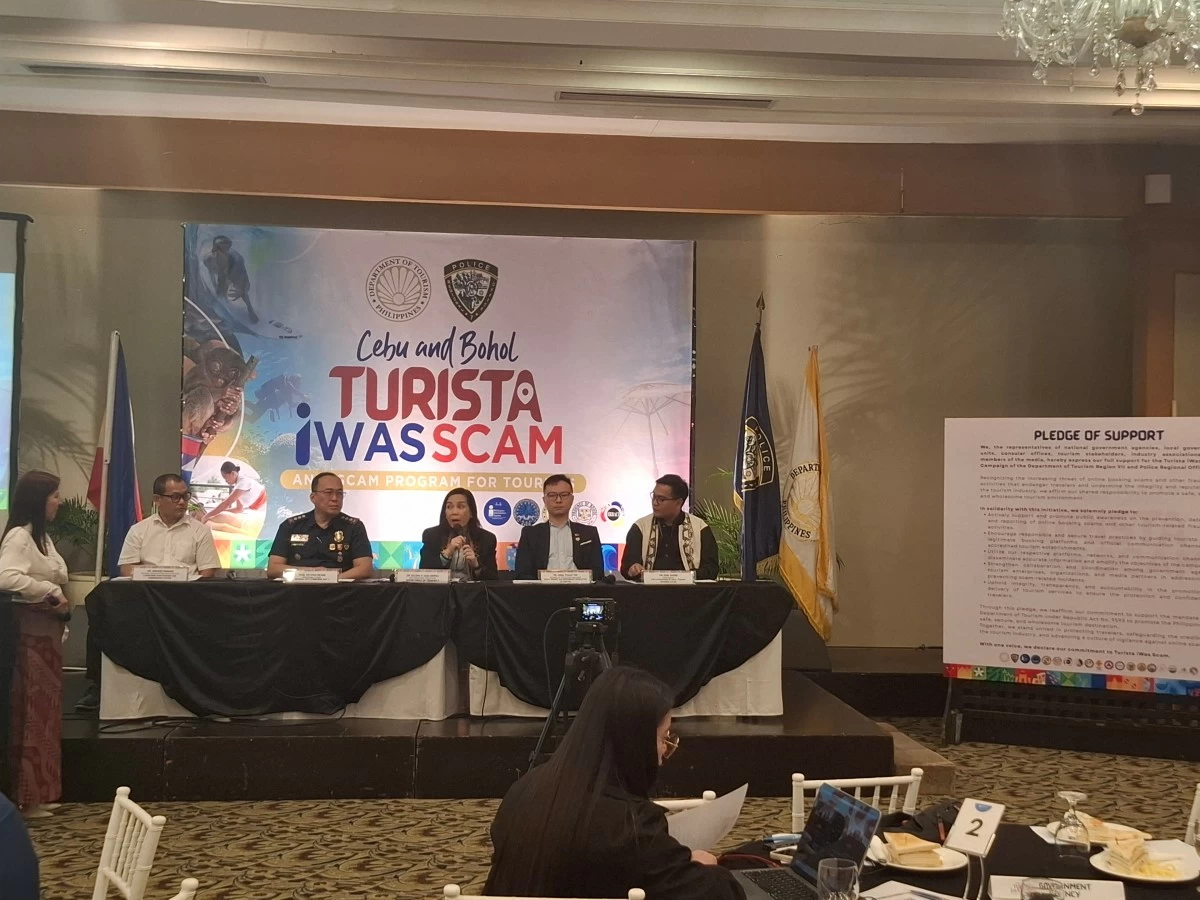
STAKEHOLDERS launch the 'Turista iWas Scam' campaign on Monday, March 23, in Cebu City. (Calvin Cordova)
CEBU CITY — The Department of Tourism-Central Visayas (DOT-7) has taken action against the increasing cases of online booking scams.
The DOT-7 on Monday, March 23, led the launching of the “Turista iWas Scam” campaign in Cebu and Bohol, which aims to protect travelers and establishments from fraudulent bookings.
Data from DOT-7 showed that 198 complaints have been filed as of March 17. The incidents involved 26 accredited tourism establishments with total losses reaching more than P1 million.
Marlon Barrientos, chief of the DOT-7 regulation division, said scammers were able to dupe travelers by creating fake Facebook pages with photos and branding of legitimate resorts.
Unsuspecting victims would be asked to send advance payments via personal bank accounts or e-wallets.
Barrientos said some fake accounts appear convincing due to large followings and frequent activity.
During the launching, Nelson Yuvallos, president of the One Island Tourism Association (OITA), disclosed that scammers were able to dupe travellers of close to P300,000 using the scheme recently.
Yuvallos said such fraudulent activities have been monitored since September 2025. He lamented that identifying the culprits has been very challenging.
Adding to their woes was the deletion of legitimate Facebook pages of certain resorts instead of the fake ones, Yuvallos said.
To give the campaign more teeth, a joint task force from the Police Regional Office-7 and the Cybercrime Investigation and Coordinating Center have been formed.
As part of the campaign, authorities advised tourists to transact only with verified accounts and double-check booking details.
Travelers were also reminded to be extra cautious of warning signs such as newly created pages and urgent payment demands.
Reports may be filed through hotline 1326 or via email at [email protected].
DOT-7 officer-in-charge Gelena Asis-Dimpas said efforts are underway to support legislation that would penalize online booking scams.
“We send a clear and unified message. We are vigilant. We are coordinated. We will not allow scams to undermine the confidence and progress of the tourism industry,” she said.