






 Business
The Stock Market
DMCI Group copes with higher oil prices, warns of supply drying up
Business
The Stock Market
DMCI Group copes with higher oil prices, warns of supply drying up
DMCI Group copes with higher oil prices, warns of supply drying up


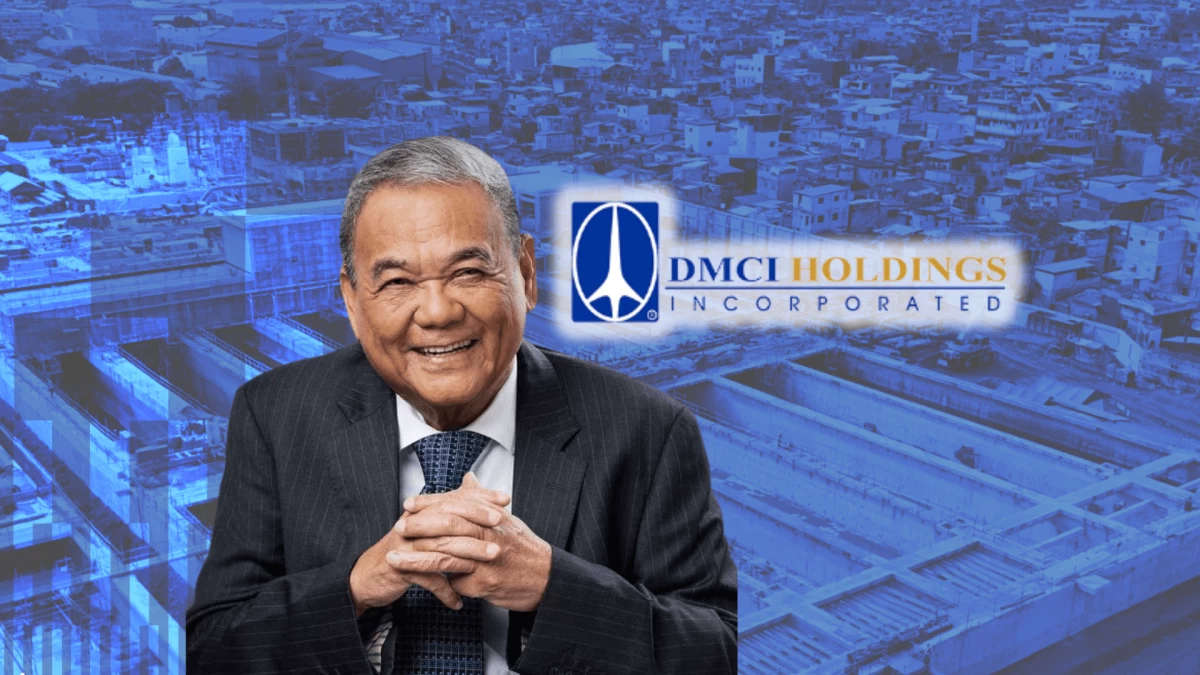
Rising fuel prices are beginning to ripple across the sprawling operations of DMCI Holdings Inc., exposing the vulnerabilities of a diversified conglomerate whose businesses—from mining to cement to property—depend heavily on steady and affordable energy supply.
For DMCI, the challenge is no longer just about higher costs. It is also about whether fuel will be available at all.
“Well, the capex [capital expenditures] is set already. So, we just have to follow it. Of course, the operating costs will now be revisited,” said DMCI Holdings Executive Vice President and Chief Finance Officer (CFO) Herbert M. Consunji in a recent interview.
Across the group, executives are now recalibrating assumptions, bracing for a period where volatility in global energy markets could directly affect margins, timelines, and even expansion plans.
Herbert explained that, “Because the price is different now. It’s not just a matter of price; it’s a matter of availability. That’s the major factor. You may have money to buy it, but it’s not available because the suppliers downgraded.”
Nowhere is this pressure more pronounced than in Semirara Mining and Power Corp. (SMPC), where fuel is central to day-to-day operations.
“Fuel is the single biggest cost of our operations. So, we’ve always been very cautious and diligent in putting all the programs to be able to conserve the fuel,” said SMPC President and Chief Operating Officer (COO) Ma. Cristina C. Gotianun.
Some suppliers have already pulled back. “So we are left with a little less than what we used to have,” Gotianun added.
For now, SMPC has secured enough fuel to keep its Semirara operations running through April, buying time to navigate an increasingly uncertain supply environment.
DMCI Holdings Chairman and Chief Executive Officer (CEO) Isidro A. Consunji noted that such disruptions are unprecedented for the group, marking the first time it has had to deal with suppliers backing out.
Even as costs climb, the company is attempting to cushion the impact. Semirara’s coal prices, tied to the Indonesian Coal Index, have risen alongside global energy prices, offering some buffer to margins. Still, the situation remains delicate.
Beyond April, visibility is limited.
“I am hoping the government can aid us also, source some fuel, in case the worst happens,” Gotianun said.
The ripple effects extend beyond mining. In property development, rising costs are forcing difficult decisions.
DMCI Homes President Alfredo R. Austria said the current surge in costs may delay the launch of new projects, although construction of existing developments will proceed as planned due to prior commitments to buyers.
In cement manufacturing, the response has been more immediate—passing on costs to customers.
Herbert, who also heads Concreat Holdings Philippines Inc., said price increases are being implemented in stages.
“But we unbundle the fuel surcharge so, in case things happen positively, then we will remove it. So we don’t want to unduly burden our customers,” he explained.
Despite the headwinds, DMCI is pressing ahead with its investment plans. The conglomerate recently raised its capital expenditure (capex) budget by 11 percent to ₱24.6 billion this year, signaling confidence in long-term demand even as near-term conditions remain volatile.
But for now, the group’s focus has shifted from expansion to resilience—managing costs, securing supply, and maintaining operations in an environment where both price and availability of fuel have become unpredictable variables.