







DICT aims to reach 60 million eGovPH users by 2028
App hits 40 million users as government brings services closer to Cebuanos
Published Mar 24, 2026 02:37 pm


Public services are moving closer to Filipinos as the eGovPH Super App reaches 40 million users, according to the Department of Information and Communications Technology (DICT). (MB Visual Content Group / DICT)
The government is ramping up its digital transformation efforts, with the Department of Information and Communications Technology (DICT) targeting 60 million users of the eGovPH Super App by 2028, following its milestone of 40 million downloads.
The push coincides with the expansion of physical and digital service hubs, including the newly launched eGovPH Serbisyo Hub in Cebu, which aims to bring faster and more accessible government services closer to Filipinos—particularly in regional centers like Cebu.
Government must go to the people
In a statement, DICT Undersecretary for eGovernment David Almirol Jr. said the combined use of physical hubs and digital platforms marks a major shift in governance.
“Hindi na dapat ang tao ang lalapit sa gobyerno nang paulit-ulit. Ang gobyerno na ang lalapit sa tao (People should no longer be the ones repeatedly approaching the government. It is the government that should reach out to the people),” Almirol said.
He emphasized that citizens no longer need to repeatedly visit government offices, as services are now delivered directly to them.
“Whether through the eGovPH Super App or the eGovPH Serbisyo Hub, we are bringing services closer to our kababayans,” Almirol added.
He also noted that the platform addresses long-standing issues such as long queues, repetitive requirements, and complex procedures.
“Kailangan natin gawing madali at mabilis ang government services. Dapat wala nang pila; tanggalin natin ang mga paulit-ulit at komplikadong proseso at napakaraming kailangang i-submit na dokumento (We need to make government services easy and fast. There should be no more lines; we must remove repetitive and complicated processes and the excessive number of documents that need to be submitted),” Almirol said.
Users now only need to input their personal information once, which can be securely shared across participating agencies, reducing redundancy and processing time.
“Ngayon, kaysa ilang beses ka pipila, sa bahay ka na lang (Now, instead of lining up several times, you can just do it from home),” he added.
One-stop hub for key government services
The Philippine government is accelerating efforts to make public services more accessible by combining physical service hubs and digital platforms, as the eGovPH Super App reached 40 million downloads.
The milestone coincided with the launch of the Bagong Pilipinas eGovPH Serbisyo Hub in Mandaue City, designed to provide Cebuanos with easier, faster, and more centralized access to essential government services.
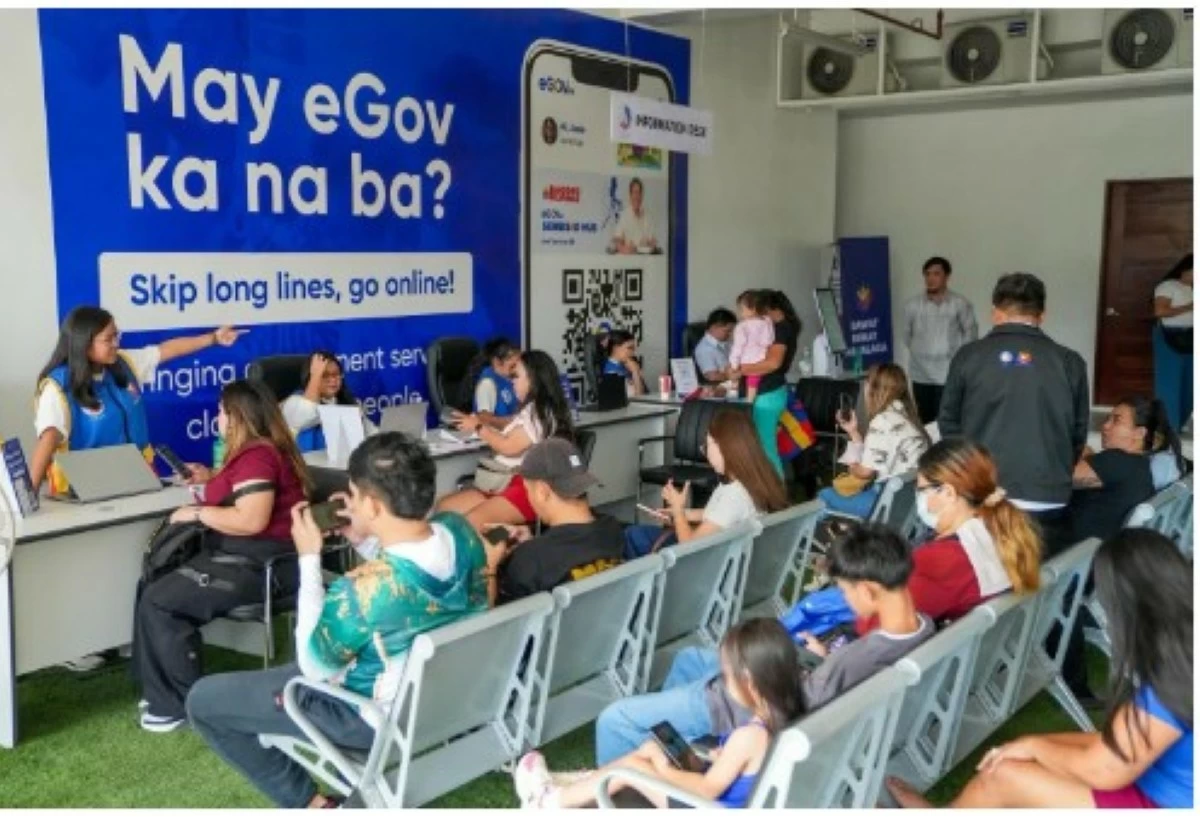
The government expands access to public services with the launch of the eGovPH Serbisyo Hub in Mandaue City and the milestone of 40 million app users nationwide. (DICT photo)
The newly opened "serbisyo hub" allows residents to transact with multiple agencies in one location, significantly reducing the need to travel between offices.
Among the agencies available at the hub are the Social Security System (SSS), the Philippine Statistics Authority (PSA), the Department of Labor and Employment (DOLE), the Department of Health (DOH), and the Department of Social Welfare and Development (DSWD).
Officials said the initiative aims to streamline transactions, cut waiting times, and improve overall service delivery.
eGovPH app expands digital access nationwide
Parallel to the rollout of physical hubs, the government continues to strengthen its digital transformation agenda through the eGovPH Super App, which serves as a centralized platform for public services.
The app is now integrated with more than 1,000 government systems, enabling users to access services such as digital national ID verification, financial and medical assistance, issuance of certificates and permits, job support and social services, and citizen help desks and hotlines.
Digital platforms key to accessible governance
President Ferdinand Marcos Jr. underscored the importance of bringing services closer to the public, particularly through digital innovation.
He said streamlining processes helps eliminate red tape and ensures faster, more transparent service delivery.
Digital ecosystem strengthens service delivery
DICT said the eGovPH app is supported by a growing digital ecosystem that includes eGovAI for automated assistance, eGovDocs for paperless transactions, and integration with the digital national ID system, which now covers around 90 million Filipinos.
According to DICT, this integration enhances security, helps prevent fraudulent users, and improves efficiency.
Target: 60 million users by 2028
“The milestone of 40 million downloads already meets the government’s 2026 target, with DICT aiming to reach 60 million users by 2028,” the agency said.
Future updates to the app are expected to include access to academic records, such as diplomas and transcripts, as well as other government-issued certificates.
Reducing congestion, curbing fixers
DICT noted that the dual strategy of combining physical hubs and digital platforms is intended to decongest government offices and reduce opportunities for fixers.
The initiative also aims to boost transparency, efficiency, and trust in public service delivery.
Public urged to use official app
As the platform continues to grow, DICT reminded the public to download only the official eGovPH app and remain vigilant against fake websites and fraudulent platforms posing as government services.
“Nasa 90 million na rin ang digital national ID natin, at dahil diyan, na-automate ang eGov app para mawala na ang pekeng users (Our digital national ID has already reached 90 million, and because of that, the eGov app has been automated to eliminate fake users),” Almirol said.